kopenhagen.info

Overview

Food & Drink in Copenhagen

Smørrebrød, hot dogs, cinnamon buns, specialty coffee and the New Nordic elite - what to try in Copenhagen, what it costs in 2026, and where to find the best addresses.

Contents

Copenhagen is one of Europe's defining food cities: birthplace of the New Nordic movement and home to down-to-earth classics like smørrebrød, hot dogs and cinnamon buns in equal measure. Eating out here is rarely cheap, but the range runs from a hot dog for a few pounds at a street cart to a three-star tasting menu costing several thousand kroner. This overview sorts the classics, names concrete addresses with prices, and weighs up where the extra spend is worth it

  • and where it isn't.

New Nordic - where the reputation comes from

The city's culinary reputation was built on a manifesto and a restaurant. Noma was founded in 2003 by René Redzepi and Claus Meyer; the name is a shortened blend of nordisk (Nordic) and mad (food). In November 2004, twelve leading Nordic chefs drew up the New Nordic Food Manifesto at the Nordic Kitchen Symposium in Copenhagen, under the patronage of the Nordic Council of Ministers. Its core principles still shape the scene today: Nordic ingredients, seasonality, traditional craft, sustainability and close ties to producers.

Worth knowing for trip planning: don't count on a table at Noma in Copenhagen in 2026. The restaurant at Refshalevej 96 on the Refshaleøen peninsula ended regular dinner service at the end of 2024 and has since operated as a food-innovation lab (Noma 3.0). In 2026 there's only a residency in Los Angeles (11 March to 26 June, around 1,500 USD per person including wine pairing, service and tax, booked through Tock). No pop-up or residency has been announced in Copenhagen itself for 2026.

The Michelin-starred houses - fine dining worth booking ahead

The New Nordic idea radiates out across the whole fine-dining scene. Eating here means planning the booking like a concert on-sale, since tables vanish within minutes - and payment is upfront or by ticket.

  • Geranium (Østerbro, by the Parken stadium) holds three Michelin stars and represents the New Nordic elite. The tasting menu runs around 4,200 DKK, with wine pairings from 2,300 to 20,000 DKK. Booking opens up to three months ahead at 18:00 local time and is often sold out within minutes.
  • Alchemist (Refshaleøen) holds two stars. The Alchemist Experience, around 50 courses, costs roughly 5,600 DKK per person, with wine pairings from 2,000 to 9,500 DKK. Tickets are released every three months via the Tock platform.
  • Kadeau Copenhagen was awarded its third star in the Michelin Guide Nordic 2026: contemporary Danish cooking rooted in Bornholm, built on foraging, fermentation and preservation, plus a Green Star for sustainability.
  • Alouette (one star, opened next to Kongens Have park in summer 2024) is a somewhat more accessible New Nordic address. Reservations run through Tock with a 995 DKK deposit per person.

For most visitors, the starred tier is a once-in-a-trip experience. Copenhagen's everyday eating scene plays out a price bracket below.

Smørrebrød - the classic lunch

Denmark's national dish is smørrebrød: a slice of dark rye bread, generously topped. Its roots go back to the Middle Ages, when field workers carried leftovers on stale bread; by the 19th century it had become the standard lunch for factory workers, and from 1888 the restaurant Oskar Davidsen shaped the dish with over 170 varieties. It's traditionally eaten at lunchtime, often with a glass of beer or aquavit. Ordering several pieces is normal; at the top addresses a single piece runs about 120 to 275 DKK in 2026, with nothing below roughly 120 DKK.

  • Schønnemann (Hauser Plads 16) has been trading since 1877 and lists more than 110 smørrebrød varieties, 21 of them herring alone - plus specialities like smoked eel with scrambled egg and over 140 types of aquavit and snaps. Herring runs 130 to 145 DKK, smoked salmon 175 to 195 DKK, smoked eel 210 to 230 DKK. Open daily 11:30 to 17:00 (closed week 33 and 24 December to 4 January); book weeks ahead in peak season.
  • Aamanns 1921 (behind Gråbrødretorv) works with organic, seasonal ingredients and sits at the top end of the price scale for top-tier quality - named best smørrebrød by the Danish restaurant critics' association in 2019. Individual pieces cost 135 to 195 DKK, the lunch set 390 DKK.
  • Palægade (opened 2016) is a focused lunchtime smørrebrød restaurant and ranks alongside Schønnemann and Aamanns among the top addresses for the traditional version; the menu spans from herring at around 130 DKK to shrimp with caviar at 275 DKK.

For something simpler and cheaper, freshly made smørrebrød is also on offer at the Hallernes Smørrebrød stall in Torvehallerne - no booking needed and a shorter wait.

Hot dogs, market halls and quick eats

Not everything in Copenhagen costs a fortune. The most iconic snack is the pølsevogn, the Danish hot dog cart - classically found around the Central Station, Nørreport and along the harbour. The usual order is the røde pølse, a red sausage, topped with crispy and raw onions, pickled cucumber, ketchup, mustard and remoulade. A classic cart hot dog runs around 40 DKK in 2026, with gourmet stalls starting around 50 DKK.

  • DØP (Den Økologiske Pølsemand) runs two carts, at the Round Tower and Helligåndskirken (daily 11:00 to 19:00), and works exclusively with organic ingredients, served in a wholegrain bun with linseed - an award-winning choice from around 40 DKK.
  • Harry's Place in Nørrebro has been a traditional favourite since 1965. Other popular operators include John's Hotdog Deli, Pølsekompagniet and Lones Pølser.

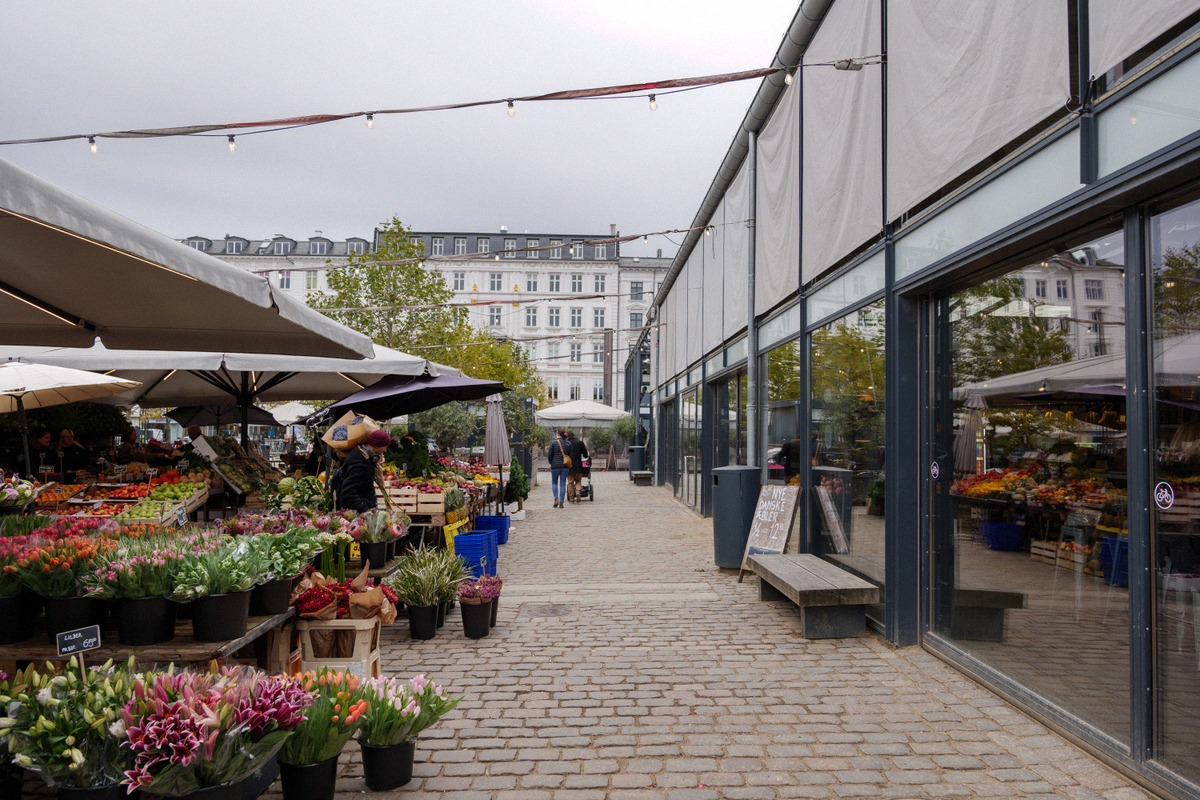
For a good but fast meal, head to Torvehallerne (Frederiksborggade 21, right by Nørreport station): two halls with more than 60 stalls, free to enter, open Mon to Fri 10:00 to 19:00 and Sat/Sun 10:00 to 18:00 (some stalls vary). More on the market halls, the seasonal harbourside market Reffen and the Meatpacking District is in the guide Street Food & Market Halls.

Cinnamon buns and bakeries

Copenhagen's sweet icon is the kanelsnegl, the Danish cinnamon bun - usually cardamom-forward and more strongly spiced than versions found elsewhere. Prices at the trendy bakeries run roughly 30 to 45 DKK a piece in 2026.

  • Juno the Bakery in Østerbro (Århusgade 48) is the benchmark - organic, soft crumb, caramelised exterior, with the cardamom bun priced at around 30 DKK. Open Tue to Sat 7:30 to 18:00, Sun until 16:00, closed Mondays. Fresh batches come out all day, so the old early-riser rule no longer applies, though queues still form.
  • Hart Bageri (from Richard Hart, formerly of Tartine) represents the laminated, more croissant-like school across twelve branches; almost all open daily 7:30 to 18:00, with pastries at 34 to 42 DKK.
  • Lille Bakery (Refshalevej 213B, Wed to Sun 8:00 to 17:00) bakes in the same spirit on the Refshaleøen former shipyard site - simple buns from 15 DKK, more elaborate pastries from around 38 DKK.
  • Andersen & Maillard (Nørrebrogade 62) offers a cream-cheese-glazed version.
  • Skt. Peders Bageri (Sankt Peders Stræde 29), founded in 1652, is the city's oldest bakery and famed for its large Onsdagssnegl - the "Wednesday bun" - of which more than 4,000 are sold every Wednesday.

Coffee - the specialty scene

A cinnamon bun calls for coffee, and Copenhagen takes it seriously. The city has a strong specialty-coffee scene with its own roasteries; as a rule of thumb they open at 7:00 to 7:30 on weekdays and 8:00 at weekends.

  • The Coffee Collective is the established name - nine locations, including the roastery on Godthåbsvej, the original site on Jægersborggade and a stall in Torvehallerne, known for direct trade with coffee farmers. An espresso costs 32 DKK, a cappuccino 38 DKK.
  • Prolog Coffee (Høkerboderne 16, in the Meatpacking District of Vesterbro) is a well-regarded roastery; open Mon to Fri 7:00 to 18:00, weekends 8:00 to 18:00.
  • Andersen & Maillard (Nørrebrogade 62) was opened in 2018 by former Noma and Coffee Collective staff and combines roastery, café and bakery under one roof; further branches are in Nordhavn and the city centre.

A coffee plus a cinnamon bun is the classic Copenhagen break: at 70 to 90 DKK, it's markedly cheaper than a smørrebrød lunch, though still priced like any major Western European city.

Frequently asked questions

What should you make sure to try in Copenhagen?+
Four classics cover the range. Smørrebrød, the generously topped rye bread, eaten classically at lunchtime with a beer or an aquavit. The Danish hot dog from a street cart, with a red sausage, remoulade and crispy fried onions. A cinnamon or cardamom bun from one of the trendy bakeries, paired with specialty coffee from a local roastery. Those with the budget to spare add a menu at one of the New Nordic fine-dining restaurants that built Copenhagen's culinary reputation in the first place.
How much does smørrebrød cost in Copenhagen?+
At the classic top addresses, a single piece runs roughly 120 to 275 DKK in 2026. Schønnemann charges 130 to 230 DKK (herring 130 to 145 DKK, smoked eel up to 230 DKK), Aamanns 1921 charges 135 to 195 DKK per piece or 390 DKK for the lunch set, and Palægade sits at 120 to 275 DKK. Nothing at these houses starts below about 120 DKK per piece. Since most people eat two or three pieces, it works out cheaper to order smørrebrød at a market-hall stall such as Hallernes Smørrebrød in Torvehallerne.
Where is the best classic smørrebrød in Copenhagen?+
The most classic address is Restaurant Schønnemann at Hauser Plads 16, trading since 1877. The menu lists more than 110 varieties, including around 21 herring options alone, plus an extensive aquavit selection. It's open daily from 11:30 to 17:00 (closed in week 33 and over the holidays from 24 December to 4 January); in peak season, book weeks ahead. Aamanns 1921 and Palægade operate at a similar level.
Where can I get the best cinnamon bun in Copenhagen?+
The reference point is Juno the Bakery in Østerbro (Århusgade 48), famed for its cardamom-forward bun with a soft crumb and caramelised exterior, priced at around 30 DKK a piece. It's open Tuesday to Saturday 7:30 to 18:00 and Sunday until 16:00, closed Mondays; fresh batches come out through the day, so queuing at opening is no longer essential. The laminated, more croissant-like style is represented by Hart Bageri (twelve branches, mostly open daily 7:30 to 18:00) and Lille Bakery on Refshaleøen (Wed to Sun 8:00 to 17:00).
Can you eat at Noma in Copenhagen in 2026?+
No, don't count on it. The restaurant at Refshalevej 96 ended regular dinner service at the end of 2024 and has since operated as a food-innovation lab (Noma 3.0). In 2026 there's only a residency in Los Angeles from 11 March to 26 June, priced at around 1,500 USD per person including wine pairing, service and tax, booked through Tock. No pop-up or residency has been announced in Copenhagen itself for 2026.
Which food and drink spots in Copenhagen are free to visit?+
None of the places listed here charge admission - you only pay for what you eat or drink. The Torvehallerne market halls (Mon to Fri 10:00 to 19:00, weekends 10:00 to 18:00) and the harbourside food market Reffen (season from 13 March, stalls open daily roughly 11:30 to 21:30, card payment only) are both explicitly free to enter, as are the Meatpacking District and the food street Jægersborggade. Bakeries, roasteries and hot dog stands likewise cost nothing beyond what you buy. The exceptions are the Michelin-starred restaurants, which require payment upfront: Alchemist around 5,600 DKK, Geranium around 4,200 DKK for the tasting menu, Alouette a 995 DKK deposit.