
Getting There & Around
Ferries from Copenhagen
Oslo, Bornholm & more
Overview
Flight, train, coach, car or ferry, how to reach Copenhagen compared, with 2026 prices and journey times, bridge tolls and the fastest transfer from the airport into town.
Oslo, Bornholm & more
Copenhagen lies in eastern Denmark, right on the border with Sweden, and is easy to reach from across Europe, by air in under two hours from most hubs, by train with a daily direct service from Hamburg that has run again since May 2026, and also by long-distance coach, by car over the big bridges, or on the overnight ferry from Oslo. Which route pays off depends on where you are travelling from and how much time you have. Once you're in the city, the metro, S-train and dense cycle network mean you can usually manage without a car.
| Route | Journey time (approx.) | Cost 2026 | Strength |
|---|---|---|---|
| Flight | 1-2 hrs from most European hubs, plus 13-15 min. transfer | Ticket dynamic, metro 30 DKK | fastest option |
| Train | around 5 hrs from Hamburg | from approx. €27 (Snälltåget) or €28.99 (DB) | comfortable, into the city |
| Coach | around 8 hrs from Berlin | from approx. €26-30 | cheapest option |
| Car | depends on starting point; tolls only at the crossings | Great Belt 205-235 DKK | flexible for the surrounding region |
| Ferry | 17.5 hrs from Oslo (overnight sailing) | from approx. 286 DKK p.p. incl. cabin | travel and a night's stay in one |
Flight, train and coach fares are demand-based and rise noticeably during the summer high season
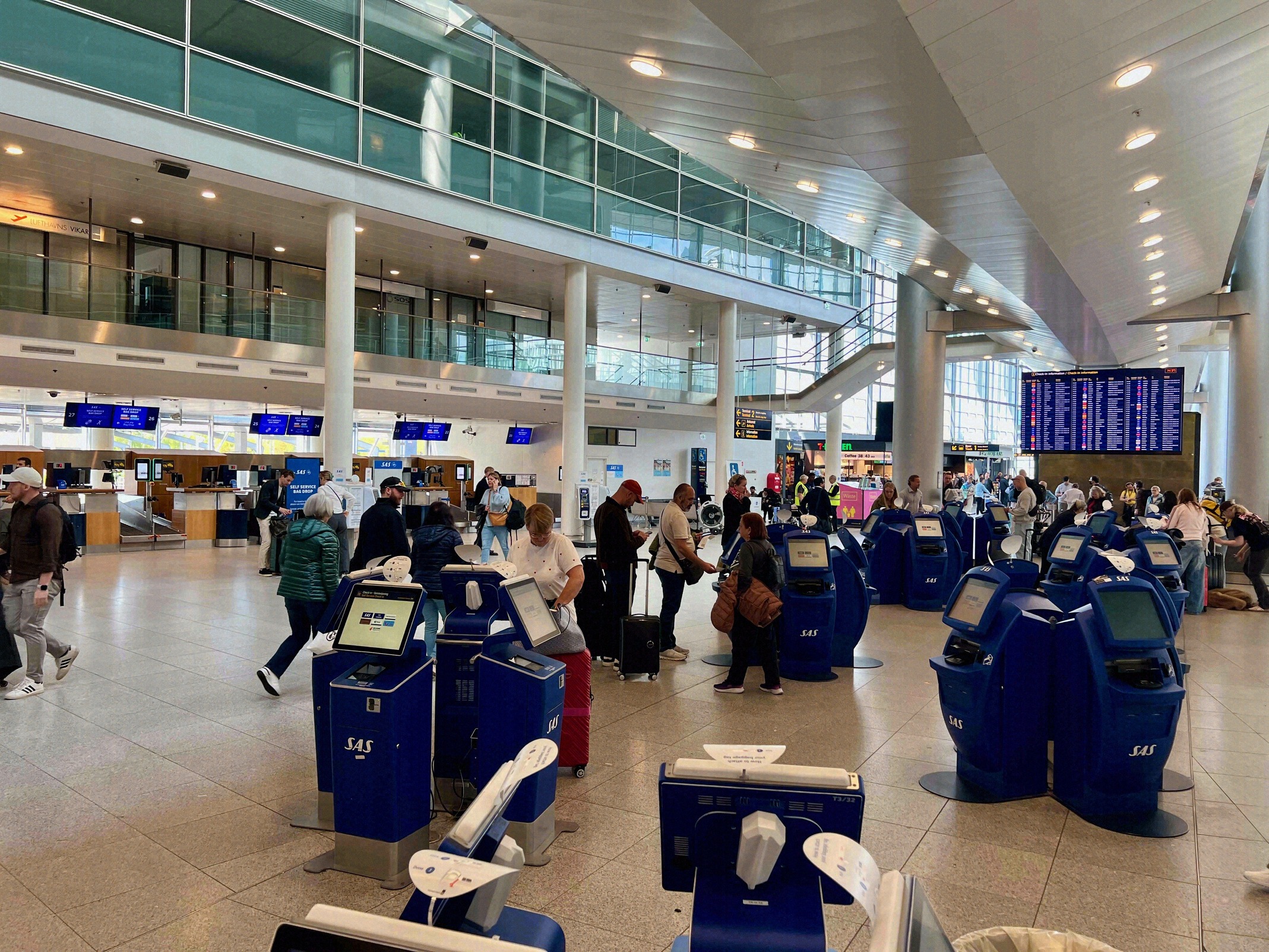
Copenhagen-Kastrup Airport (CPH) is Scandinavia's largest and the fastest gateway into the city. Numerous direct flights connect it to major European cities, from Frankfurt and Berlin in around an hour, from Munich in about 1:35 hours, from Vienna in around 1:45 hours and from Zurich in just under two hours. Alongside SAS and the Lufthansa Group, easyJet, Ryanair and Norwegian also serve individual routes; comparing prices before booking pays off.
The quickest way from the airport into the centre is the M2 metro line or the regional train, both take 13 to 15 minutes. A three-zone ticket costs 30 DKK, is valid for 90 minutes, and works for metro, train and bus alike. For full details on the route, frequency and buying tickets, see the guide Airport to city centre.
The rail link to Copenhagen has improved noticeably in 2026. Since 4 May 2026, the Swedish operator Snälltåget has run daily, year-round, from Hamburg (departing 9:51) via Copenhagen onward to Stockholm. The journey to Copenhagen takes around five hours, with tickets from about €27, fares are dynamic and rise sharply with demand. Important to know: the train stops in Copenhagen at København Syd station, not at the Central Station. From there, S-train and bus services get you into the centre within minutes.
Alternatively, Deutsche Bahn gets you there too. The Super Sparpreis Europa fare on the Hamburg-Copenhagen route starts at €28.99, with the flexible fare around €110 in 2nd class. Bookings open up to six months in advance, the earlier you book, the cheaper it gets. Seat reservations on cross-border Hamburg-Copenhagen trains are compulsory (at no extra charge) from 26 June to 16 August 2026; outside that period they cost €5.50 in 2nd class. Travellers from southern Germany, Austria and Switzerland typically connect via Hamburg.
For context: the much-discussed fixed Fehmarn Belt crossing between Puttgarden and Rødby is not yet in operation in 2026. It was originally due to open in mid-2029; after officially confirmed delays of up to 18 months, it is now expected to enter service around 2031. Until then, train travel runs via the overland route through Jutland.
Travellers watching their budget can reach Copenhagen cheaply by long-distance coach. FlixBus is the main operator, from Berlin the journey takes around eight hours (tickets from about €26-43, roughly five services daily), while from Hamburg tickets start at around €30. The coach is the cheapest but also slowest option; as with rail and air, fares rise with demand in the high season.
Denmark's motorways are toll-free, you only pay at the fixed crossings. From continental Europe, the main route runs through Jutland and over the Great Belt Bridge (Storebæltsbroen), which links the island of Funen with Zealand. The 2026 car rate is 205 DKK at the express rate (via BroBizz or number-plate recognition, no separate contract required since 1 January 2026) and 235 DKK when paying by cash or card.
If you'd rather cut out the Jutland route altogether, take a Scandlines ferry - Rødby- Puttgarden or Gedser-Rostock, and skip the Great Belt toll entirely; the guide Ferries from Copenhagen compares the connections in detail.
Coming from Sweden, or via the combined route through Malmö, the way in is over the Øresund Bridge. For a car up to 6 metres, an online ticket costs 665 SEK, or 745 SEK paying by cash or card at the toll station. With the ØresundGO discount scheme (annual fee 530 SEK) you pay just 260 SEK per crossing long-term. Higher rates apply for motorhomes and vans.
The main ferry route out of the city itself is the overnight sailing to Oslo: it departs daily at 16:30, takes around 17.5 hours, and combines the crossing with a night's stay in one - a cabin is always included in the ticket, with fares starting at around 286 to 293 DKK per person. There is, on the other hand, no longer a ferry between Malmö and Copenhagen, train and car now cover that Øresund crossing. All connections, fares and how to reach the terminal are covered in the guide Ferries from Copenhagen.
Within Copenhagen itself, a car is more of a hindrance than a help. There's no congestion charge like in London, but a low-emission zone (Miljøzone) covering the centre and Frederiksberg, high parking pressure, and a dense, physically separated cycle network all keep car traffic in check. Parking charges rose sharply from 1 January 2026:
Charges have also applied on weekends and public holidays since 1 April 2025, though the first hour is free from Saturday 17:00 to Monday 08:00 and on public holidays (registration required). For the compact city centre you won't need a car at all: metro, bus, S-train and the bicycle get you everywhere. For how best to get around locally, including the 24-hour metro, harbour buses and app-based bike hire, see the guide Public transport in Copenhagen.