
Round Tower
Viewing tower with observatory and spiral ramp
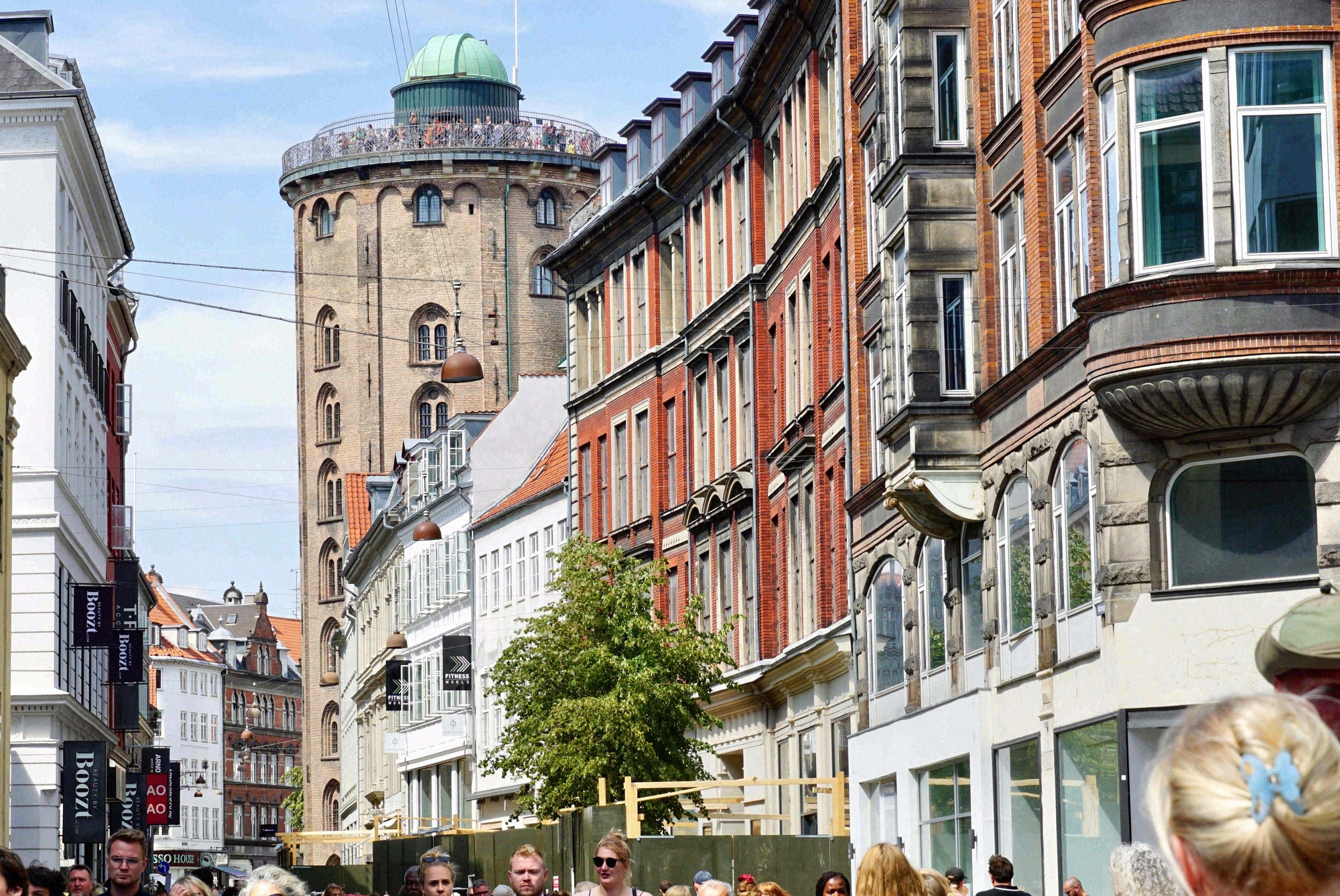
The Round Tower (Rundetårn), Copenhagen's tower from 1642, holds Europe's oldest working observatory. A spiral ramp with just over seven turns leads up to a view over the old town.
Contents
A tower with a spiral ramp
The Round Tower was built between 1637 and 1642 under King Christian IV and is one of the landmarks of Copenhagen's old town. Its defining feature is the spiral ramp: instead of steps, a gently rising walkway winds just over seven times around the tower's core all the way to the top. This let carts haul heavy astronomical instruments up to the observatory. Only at the very top do two short flights of wood and stone stairs lead the final stretch to the viewing platform.
Europe's oldest observatory
At the summit sits the observatory, the oldest observatory building in Europe still in use. Christian IV had the tower built specifically for the astronomers of the University of Copenhagen, who used it as the centre of Danish astronomy for centuries. The university observatory moved elsewhere in 1860 and the tower fell out of use for a time; it was rebuilt as an observatory for amateurs and the public in 1928/29. Today's telescope is a refracting lens telescope from 1929 with 80 to 450 times magnification. Over the winter half of the year the observatory is normally staffed by astronomers on Tuesday and Wednesday evenings, on a clear night you can look through the telescope yourself.
Halfway up sits the old library hall, now used for changing exhibitions and concerts.
Renovation and Lightyear 2026
2026 marks the 350th anniversary of Ole Rømer's measurement of the speed of light, and the tower is dedicating the whole year to the theme of light under the title Lightyear 2026. The library hall hosts four exhibitions chosen by open call, plus a themed exhibition on Rømer running from 6 February 2026 to 4 January 2027.
At the same time, the tower is undergoing restoration: the roughly three-tonne dome and the 1929 telescope are being overhauled, the telescope itself was removed in late 2025 and sent to a specialist workshop in Germany. What this means for a visit in 2026:
- The tower was fully closed from 5 January to 5 February and reopened on 6 February.
- The observatory is expected to stay closed until October 2026, looking through the telescope won't be possible during this period.
- The viewing platform may be affected on individual days around the reinstallation of the dome. Check the official website for the current status.
What to expect
At the top, a platform wraps around the tower's summit with views over Copenhagen's red rooftops, church spires and domes. Allow 45 to 60 minutes for the whole visit, including the climb and a short pause at the top. It's best in the morning on a clear day.
- Admission: adults 60 DKK, students with ID 40 DKK, children under 17 free.
- Tickets are sold only at the box office on site; online advance booking is available for events only.
- Opening hours: summer (April to September) daily 10:00-20:00, winter (October to March) daily 10:00-18:00. Closed on 24/25 December and 1 January; open only until 15:00 on 31 December.
- Accessibility is limited: the ramp itself is easy to walk, but two flights of stairs lead to the platform. The library hall's exhibition rooms, however, are accessible.
Getting there & combining your visit
The Round Tower stands in the middle of Indre By (the city centre), right on the shopping street Strøget. A visit pairs well with a stroll through the centre - Rosenborg Castle, with its crown jewels and palace garden, is just a few minutes' walk away. If you enjoy viewing towers, combine your visit with the dome climb at Marble Church. For more ideas, see the overview of Copenhagen's must-see attractions.
Frequently asked questions
Why does the Round Tower have no staircase? +
How much does it cost to visit the Round Tower? +
Is the Round Tower accessible? +
Is the view from the Round Tower worth it? +
Nearby
Trinitatis Kirke
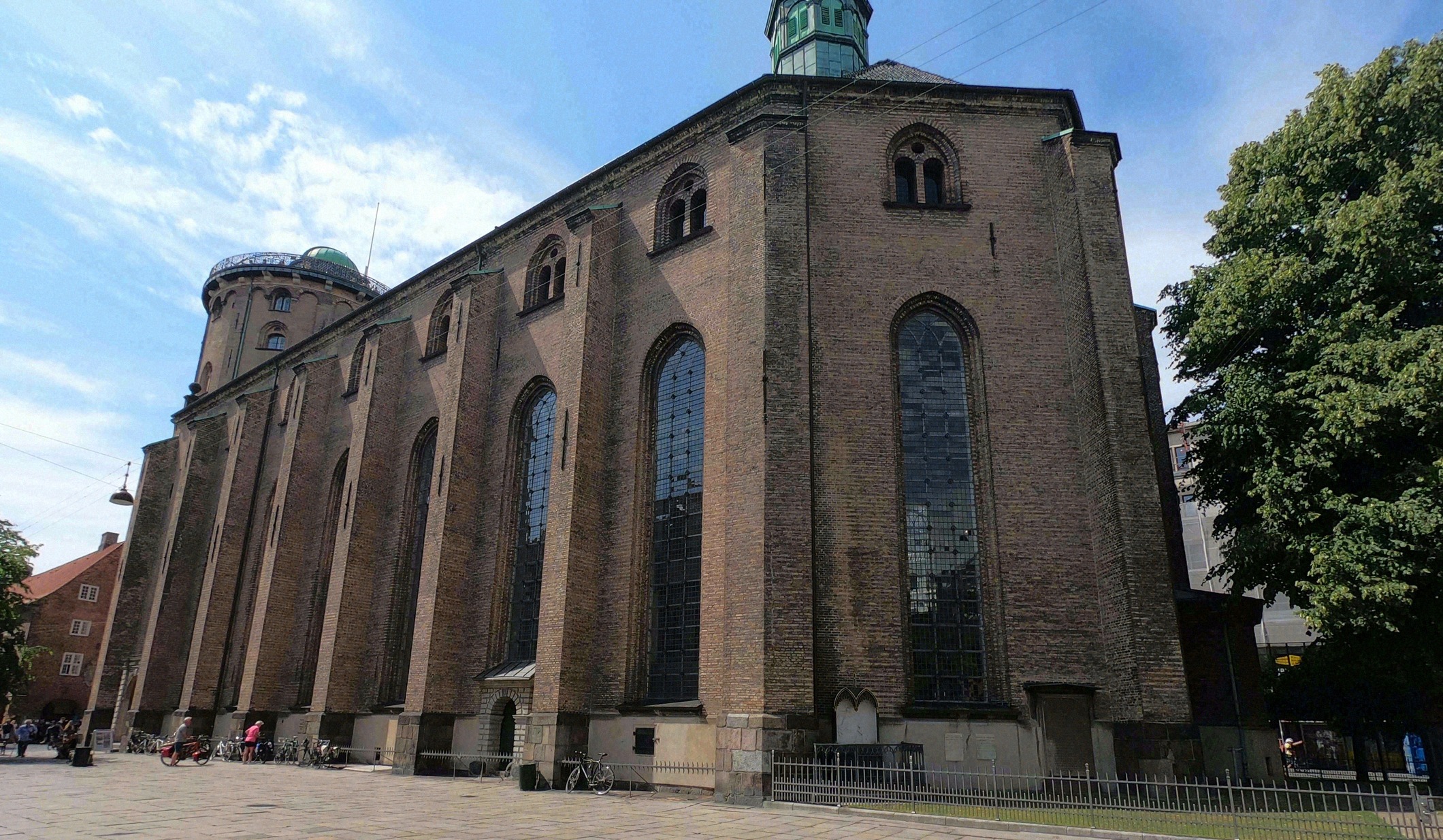
University church of Christian IV in the old town, physically joined to the Round Tower. Bright interior, active music programme, free admission.
Helligåndskirken
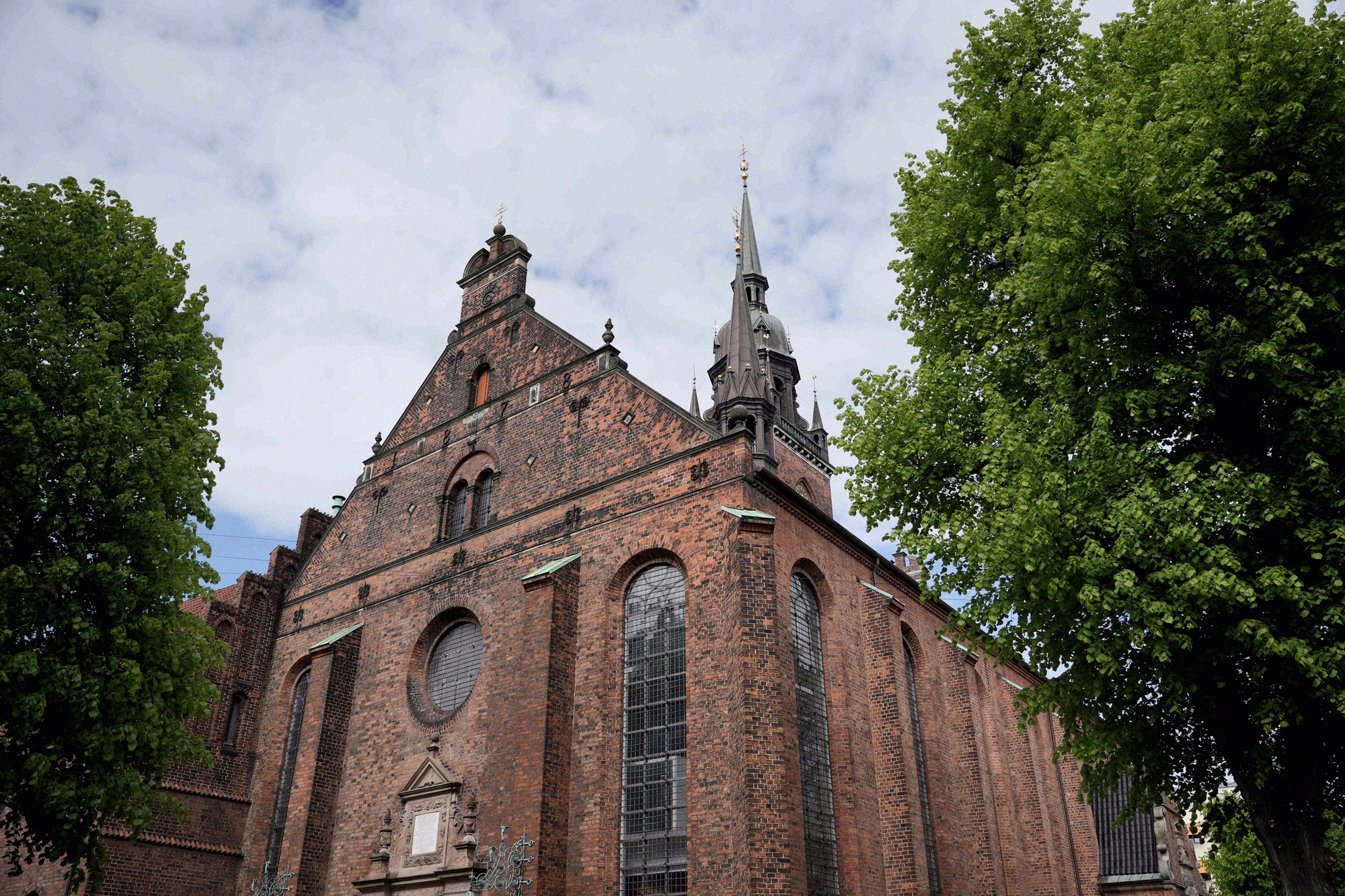
Medieval Church of the Holy Spirit right on Strøget by Amagertorv. Reopened in March 2026 after a two-year renovation, with a Greenlandic congregation.
Copenhagen Cathedral (Vor Frue Kirke)
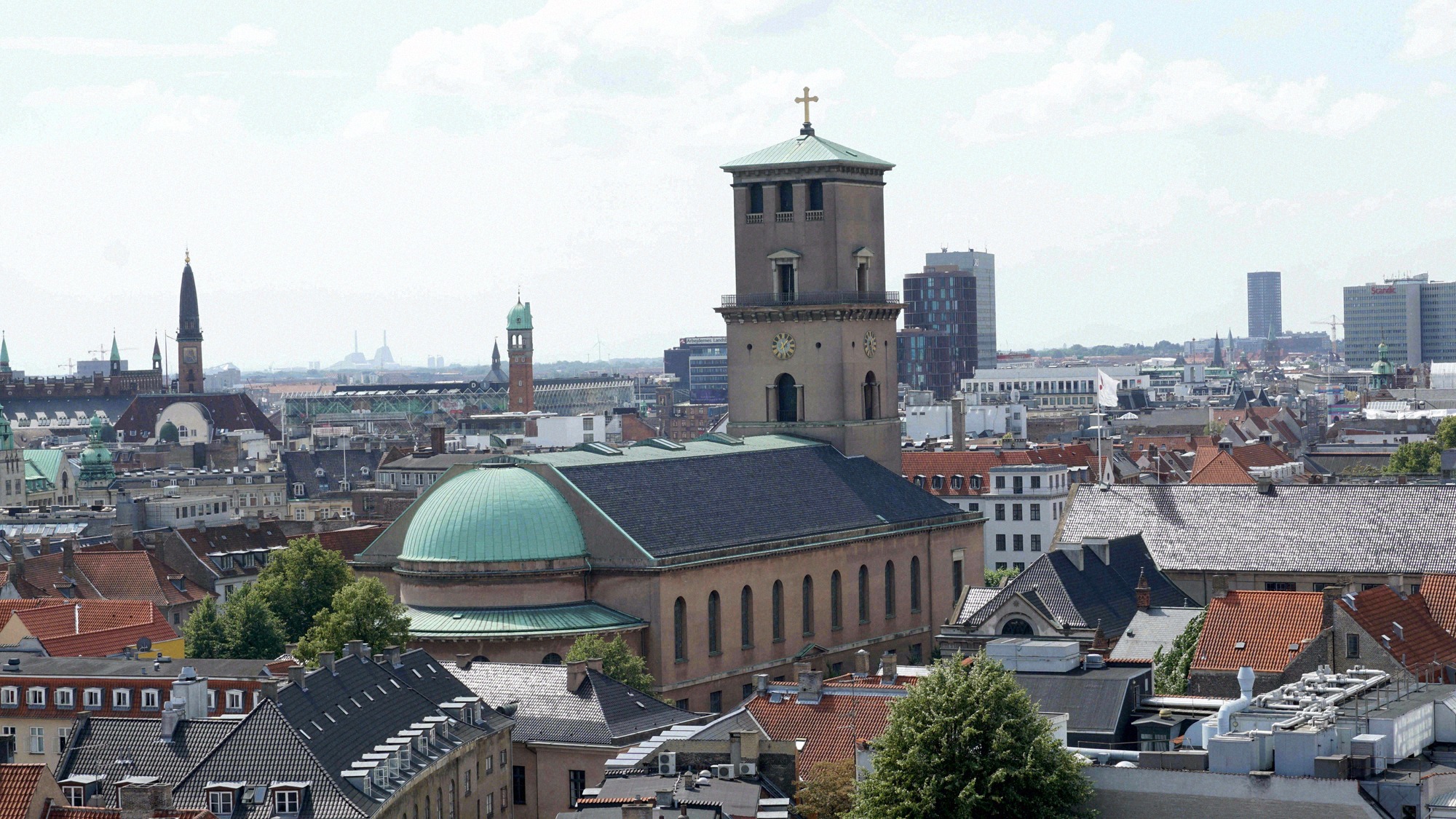
Vor Frue Kirke on Frue Plads is Copenhagen Cathedral: a neoclassical church by C. F. Hansen with Thorvaldsen's Christ figure and row of apostles. Free entry.
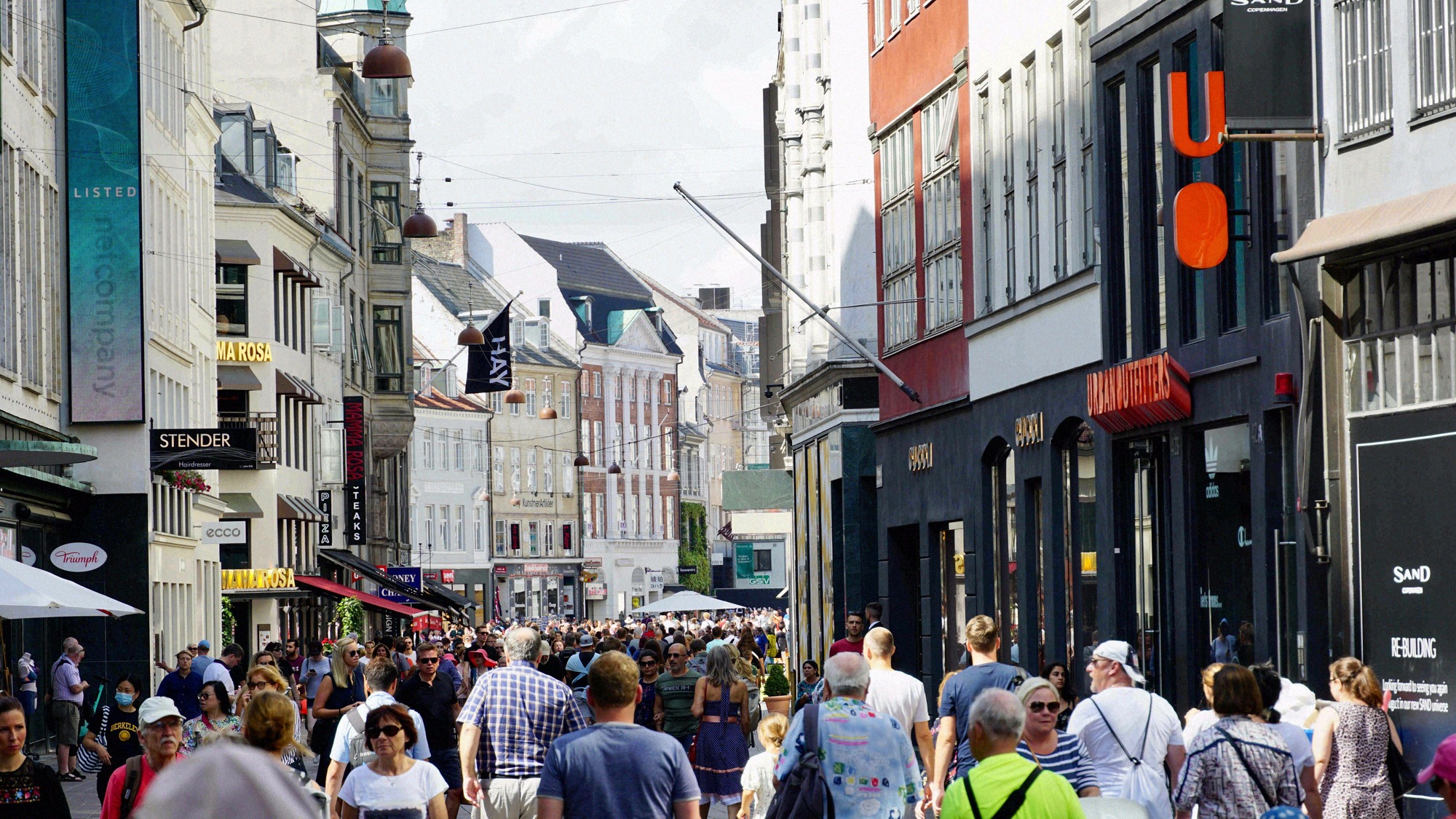
Strøget
Strøget is Copenhagen's main pedestrian axis, around 1.1km of car-free shopping street running from City Hall Square to Kongens Nytorv, one of Europe's longest.
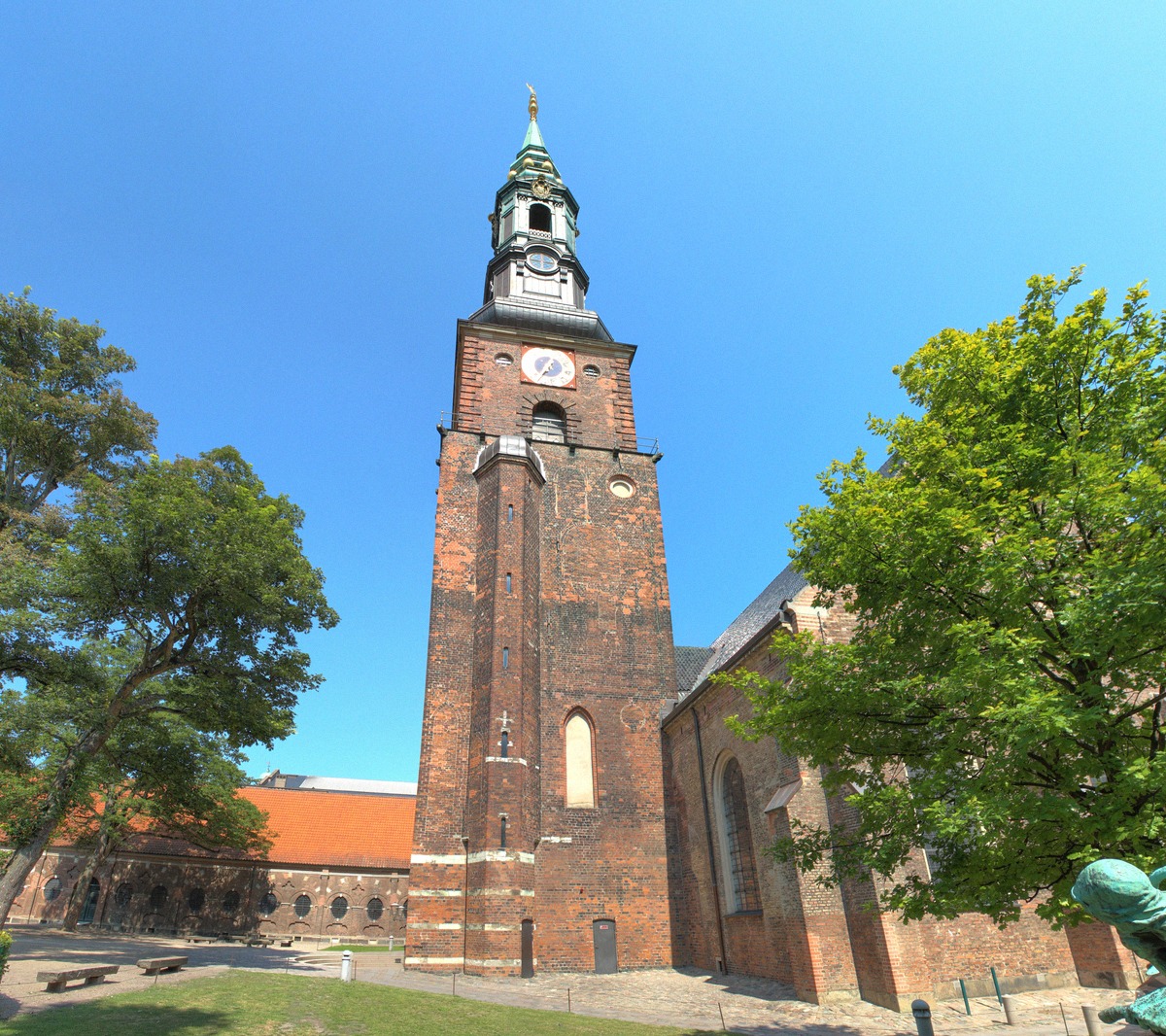
Sankt Petri Kirke
Sankt Petri Kirke is the oldest surviving church in central Copenhagen and home to the city's German congregation. Don't miss the baroque burial chapels with their herb garden.
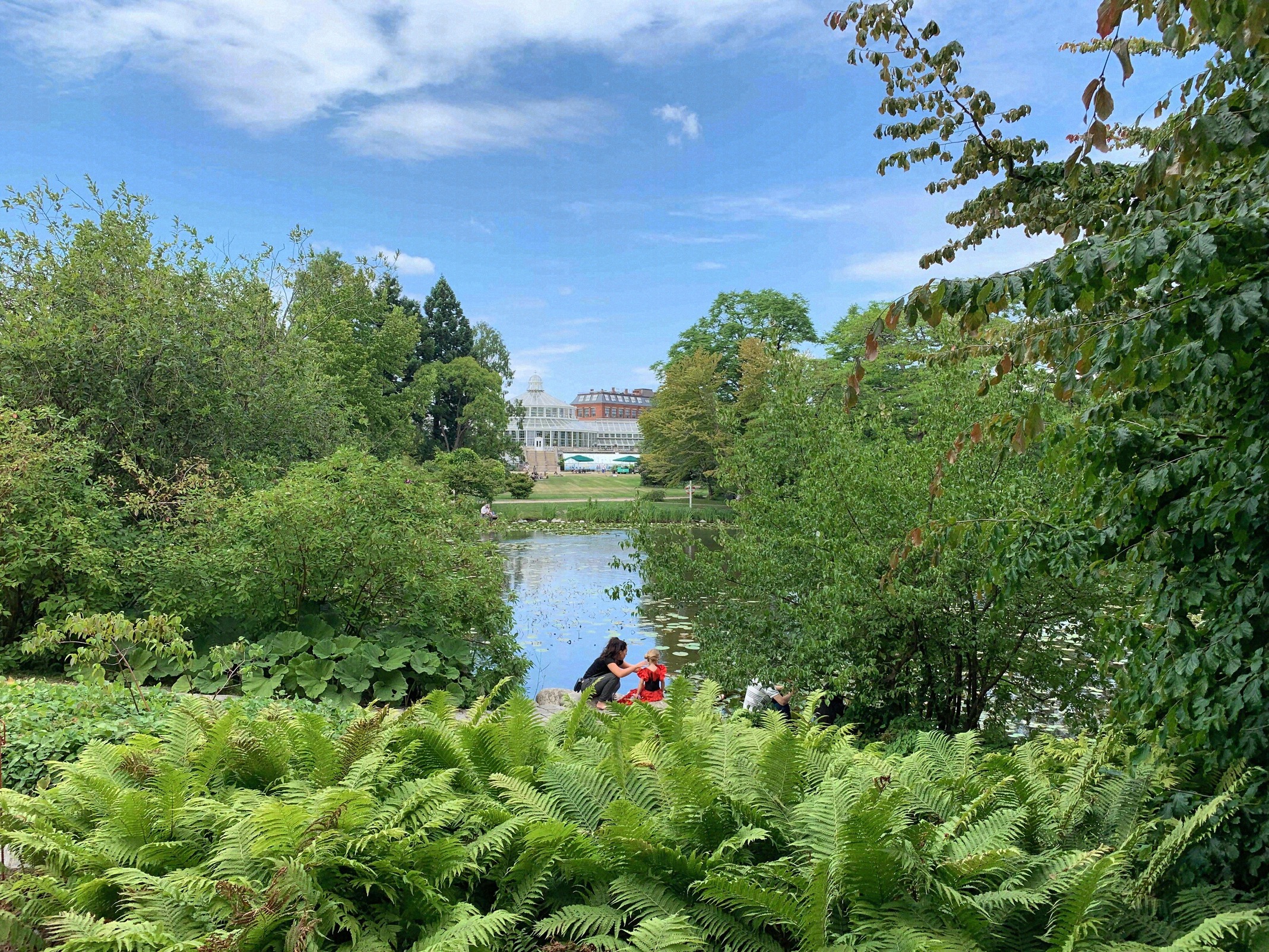
Botanical Garden
Botanisk Have, the University of Copenhagen's free garden at Nørreport, with a lake landscape, glasshouses and the historic glass-and-steel Palm House.