
Trinitatis Kirke (Trinitatis Church)
Baroque church interior, organ and Friday concerts
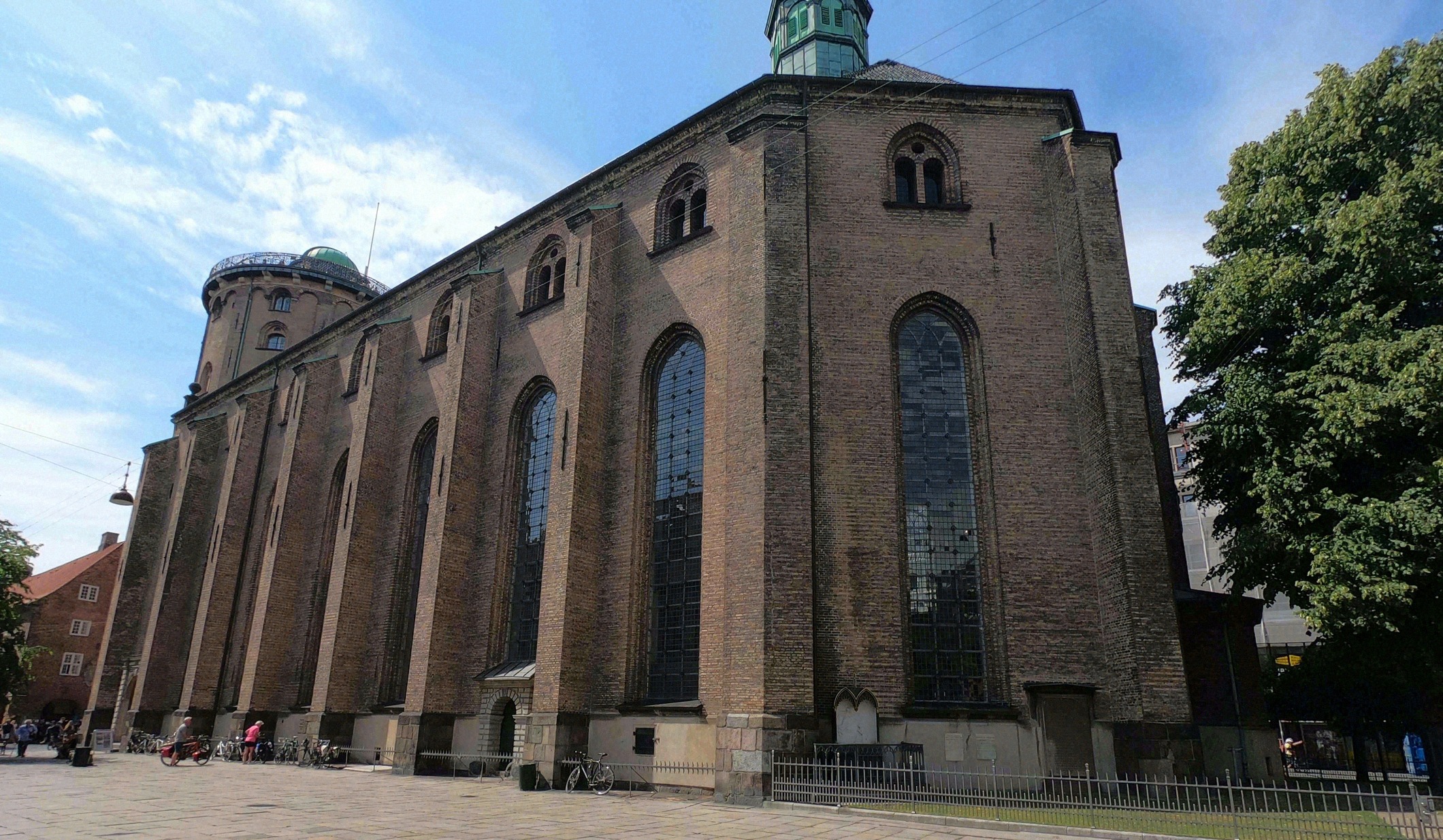
The church next to the Round Tower was consecrated in 1656, burned out in 1728 and was refitted by 1732. It is free to enter, and there is a concert on Fridays at 16:30.
Contents
White walls, gilded vaults
The nave is light and whitewashed. Two rows of seven identical octagonal piers divide the room into a central aisle and two side aisles, eight bays long. Each bay carries a pointed rib vault with gilded ribs, regilded in 1982/83. The sixth bay has a large keystone with the royal coat of arms. The organ gallery hangs at the south-west end, and the floor is laid in a pattern of grey and reddish-brown tiles; after the fire, tiles from the island of Öland were used for it.
The foundation stone was laid on 7 July 1637, and the church was consecrated on 1 June 1656, Trinity Sunday. Hans van Steenwinckel the Younger began the building, and Leonhard Blasius and Albertus Mathiesen carried it on. Until 1869 it was called the Students' Church or Regensen Church, and in popular speech the Round Church. Then it became a parish church. When it was finished it was, after Copenhagen Cathedral (Vor Frue Kirke), one of the largest churches in the city.
In the city fire of 1728 it lost almost all its furnishings. Only the altar silver was saved, and walls and vaults held. It was reconsecrated on 7 October 1731. Since 1817 the north side has been the main facade, with portals by Peder Malling. There were restorations in 1834/35, 1869-71 and 1982/83, and the last brought the interior close to its appearance of the 1730s.
Altar, pulpit, pews and font
J. F. Ehbisch made the altar and pulpit in 1731. The wood stood unpainted until 1756 and was then painted to look like marble and gilded. On the altar are the crucified Christ with Mary and John, flanked by figures of Faith and Grace. The pulpit carries figures of Love, Hope and Faith, and under the sounding board sits a dove of 1934. The angels at the chancel rail are attributed to Ehbisch.
The pews were made after the fire, long ones in the middle and shorter ones along the outer walls. Shell carvings by Hendrich Fischer decorate the pew ends, and 103 of the 138 shells date from 1730-32. The font of white Italian marble by Didrick Gercken (1731) was replaced by a new one in 1956 and rediscovered around 1982-87, and it is in use again. The large baroque clock by Peter Michael Abel (1757) still runs. The largest painting, The Blessing by Anton Dorph, was donated in 1873.
Organs and the week in church
The organ case by Lambert Daniel Kastens (1731) still stands. Behind it, a Marcussen & Søn organ has been at work since 1956, enlarged to 53 stops in 1977, and its case bears the royal coat of arms. Since 1987 there has also been a choir organ with nine stops by Poul-Gerhard Andersen, in a case designed by Inger and Johannes Exner, between the northern piers. The church's chamber choir has existed since 1993.
On Wednesdays at 16:15 from September to May there is Evensong, on Thursdays from 14:30 to 16:30 a sing-along afternoon together with the cathedral, and on Fridays at 16:30 a concert. Several concerts take place in December. In March 2027 the St John Passion (17 March) and the Easter concert of DR Vokalensemblet (18 March) follow.
Vault, epitaphs and churchyard
Under the chancel lie 15 burial vaults, each with its own access. They were opened and repaired in 1926/27, and about 125 coffins were found. During the Second World War the Torah scroll of the Copenhagen synagogue was hidden in the crypt.
Nine epitaphs have survived in the church. The one for Hans Schack from 1687, by Artus Quellinus the Younger, stands on the north side of the chancel. The most recent, for Terkel Klevenfeldt (1798), has a portrait medallion by Johannes Wiedewelt. The master builder Laurids de Thurah was buried in the nave in 1759, and a plaque on the north wall between the sixth and seventh bays commemorates him. In the churchyard stand monuments to the poets Johannes Ewald and Johan Herman Wessel (Otto Evens, 1879).
The library above the nave
From 1657 to 1861 the university library occupied the space above the church. Its hall is now part of a visit to the Round Tower (Rundetårn), together with exhibitions.
Frequently asked questions
Is Trinitatis Kirke the same as the Round Tower? +
Do you pay for concerts? +
Can you see the vault under the chancel? +
Nearby
Round Tower (Rundetårn)
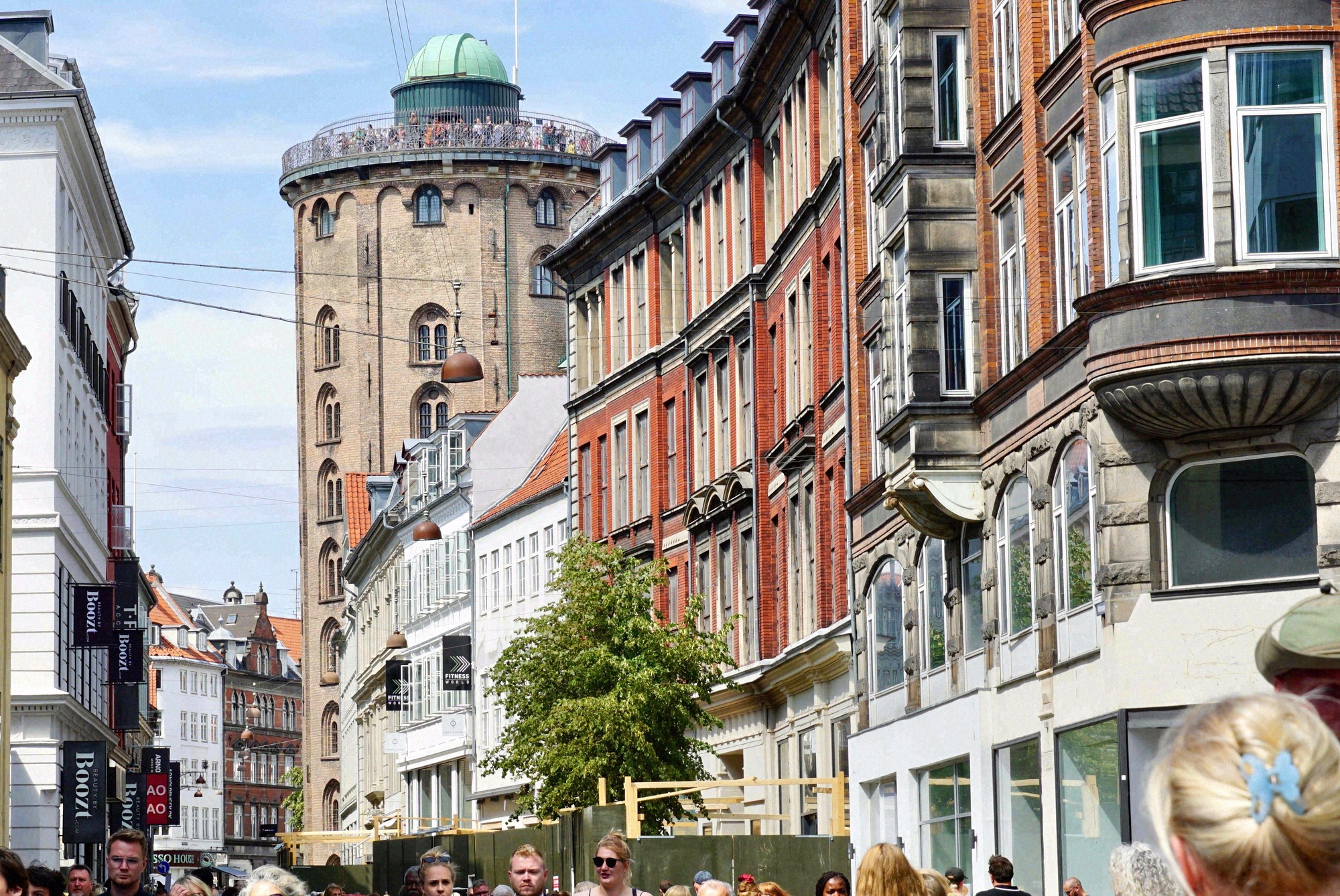
The Round Tower (Rundetårn) of 1642 has no staircase. A spiral ramp about 200 metres long leads almost to the platform, and the restored observatory sits at the top.
Church of the Holy Spirit (Helligåndskirken)
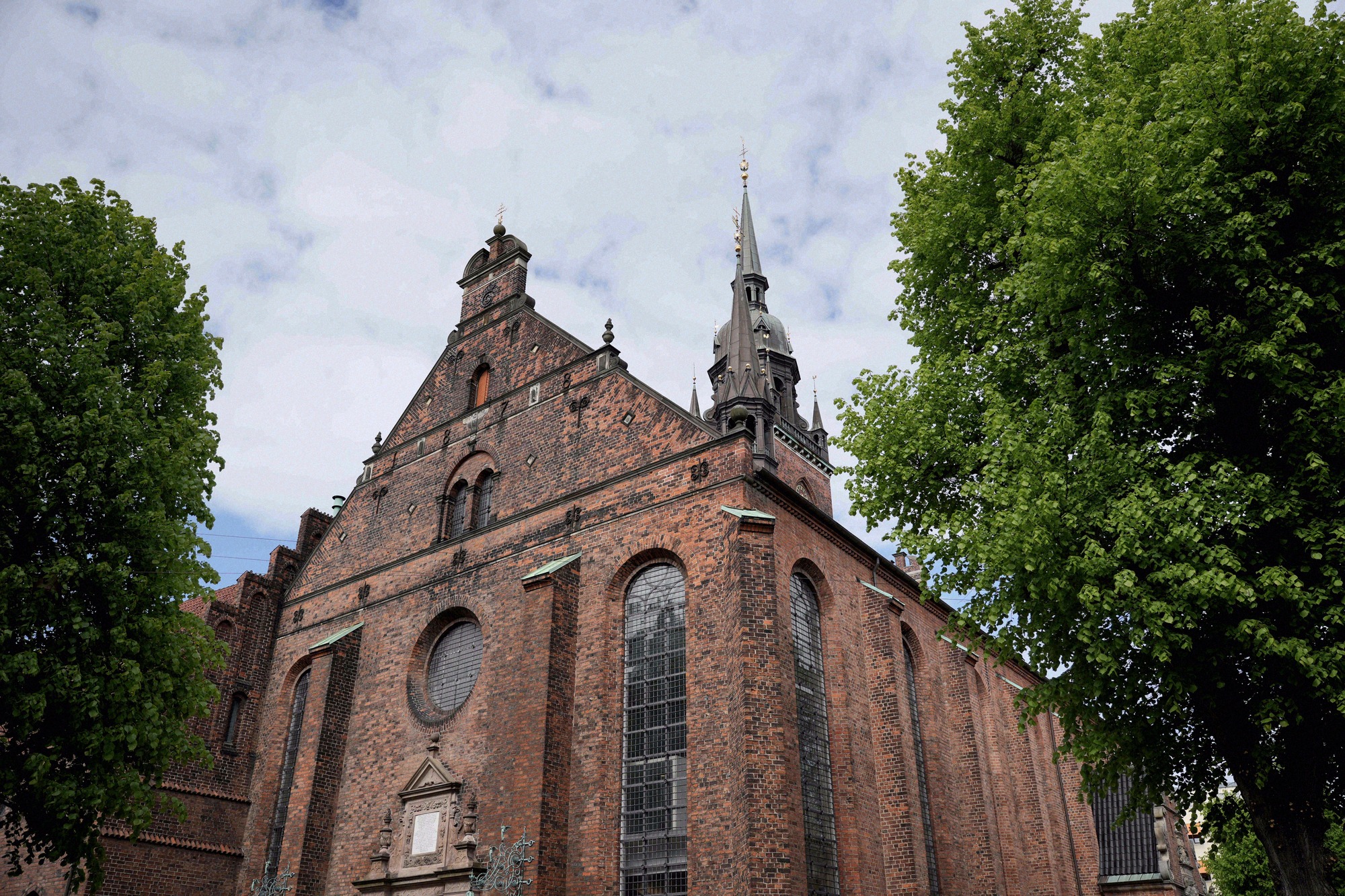
The Church of the Holy Spirit on Amagertorv goes back to a hospital of the late 13th century. The Helligåndshuset survives from the monastery, and the parish also holds services in Greenlandic.
Strøget
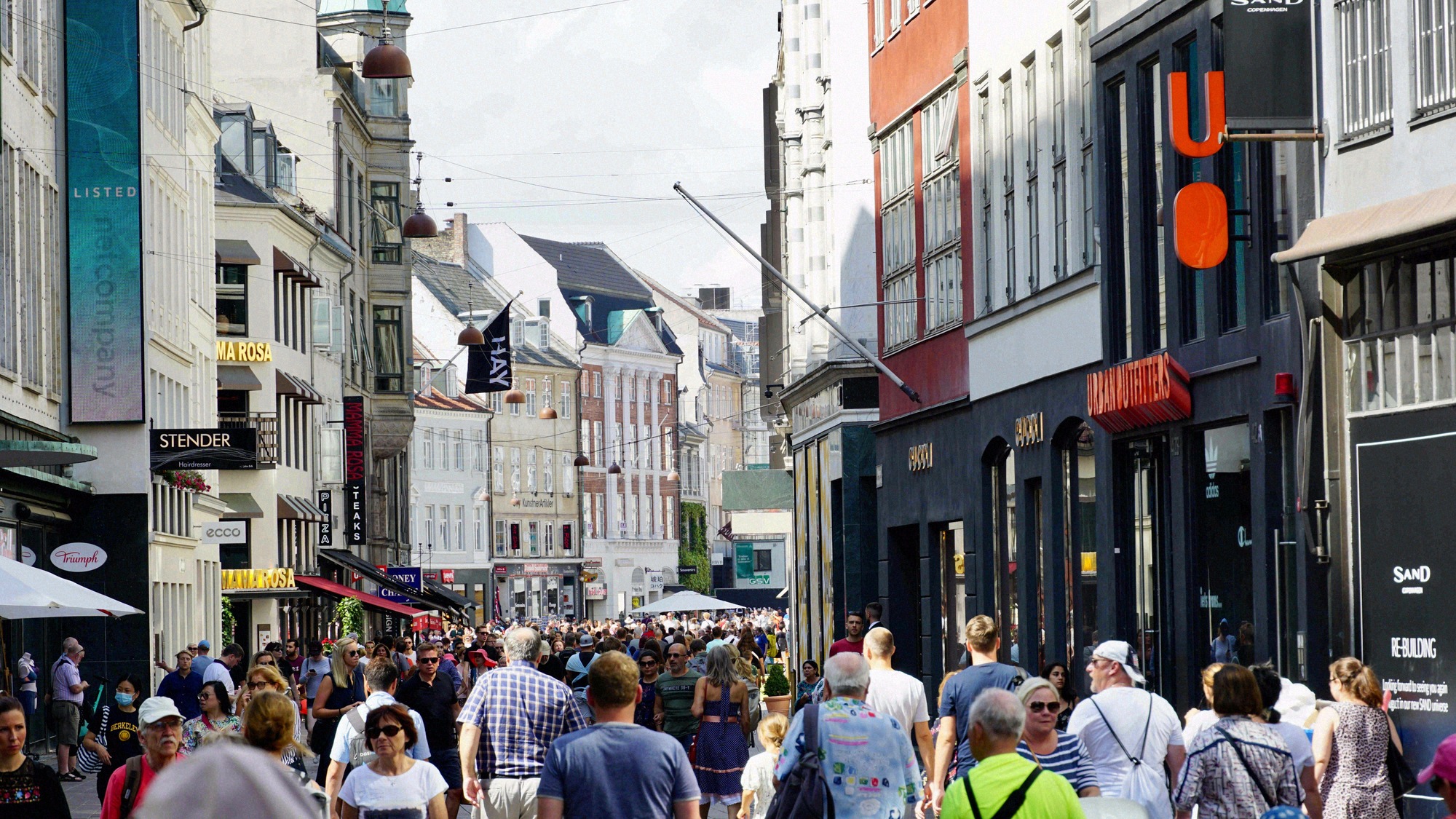
Strøget links Rådhuspladsen and Kongens Nytorv through the old town: four streets, three squares, department stores and a pedestrian zone that began as a trial in 1962.
Copenhagen Cathedral (Vor Frue Kirke)
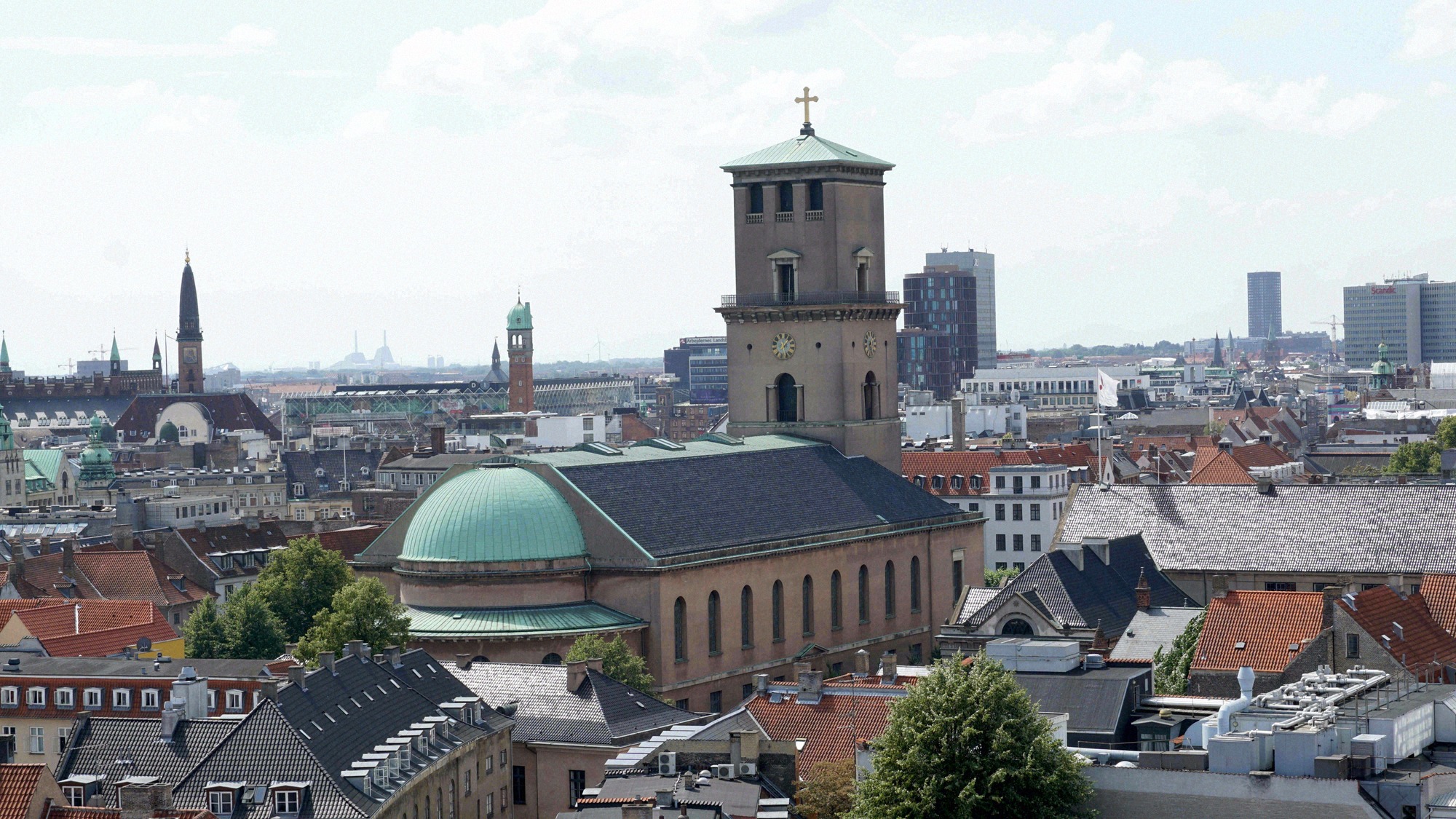
Copenhagen Cathedral (Vor Frue Kirke) on Frue Plads was rededicated in 1829 after fire and bombardment. Thorvaldsen's Christ and the twelve apostles stand in the nave, and entry is free.
Sankt Petri Kirke
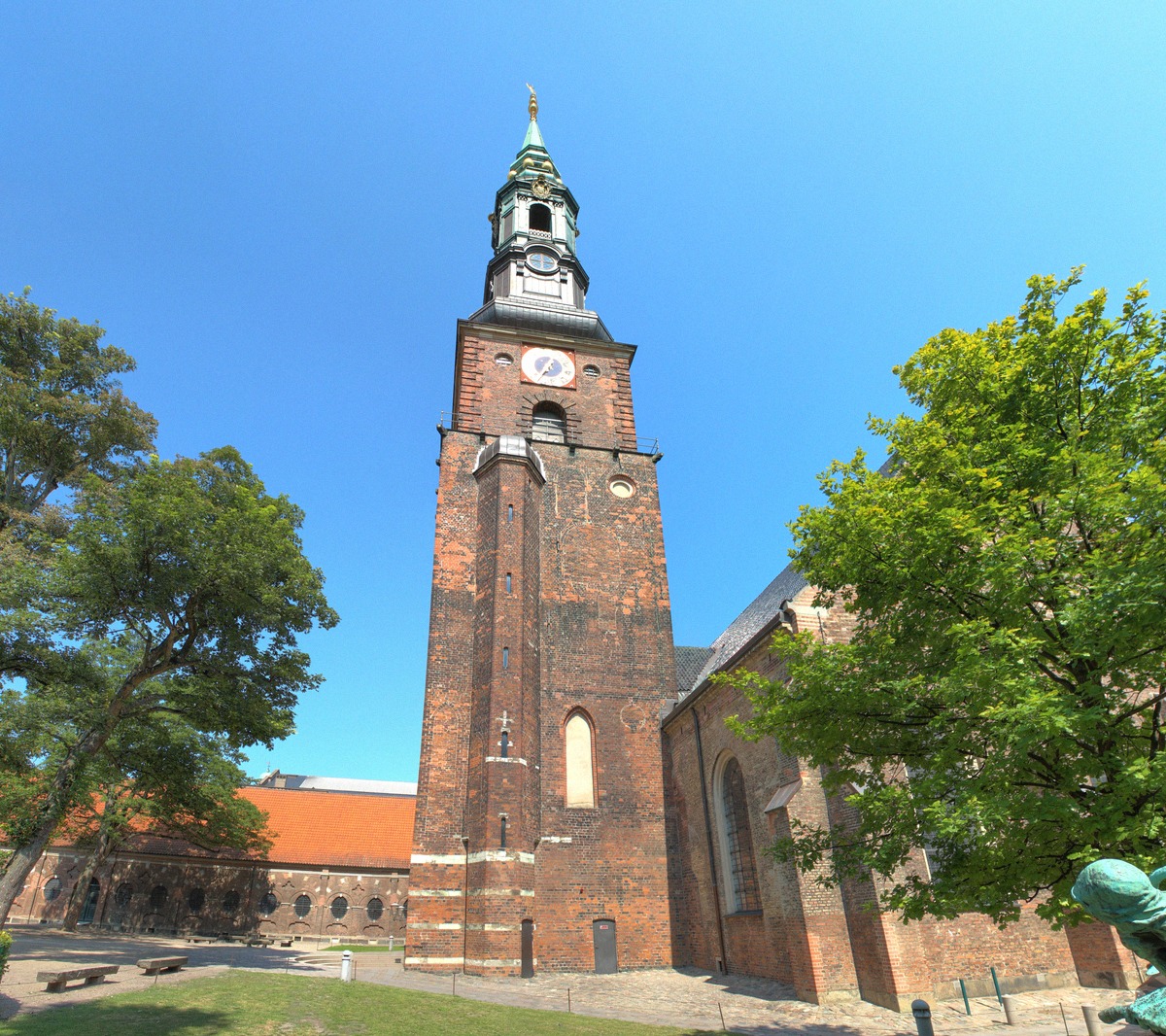
Sankt Petri Kirke (St Peter's Church) is the church of Copenhagen's German congregation. The Gothic brick building has burial chapels and, under the north transept, a large vault.
Botanical Garden
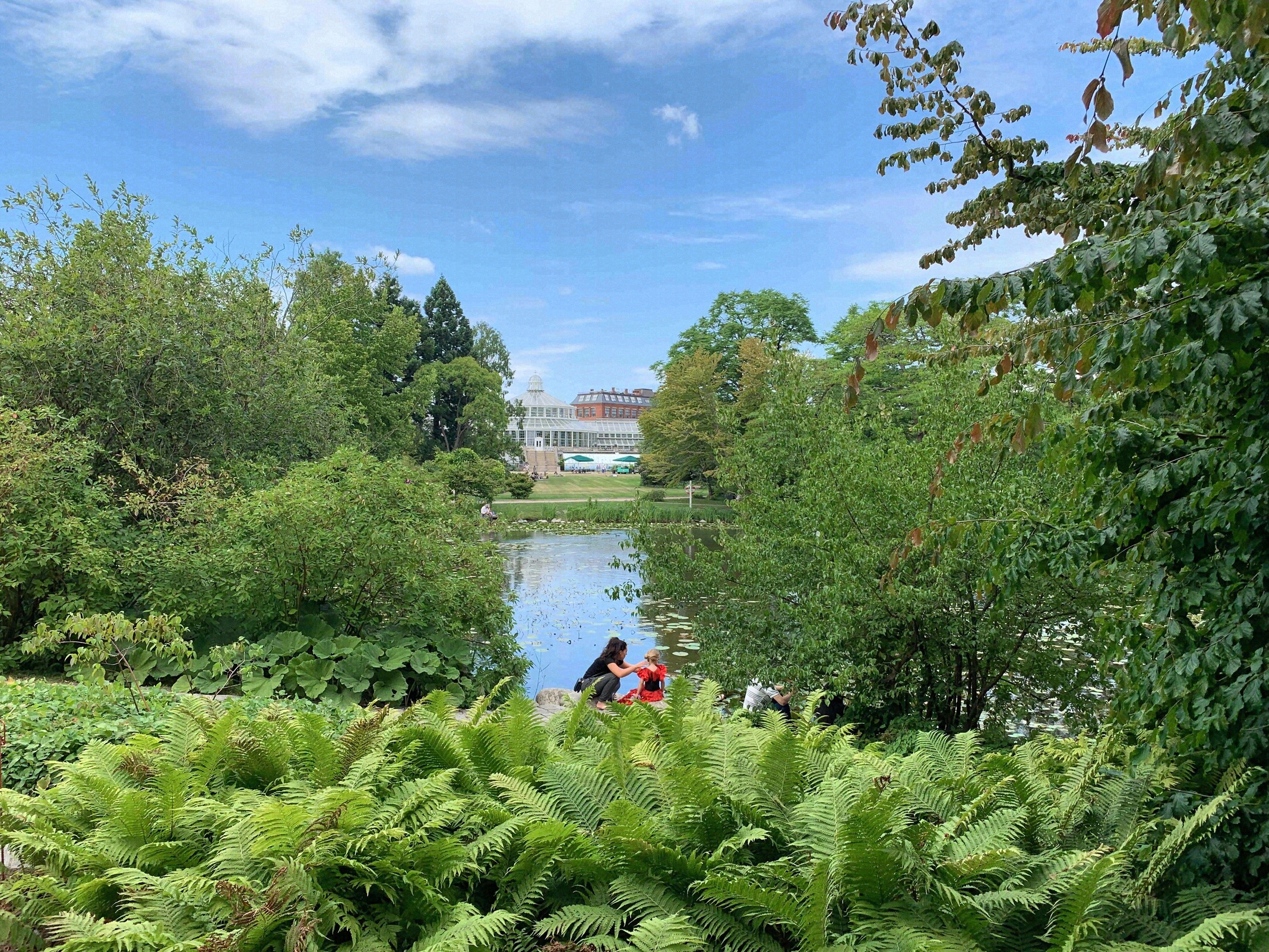
The Botanical Garden on Gothersgade is free. The Palm House of 1874 is 16 m high with a gallery, and its Dry Tropics section is closed for renovation.