
Copenhagen Cathedral (Vor Frue Kirke)
Neoclassical cathedral with Thorvaldsen's Christ and royal weddings
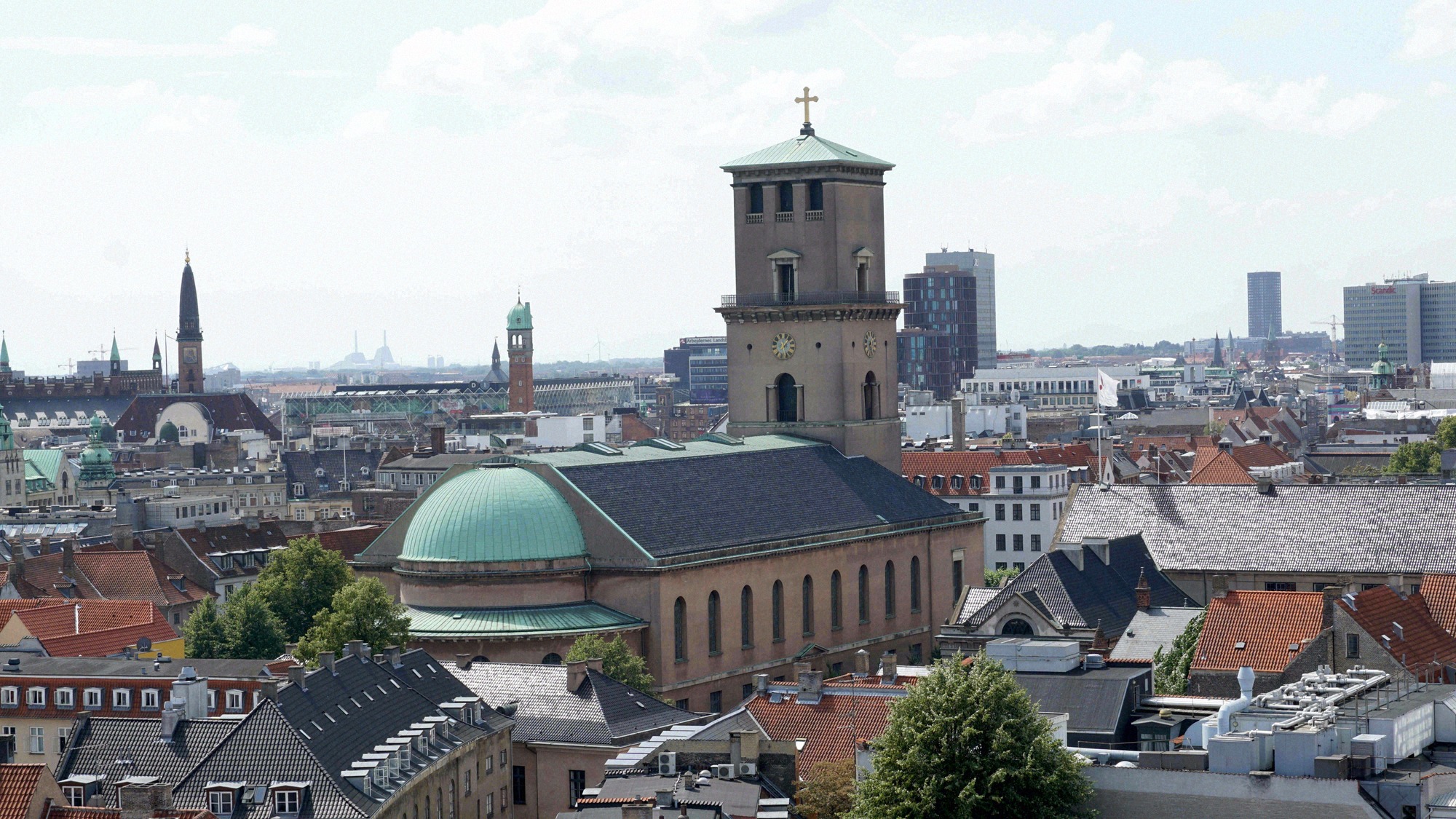
Copenhagen Cathedral (Vor Frue Kirke) on Frue Plads was rededicated in 1829 after fire and bombardment. Thorvaldsen's Christ and the twelve apostles stand in the nave, and entry is free.
Contents
The cathedral and Thorvaldsen's Christ
Vor Frue Kirke, the Church of Our Lady, is Copenhagen's cathedral and has had that rank since the 1920s. Its main sight is at the far end of the nave: Bertel Thorvaldsen's figure of Christ, about 3.45 m high, with open arms in the apse. The inscription on the plinth, "Kommer til mig" (Come unto me), is a line from Matthew 11:28. The figure replaced a planned altarpiece by J. L. Lund. Thorvaldsen received the commission in 1819, the statue was shipped from Italy in 1833 and it was set up in 1839.
Along the sides stand the twelve apostles in marble, each with a medallion of a putto above. Paul takes the place of Judas Iscariot. The plaster models arrived by ship, the Therese, in 1828 and proved too large for the niches in the pillars, which is why the figures stand free on plinths. Andrew and Jude Thaddeus were reworked in Rome and reached their places in 1848.
In front of the altar kneels the baptismal angel with a scallop shell, in use from 1839; Thorvaldsen had made a standing version in 1823. The reliefs are easier to miss. "Caritas" and "The Guardian Angel of the Child" hang near the entrance (1840), "The Road to Calvary" in the apse and "The Entry into Jerusalem" under the portico. Above the portal, the tympanum "John the Baptist Preaching" was unveiled in clay in 1838 and replaced in bronze in 1928.
Fire, bombardment and a new building
The first church was built in the late 12th century on the highest point of the city and consecrated in 1209. It burnt in 1314 and was rebuilt in brick. On 20 October 1728 the great fire of Copenhagen destroyed it again, and the bombardment of 1807 damaged it so badly that a new building was needed.
Christian Frederik Hansen built today's cathedral from 1817 to 1829, reusing old masonry and the tower. The interior is neoclassical: a portico with six fluted Doric columns outside, and inside a coffered vault modelled on the Pantheon. It seats more than 1,000 people, and the nave is about 60 m long and more than 25 m high. When the cathedral was consecrated on 7 June 1829 the sculptures were still plaster. A thorough renovation followed in 1977-79.
The tower is around 60 m high and holds four bells. The oldest dates from 1490, was cast by Oluf Kegge and rings for the morning service. The Stormklokken ("storm bell"), at four tonnes, is the largest bell in Denmark.
Royal weddings, coronations and funerals
Earlier churches on the site were used by the royal house. Margrete and Håkon VI married here on 9 April 1363. On 28 October 1449 Christian I and Dorothea were crowned and married in a single ceremony, and Dorothea was the first queen crowned here. Christian III was crowned on 12 August 1537, Frederik II in 1559 and Frederik III on 23 November 1648. In the present cathedral Crown Prince Frederik married Mary Donaldson on 14 May 2004.
Funeral services were held here for Thorvaldsen (1844), Kierkegaard (1855) and H. C. Andersen (1875), though none of them is buried in the church. Kierkegaard gave communion addresses here in 1847 and 1848. In the crypt, a small museum shows models of the earlier buildings.
Services, choirs and organs
Services take place on Sundays and public holidays and on Friday and weekday mornings, and baptisms, weddings and funerals are held in between. The main organ by Marcussen was installed in 1995 and the choir organ in 2002. The boys' choir Københavns Drengekor, founded in 1924 by Mogens Wöldike, has been attached to the church since 1959, and the ensemble Vor Frue Kantori sings at the services.
When the doors are closed
The weekly opening hours have gaps, so arriving at 16:00 on a Tuesday or Wednesday finds the doors shut. Plan something nearby and return before or after.
On the corner of Nørregade and Sankt Peders Stræde, Sankt Petri Kirke is the nearest alternative. Trinitatis Kirke and the Round Tower stand in the same part of the old town.
Frequently asked questions
What is the night church? +
Where is the entrance to Vor Frue Kirke? +
Is there parking at the cathedral? +
Nearby
Sankt Petri Kirke
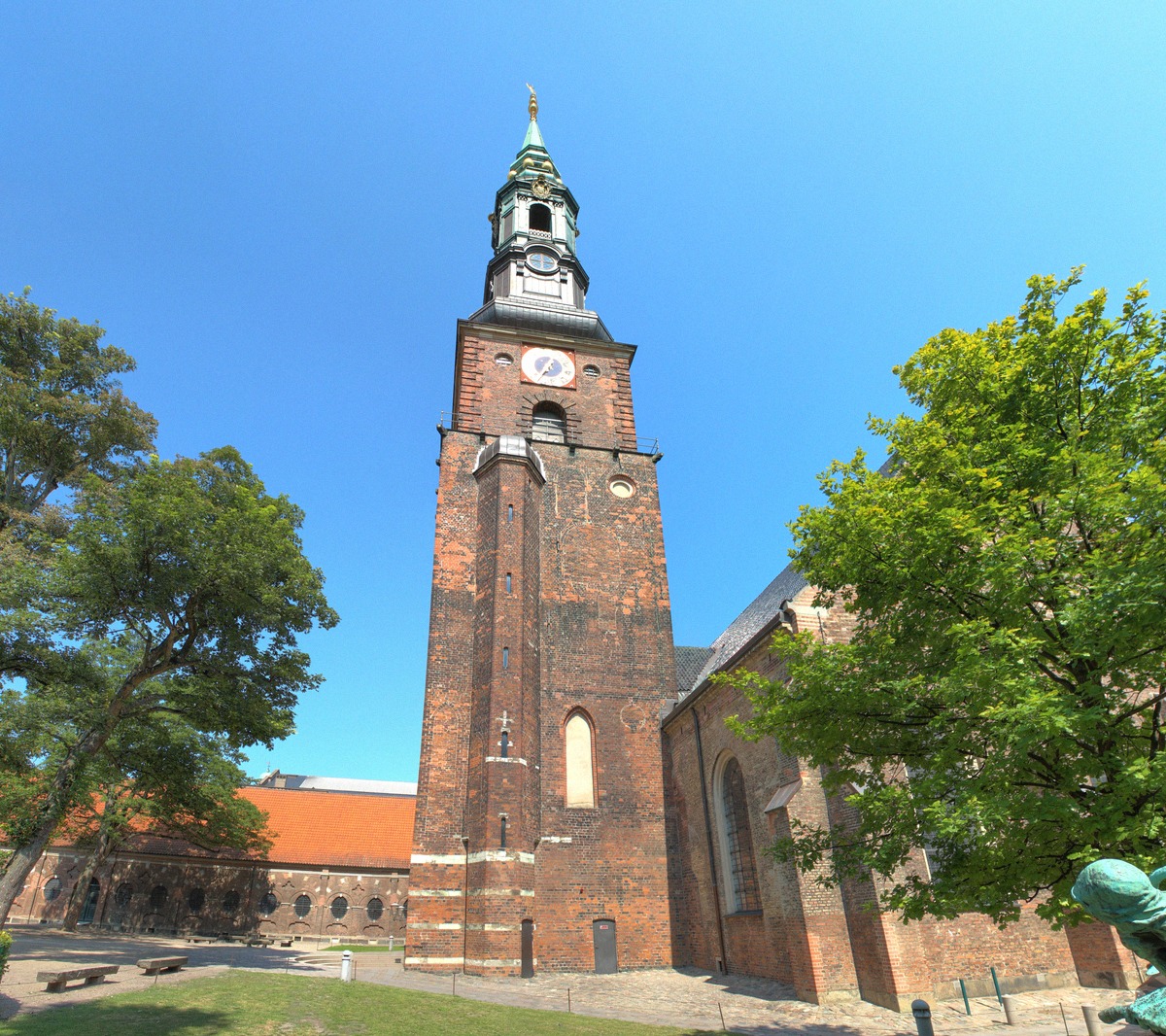
Sankt Petri Kirke (St Peter's Church) is the church of Copenhagen's German congregation. The Gothic brick building has burial chapels and, under the north transept, a large vault.
Strøget
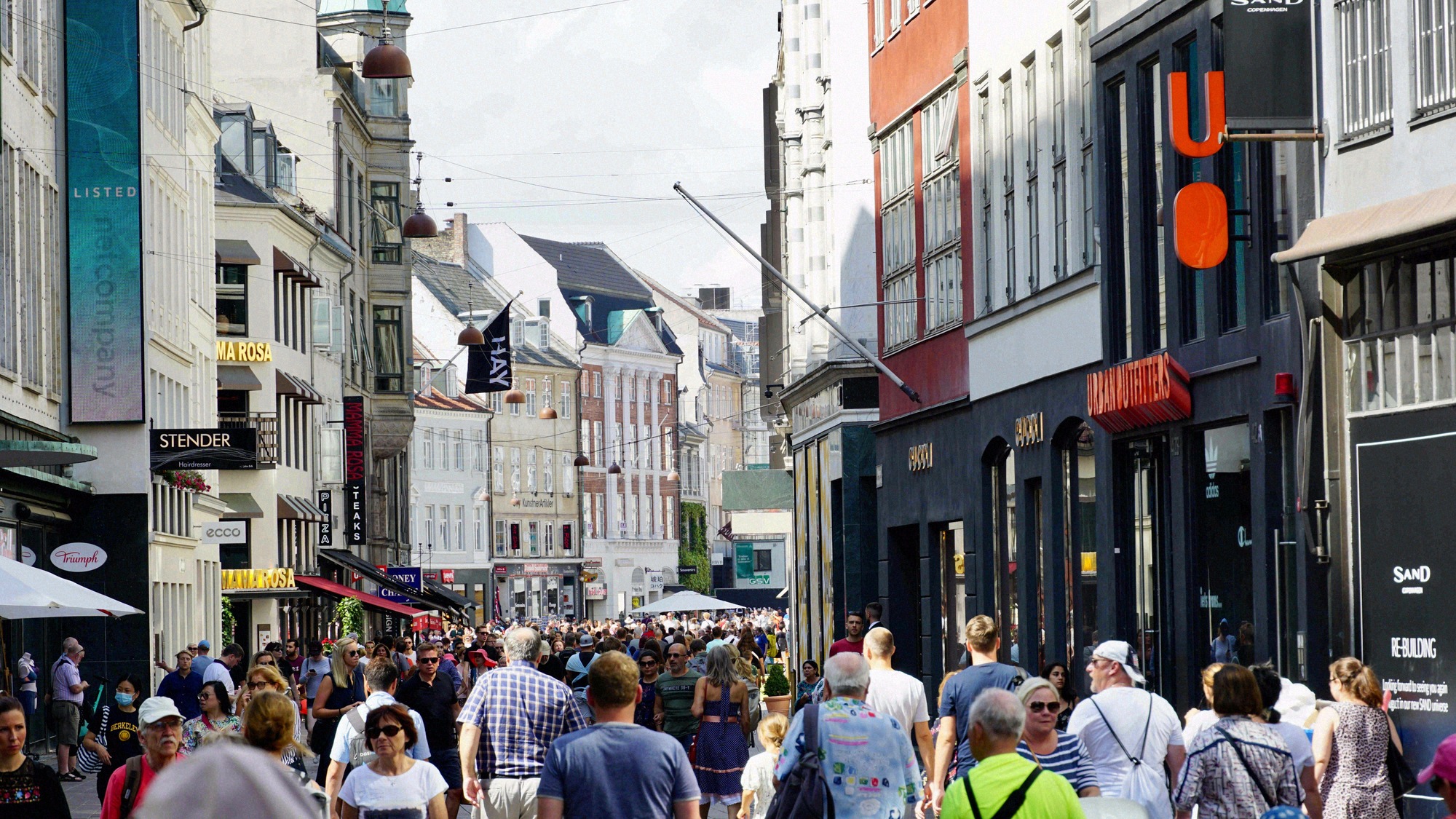
Strøget links Rådhuspladsen and Kongens Nytorv through the old town: four streets, three squares, department stores and a pedestrian zone that began as a trial in 1962.
Church of the Holy Spirit (Helligåndskirken)
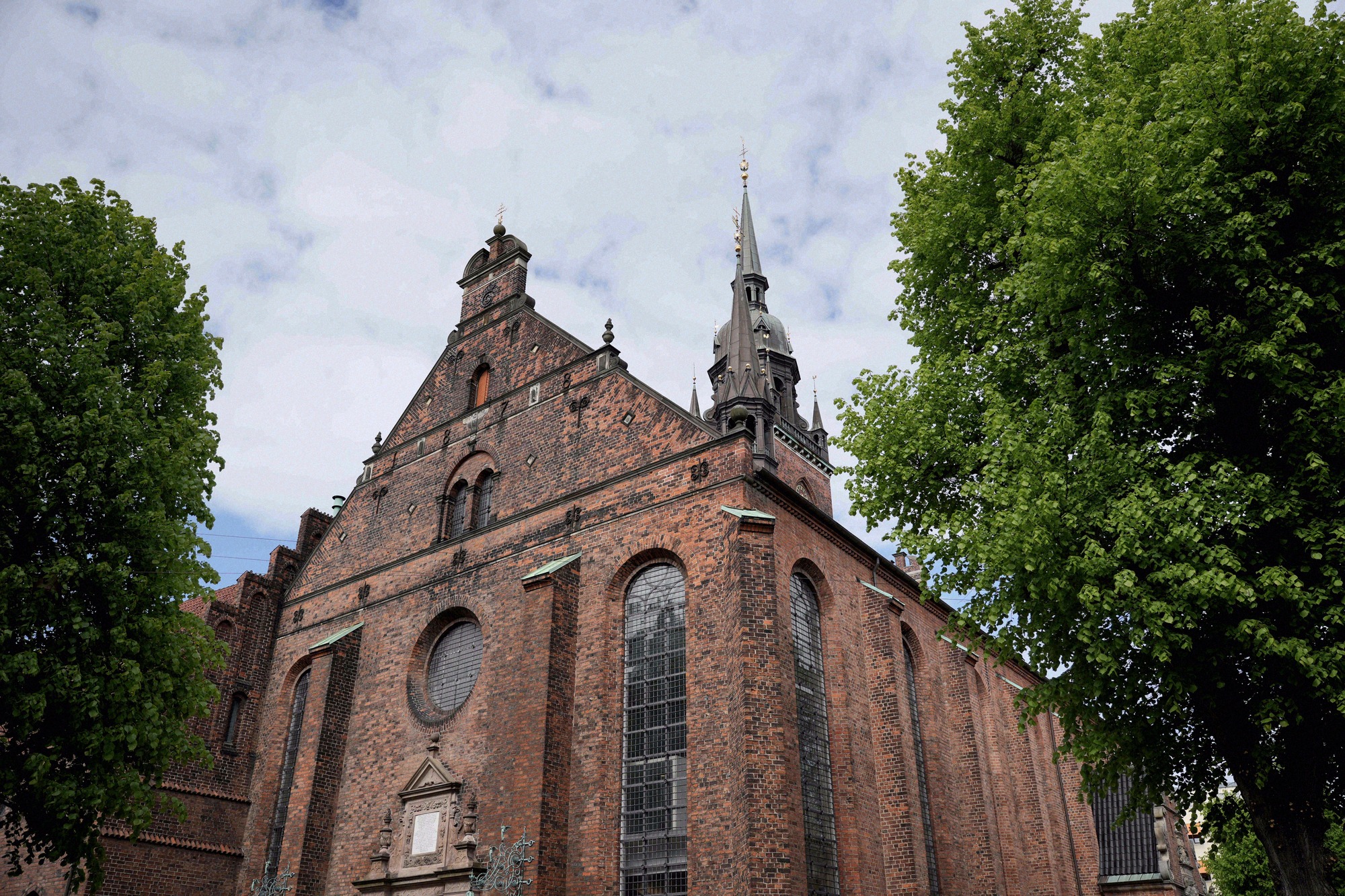
The Church of the Holy Spirit on Amagertorv goes back to a hospital of the late 13th century. The Helligåndshuset survives from the monastery, and the parish also holds services in Greenlandic.
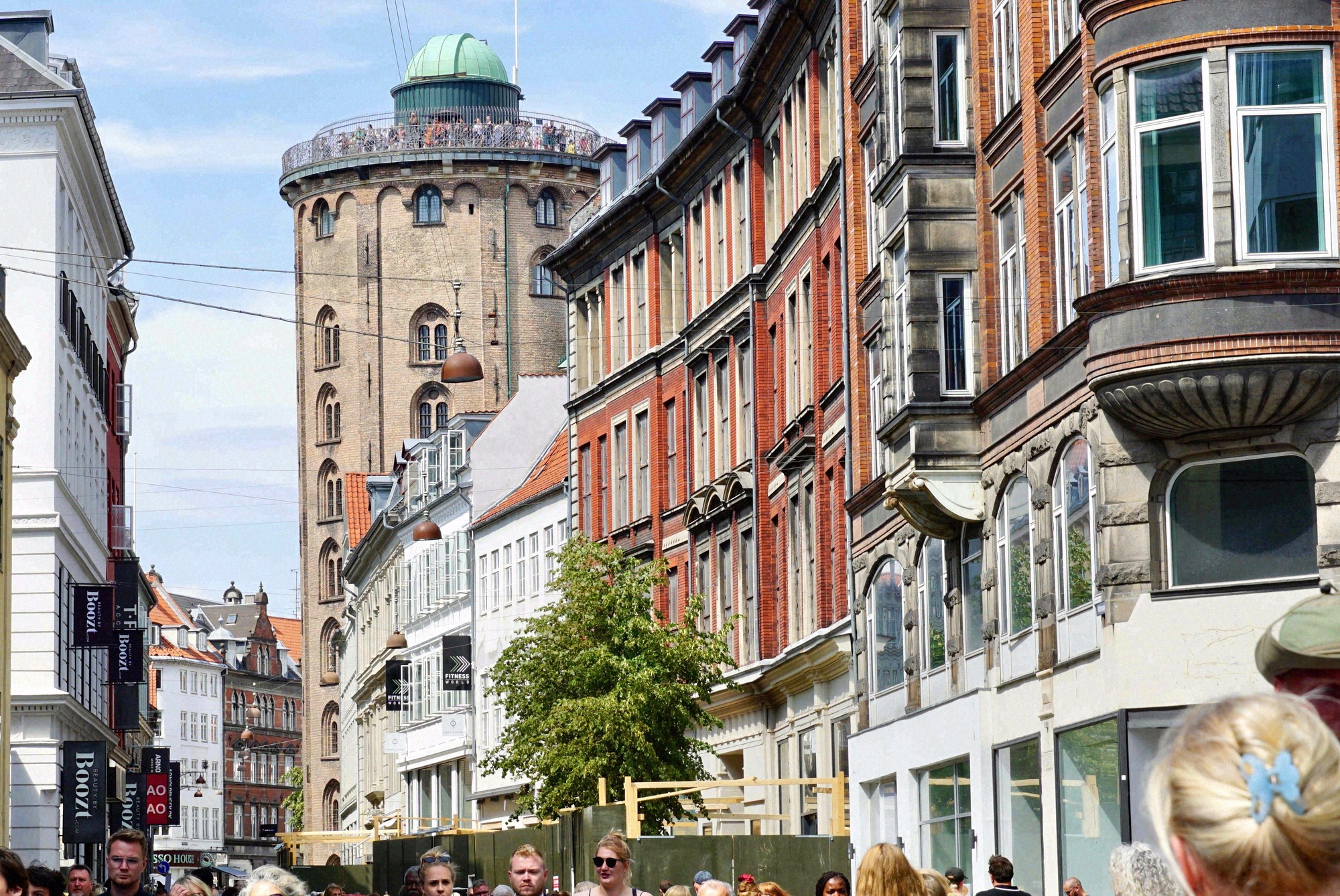
Round Tower (Rundetårn)
The Round Tower (Rundetårn) of 1642 has no staircase. A spiral ramp about 200 metres long leads almost to the platform, and the restored observatory sits at the top.
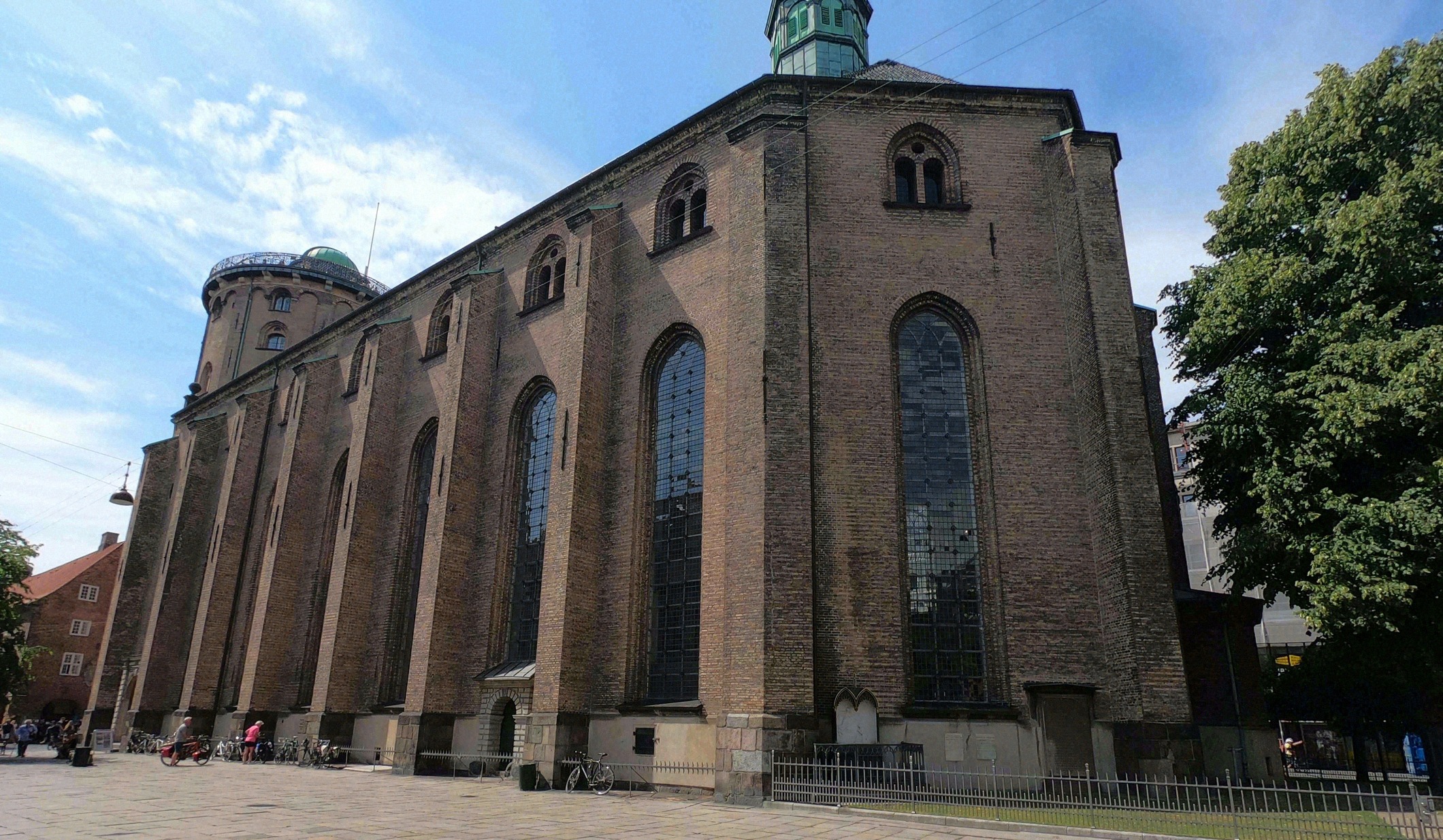
Trinitatis Kirke (Trinitatis Church)
Trinitatis Kirke was consecrated in 1656, burned out in 1728 and was refitted by 1732. It is free to enter, and there is a concert on Fridays at 16:30.
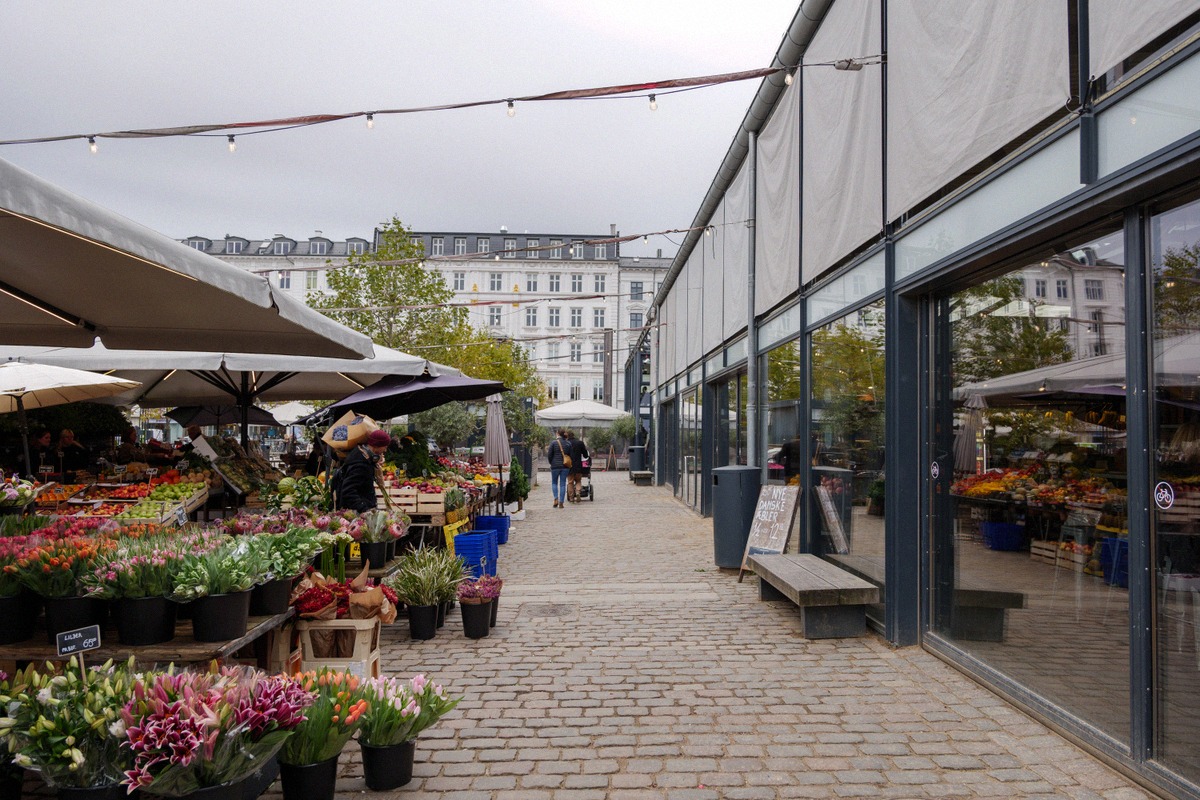
Torvehallerne
Two glass halls on Israels Plads beside Nørreport: smørrebrød, coffee, fish, pastry and takeaway food at around 50 stalls, open almost all year.