
Sankt Petri Kirke
Gothic brick church with burial chapels and a vault
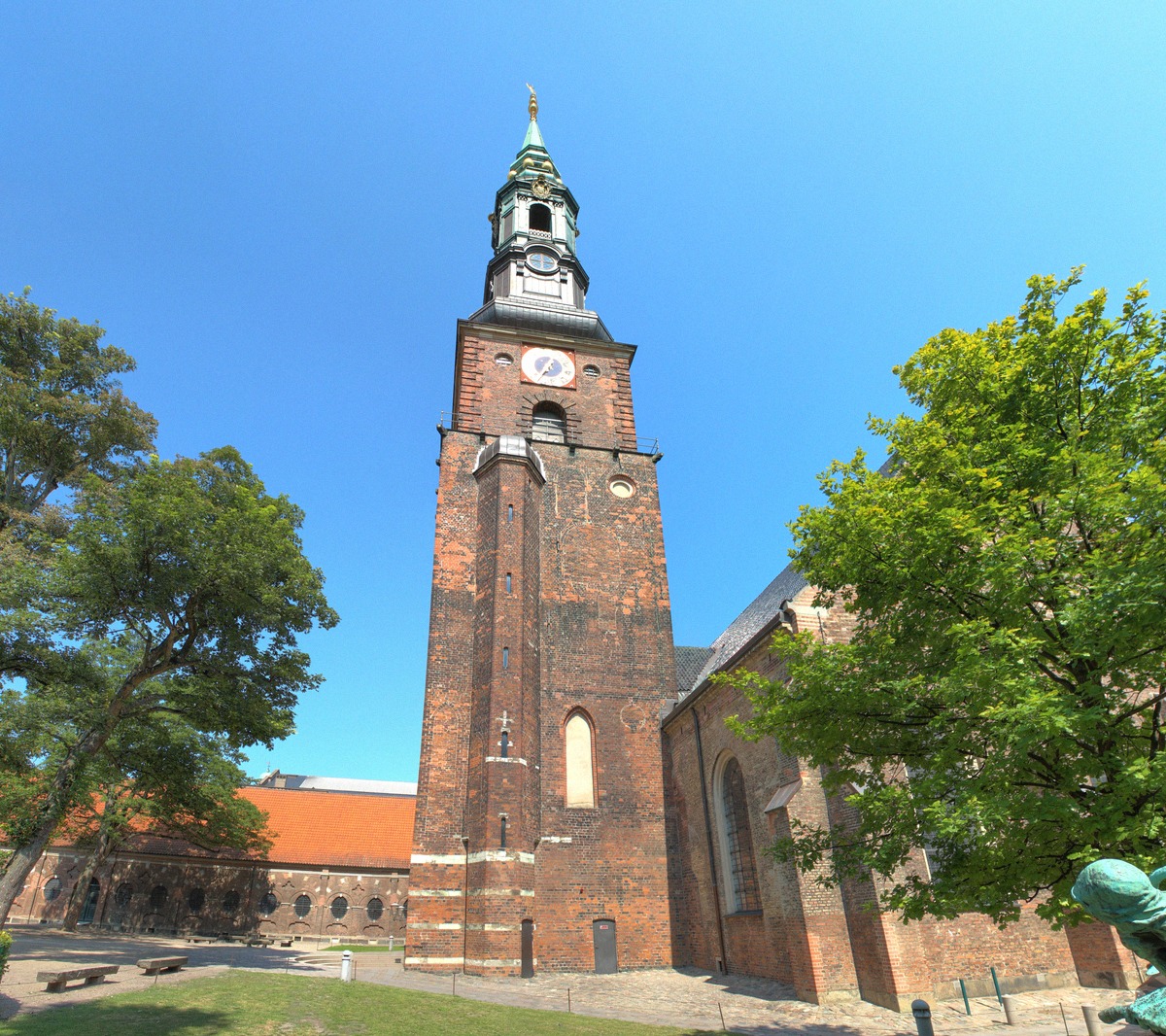
Sankt Petri Kirke (St Peter's Church) is the church of Copenhagen's German congregation. The Gothic brick building has burial chapels and, under the north transept, a large vault.
Contents
Brick walls, baroque furnishings
At the corner of Nørregade and Sankt Peders Stræde stands a church first mentioned in 1304; Copenhagen Cathedral (Vor Frue Kirke) is a few steps further along Nørregade. The first mention is in the will of the priest Hinze Bagge. The first church burned down in 1386 together with its two bells and was rebuilt. The nave and five-sided chancel of today's building date from the middle of the 15th century and the lower tower from around 1500. Christian IV added a north aisle in 1631 and a south aisle in 1634, which gave the church its cross-shaped plan. The north transept was extended in 1691 (the Christian V Hall), and a large vault lies beneath it.
The south transept is now the main entrance, with a baroque portal of 1731 by Didrick Gercken. After the fire of 1728 Johan Cornelius Krieger rebuilt the church, and the narrower upper part of the tower is his. The carpenter Johann Boye Junge added the rococo copper spire in 1756/57. The church survived the bombardment of 1807, was repaired in 1815/16 and was renewed in Gothic Revival style in 1865/66.
The interior is light today because of the restoration of 1994 to 2000 under Hans Munk Hansen, which removed the Gothic Revival fittings of 1865/66. The coloured glass panels of 1898 in the chancel and of 1918-20 in fourteen windows, which had darkened the nave, have gone as well; they are kept in the church archive. The altarpiece by J. L. Lund (1819) was donated by the Danish West India Company, and J. A. Meyer designed the frame and the pulpit. There is also a painting of the Ascension from 1732 and a bronze font of 1830, and the organ stands in the north aisle.
A foundry, then the German congregation
After the Reformation the parish was dissolved in 1537, and the Crown used the building as a cannon and bell foundry. The German congregation had at first moved into the former monastery church of Sankt Clara on Møntergade. In 1585 King Frederik II gave it this church, and sermons have been preached in German here ever since. The Evangelical Lutheran congregation belongs to the Danish National Church and has more than 900 members.
The years 1848 to 1850 were a break. In the Three Years' War tensions between Danes and Germans grew, and the congregation lost members and money. In 1994 the Danish state took over the building. Today the church, the Sankt Petri School and the cultural centre together form a centre of German culture in Copenhagen. The pastor Balthasar Münter, father of the writer Friederike Brun, served at this church.
Burial chapels, vault and herb garden
The west chapel was built in 1648 and enlarged in 1658/59. In 1681-83 followed a key-shaped extension to the north-west of the church, the three-winged Renaissance complex of the burial chapels. The vaults were used for burials from 1648 to 1740. Burials in churches have been forbidden since 1805, but they stayed permitted in the burial chapels, and today urn burials take place there in a columbarium. One of the large vaults under the church was converted into an urn hall in 1937.
Christian Gyldenløve was moved here from the cathedral in 1734. The herb garden, the Urtegården, lies between the wings of the chapels.
Frequently asked questions
How old is Sankt Petri Kirke? +
Can you join a guided tour of the burial chapels? +
Who is buried at Sankt Petri Kirke? +
Nearby
Copenhagen Cathedral (Vor Frue Kirke)
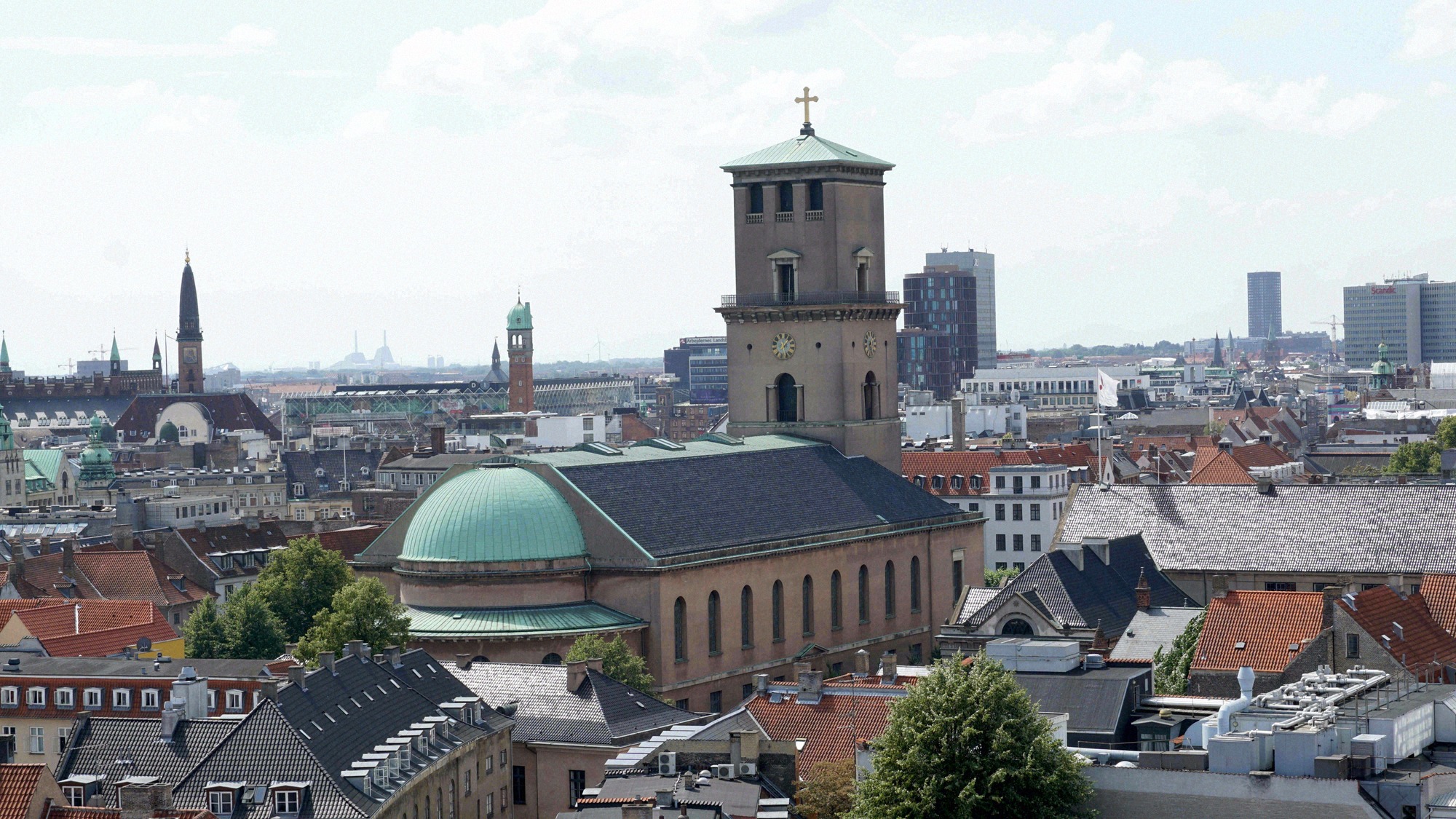
Copenhagen Cathedral (Vor Frue Kirke) on Frue Plads was rededicated in 1829 after fire and bombardment. Thorvaldsen's Christ and the twelve apostles stand in the nave, and entry is free.
Strøget
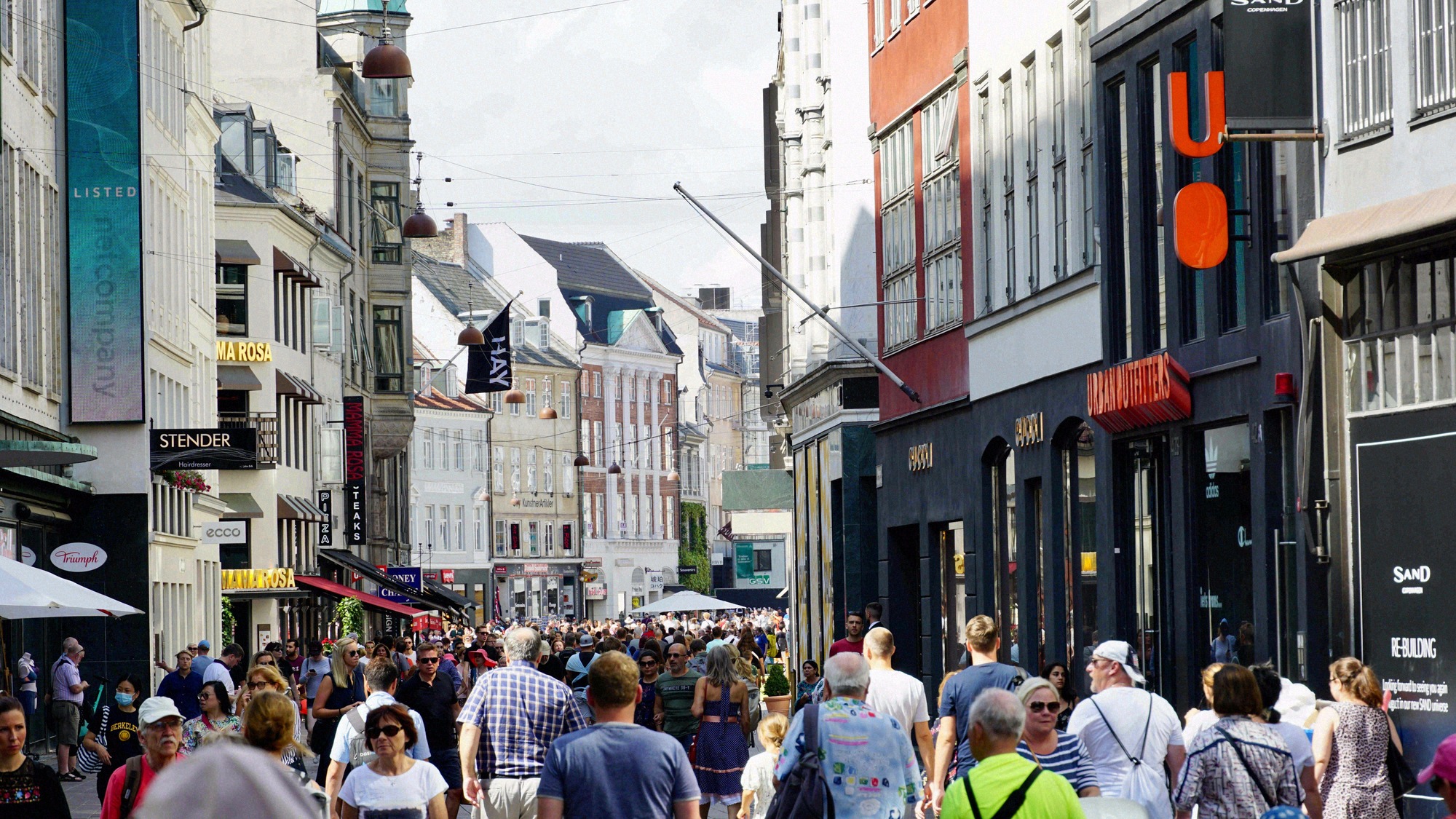
Strøget links Rådhuspladsen and Kongens Nytorv through the old town: four streets, three squares, department stores and a pedestrian zone that began as a trial in 1962.
Round Tower (Rundetårn)
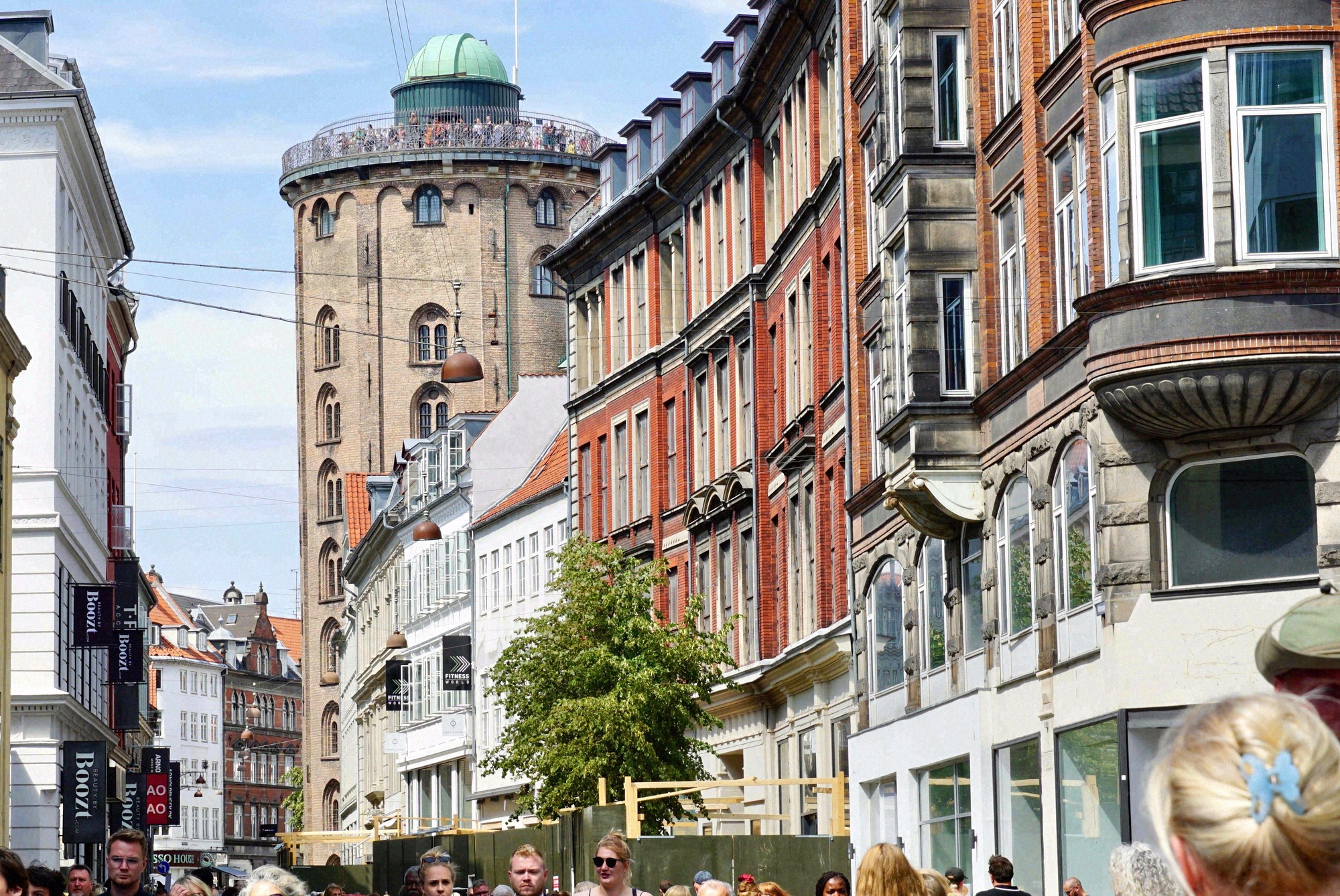
The Round Tower (Rundetårn) of 1642 has no staircase. A spiral ramp about 200 metres long leads almost to the platform, and the restored observatory sits at the top.
Church of the Holy Spirit (Helligåndskirken)
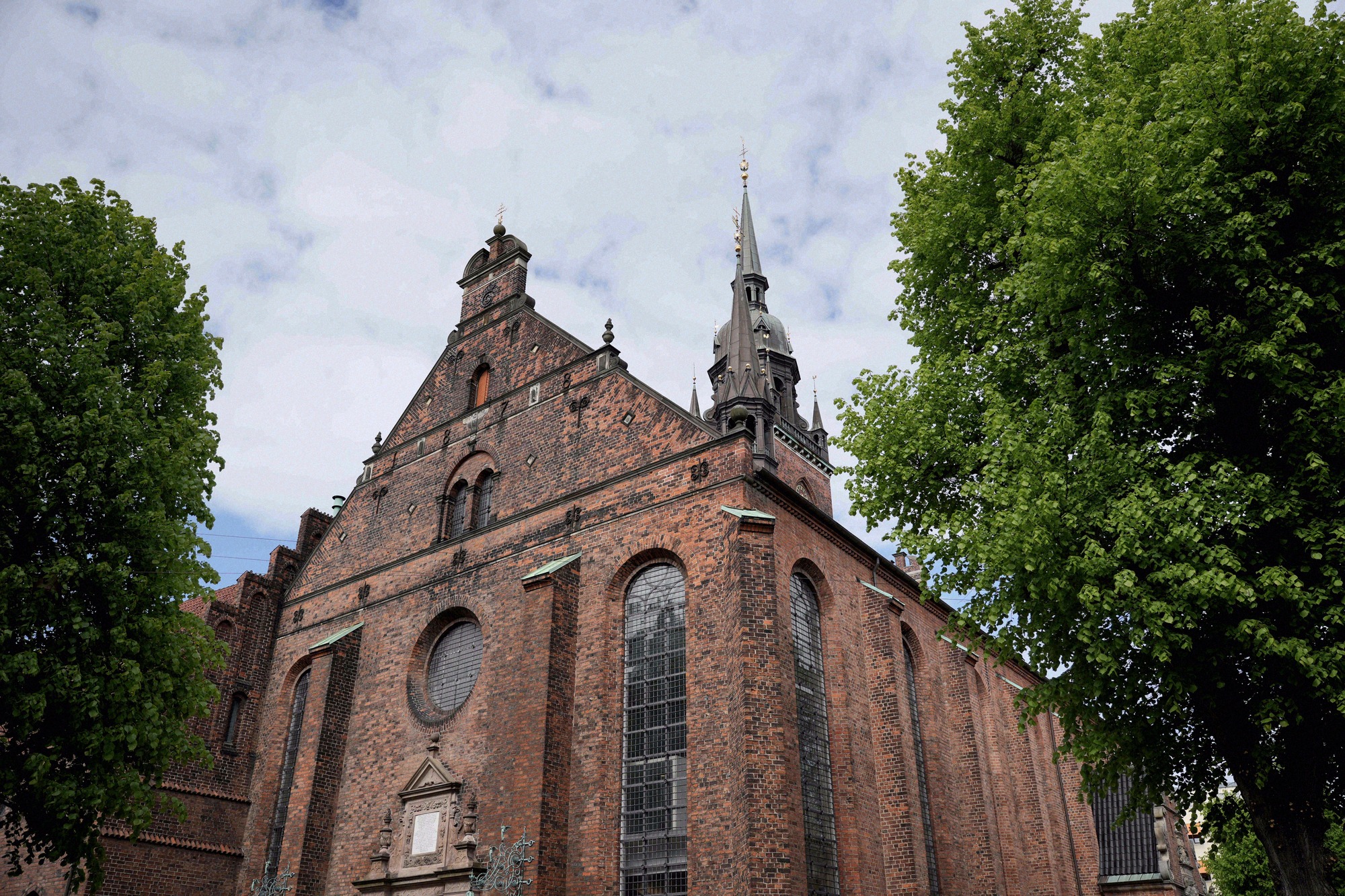
The Church of the Holy Spirit on Amagertorv goes back to a hospital of the late 13th century. The Helligåndshuset survives from the monastery, and the parish also holds services in Greenlandic.
Trinitatis Kirke (Trinitatis Church)
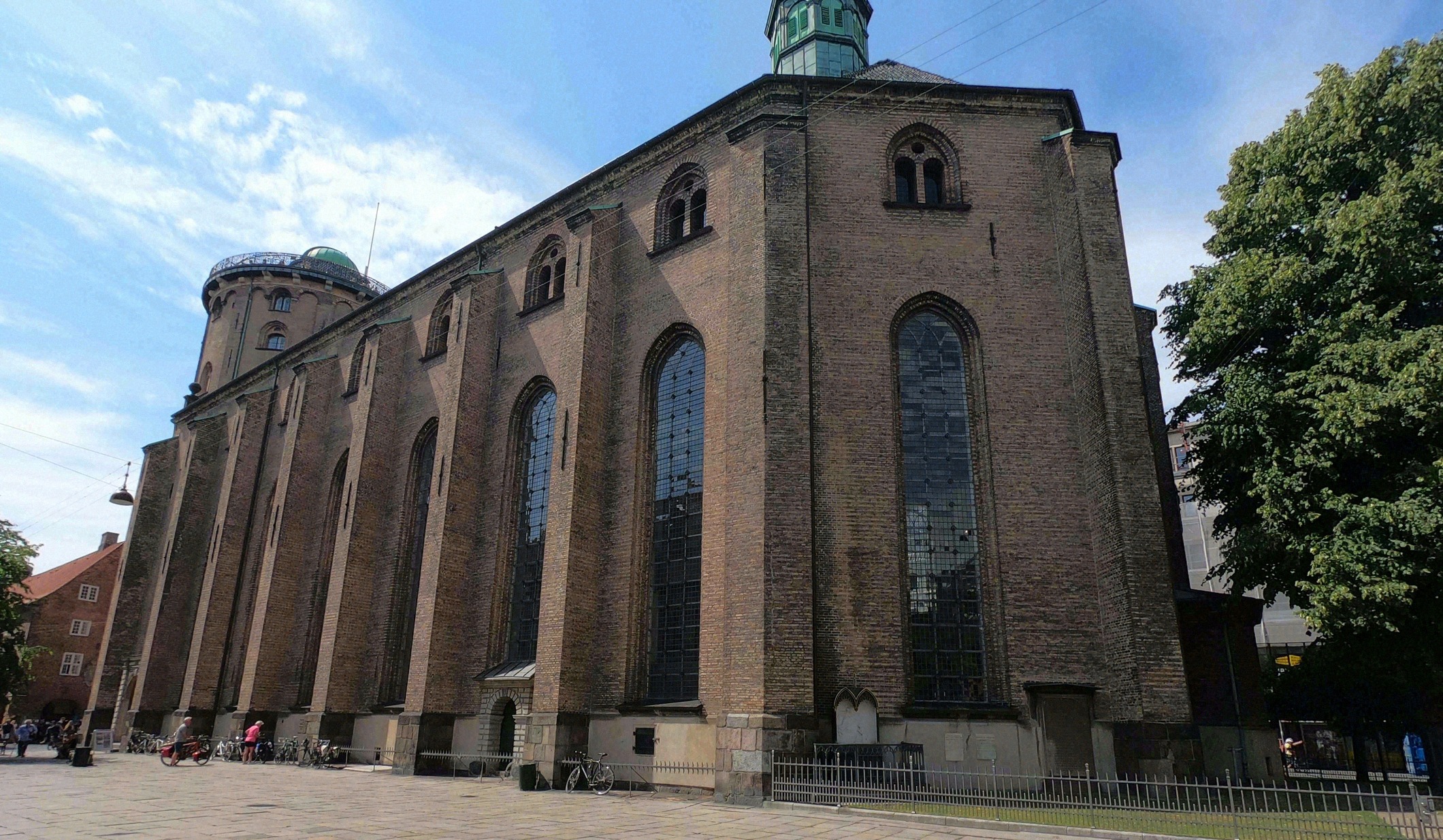
Trinitatis Kirke was consecrated in 1656, burned out in 1728 and was refitted by 1732. It is free to enter, and there is a concert on Fridays at 16:30.
Torvehallerne
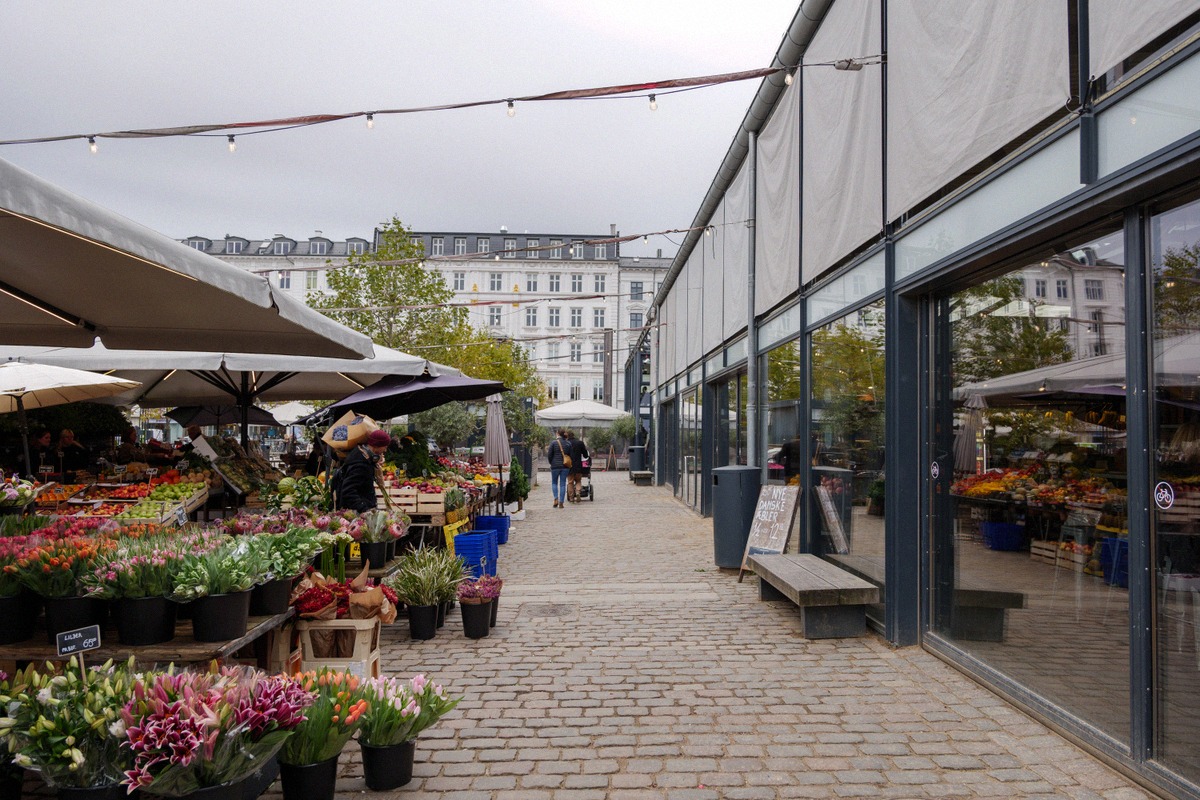
Two glass halls on Israels Plads beside Nørreport: smørrebrød, coffee, fish, pastry and takeaway food at around 50 stalls, open almost all year.