
Charlottenborg Palace
Baroque palace on Kongens Nytorv with the art academy and Kunsthal
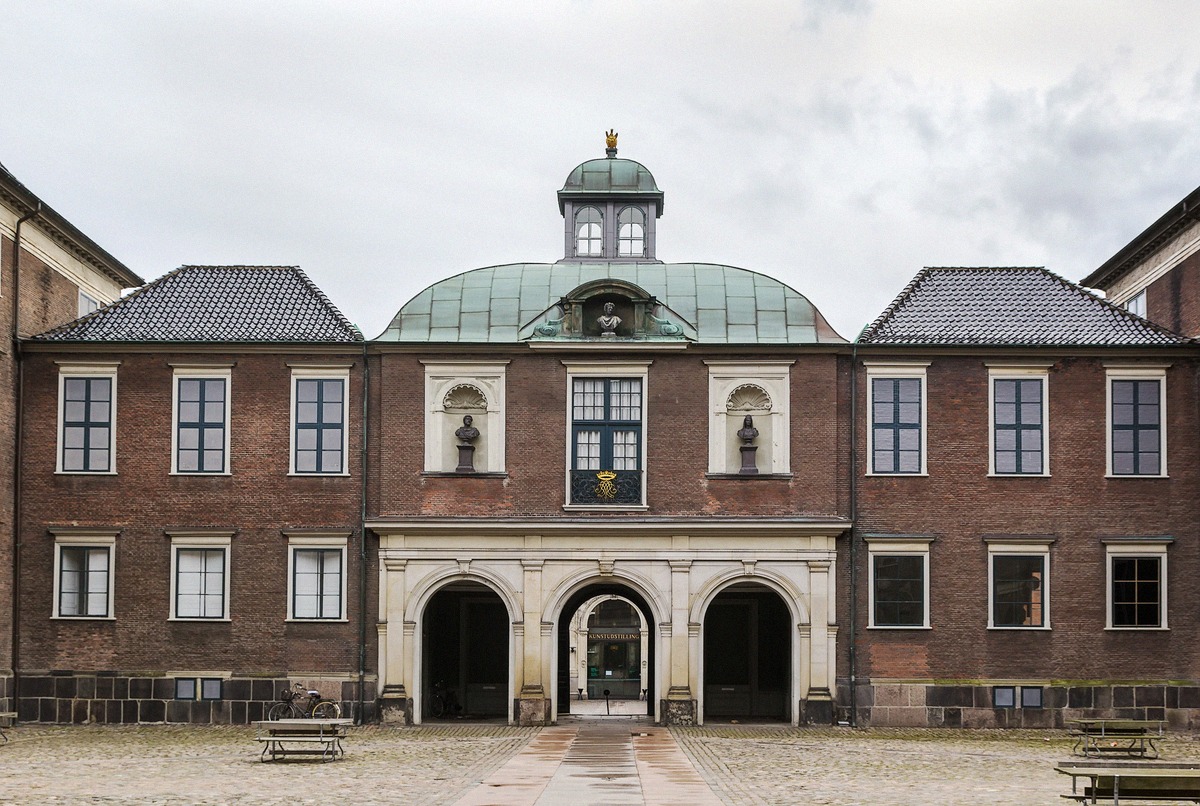
The palace on Kongens Nytorv, built from 1672 for a half-brother of Christian V, houses the art academy and Kunsthal Charlottenborg with changing contemporary art.
Contents
What you can visit
Charlottenborg Palace holds the art academy, the art library and Kunsthal Charlottenborg. Only the Kunsthal is a place to visit. The academy is a working school, so from the palace you mainly see the facade towards the square and the courtyard, and behind the entrance you find contemporary art, not palace rooms.
From Kongens Nytorv you enter across the cobbled courtyard. The second entrance is on the water side, a few steps from the canal at Nyhavn, and the Kongens Nytorv metro station is right on the square. The foyer has the bookshop Charlottenborg Art Books, which stocks art books. Strøget begins just behind the square.
Exhibitions and the Spring Exhibition
The Kunsthal shows only changing contemporary art, and there is no permanent exhibition. You go because the current programme interests you. Until the end of February 2027 three solo exhibitions run side by side, by Amalie Smith, Jochen Lempert and Som Supaparinya. Smith shows her work under the title "Levende", Lempert photography under the title "Flora Incognita" and Supaparinya "Reroute". Each of the three rooms belongs to one artist, so you can skip a show without missing anything in the others.
A fixed point of the year is the Forårsudstillingen, the Spring Exhibition. It has taken place every year since 1857, anyone aged 18 or over may submit work, and a jury makes the selection. So you see the breadth of Danish contemporary art and not only what galleries show. The Forårsudstillingen is held in spring; plan for April and May. The Charlottenborg Fonden organises it. The winner of the Solo Prize later receives a solo exhibition in Politikens Forhal. The Efterårsudstilling in autumn is different: it is an exhibition by invitation. In summer the academy's graduation show follows.
Gyldenløve's palace and the academy
The palace is named after Queen Dowager Charlotte Amalie, who bought it in 1700. It had been built before that for Ulrik Frederik Gyldenløve, a half-brother of Christian V, who received the plot in 1669. The side wings were standing by 1677, and around 1682 a lower wing towards the garden was added, to plans by Lambert van Haven. Ewert Janssen is usually named as the architect of the palace.
The art academy has had its seat here since 1754. Today the building houses the academy, the Kunsthal and the art library. Between 1778 and 1877 the university's botanical garden lay on the site. The exhibition building by Albert Jensen and Ferdinand Meldahl was completed in 1883 on that ground and renovated in 2007/08, and in 2012 the Kunsthal merged with the academy's art schools.
Frequently asked questions
Is Charlottenborg accessible by wheelchair? +
Can you take photos and bring a pushchair? +
Where do you leave your coat and bag? +
Is the Kunsthal cinema open to visitors? +
Nearby
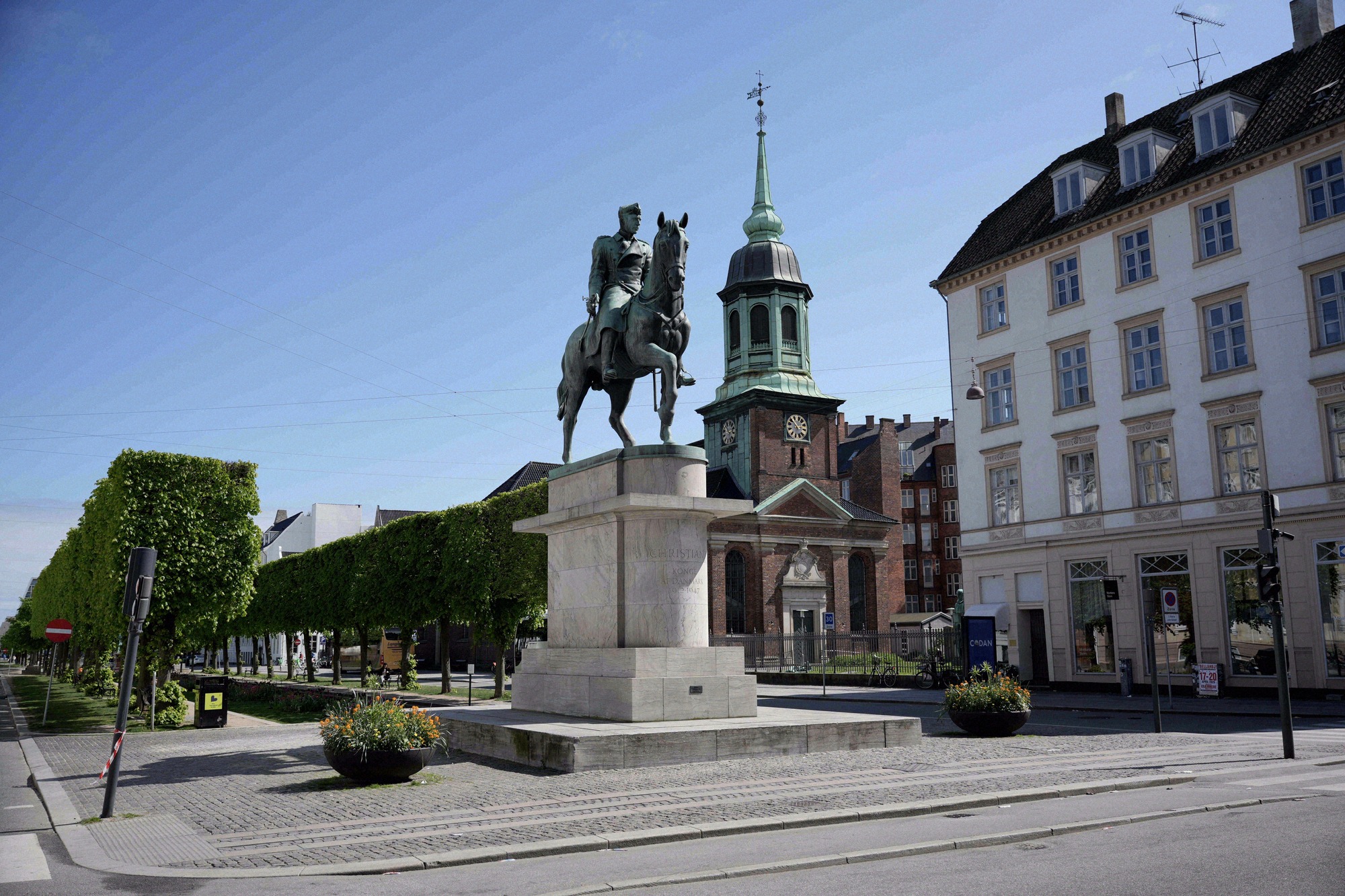
Kongens Nytorv
The square where Strøget ends and Nyhavn begins, with the statue of Christian V, the Royal Theatre, Hotel d'Angleterre, Magasin du Nord and a metro station beneath it.
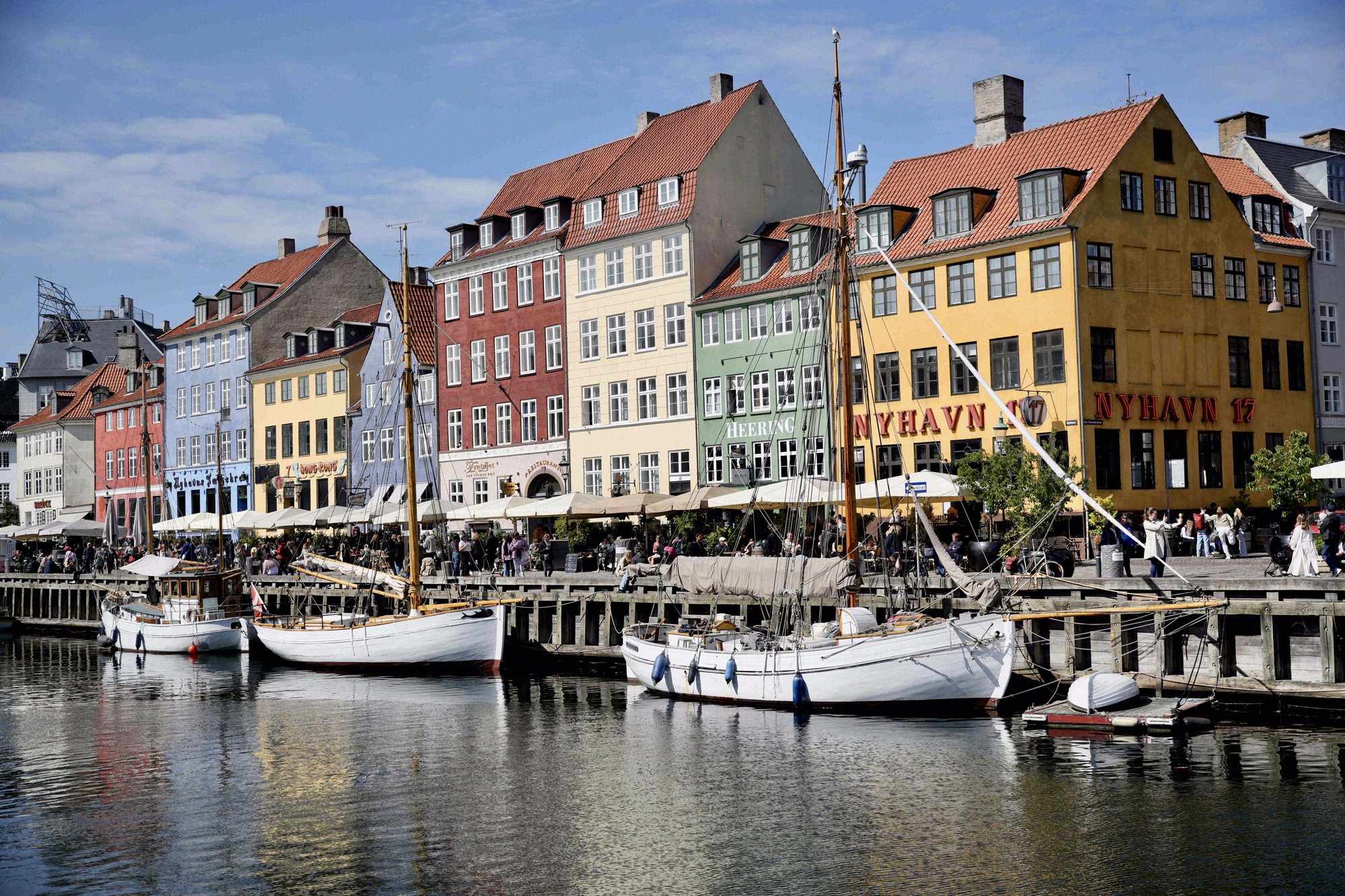
Nyhavn
The canal dug in the early 1670s, with number 9 as the oldest house, three addresses of Hans Christian Andersen, the canal tour boats and the bridge to Christianshavn.
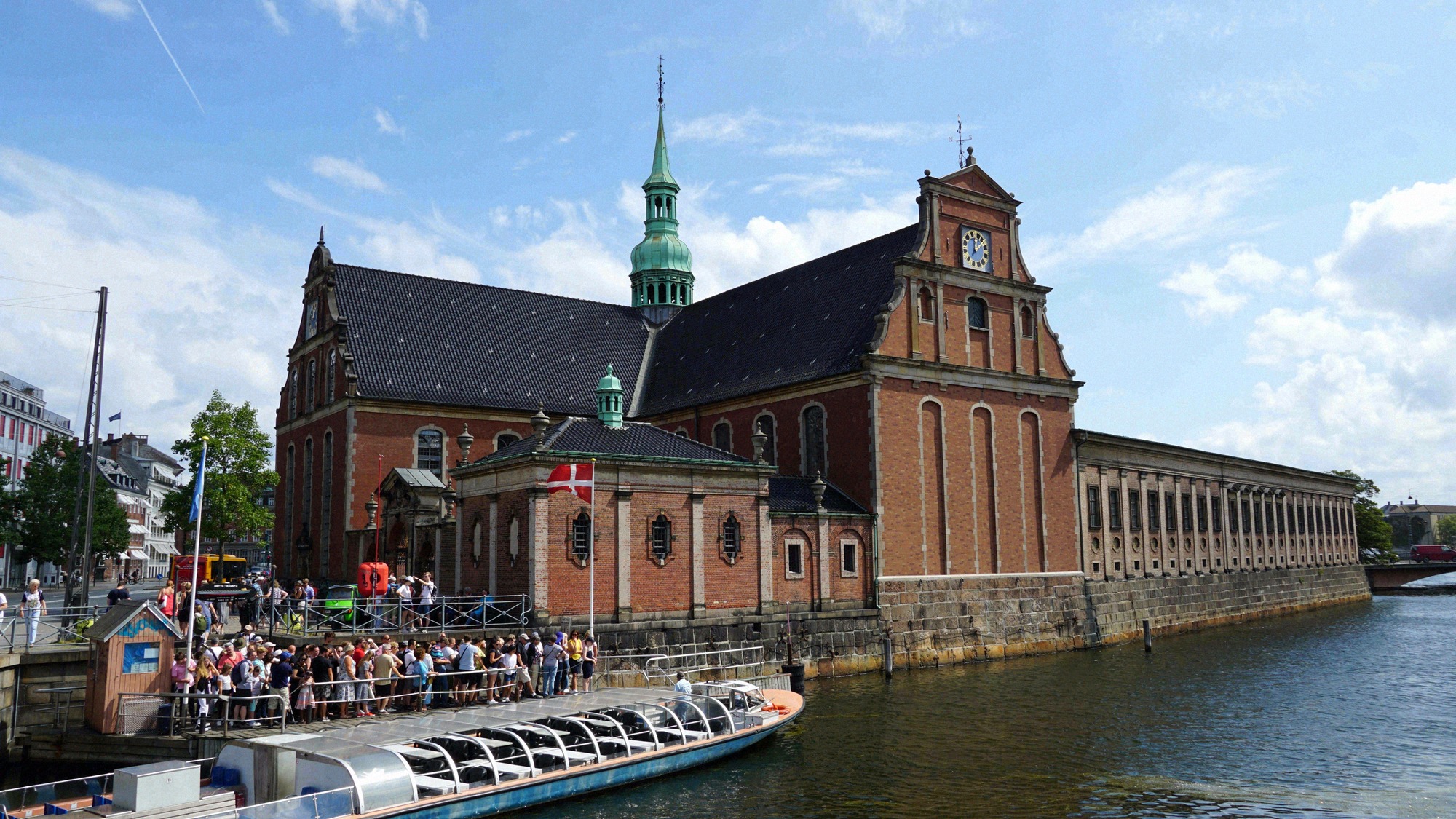
Holmens Kirke
Holmens Kirke began in 1619 as an anchor forge of the navy turned church. Altar of 1661, the tombs of Niels Juel and Tordenskjold, the wedding of Margrethe and Henrik in 1967.
Børsen
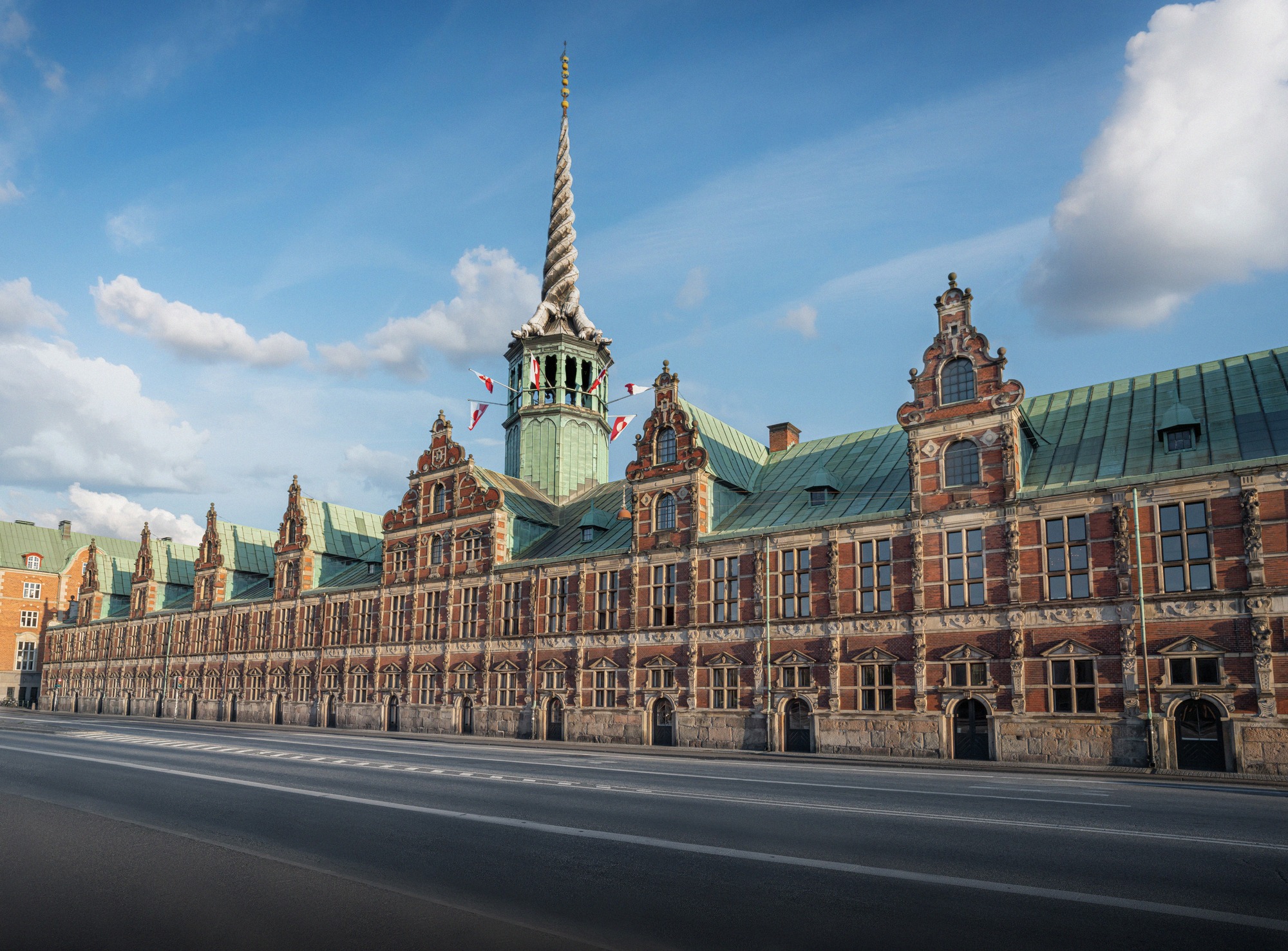
Børsen, the old stock exchange on Slotsholmen, has been a building site under a protective cover since the fire of 16 April 2024. A free visitor centre on Børsgade shows building parts and the progress of the rebuilding.
Amalienborg Palace
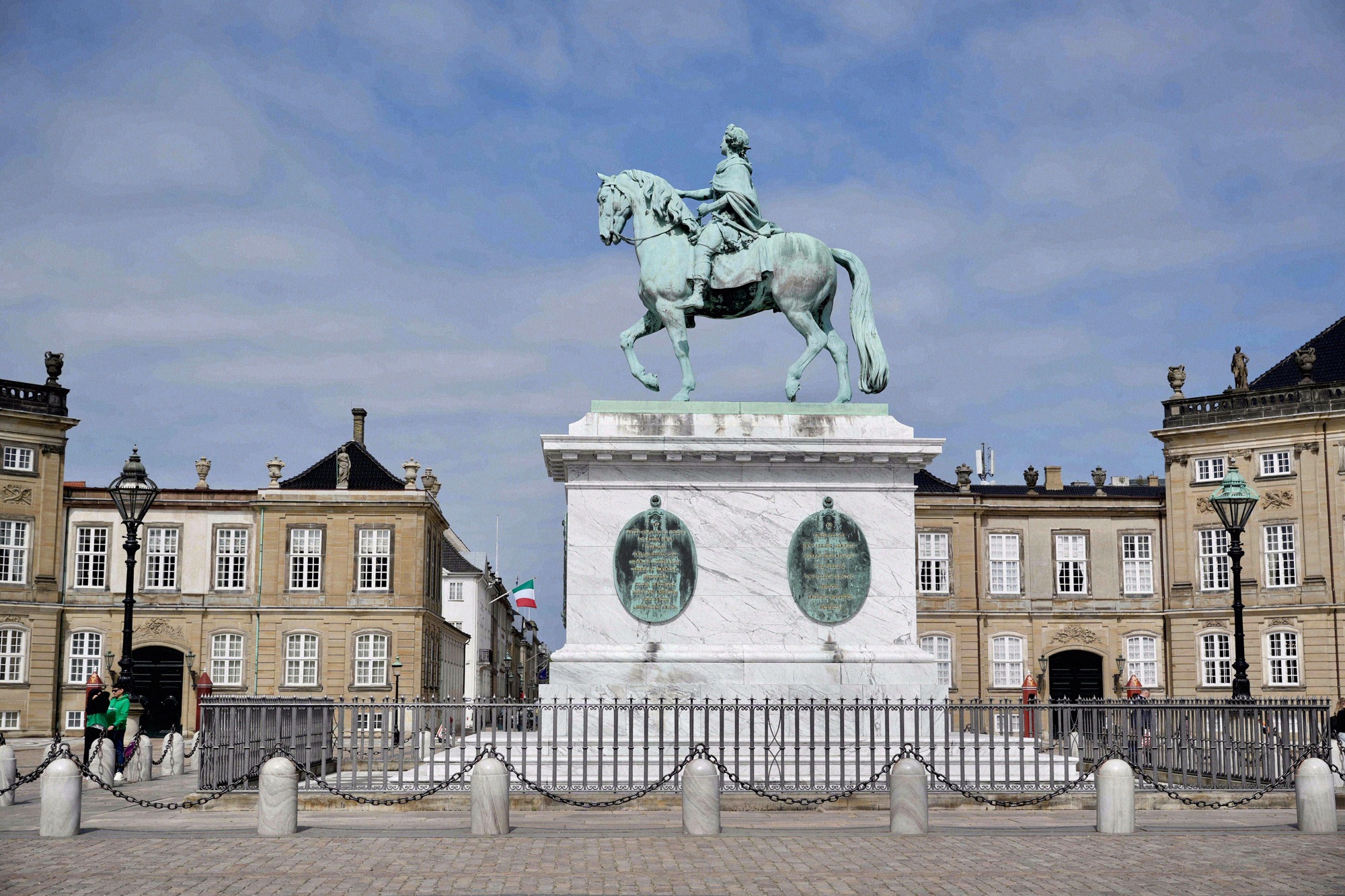
Amalienborg Palace is four palaces around an octagonal square. The Changing of the Guard on the square is free to watch, and the museum shows the studies of Danish kings and a Fabergé room.
Marble Church (Marmorkirken)
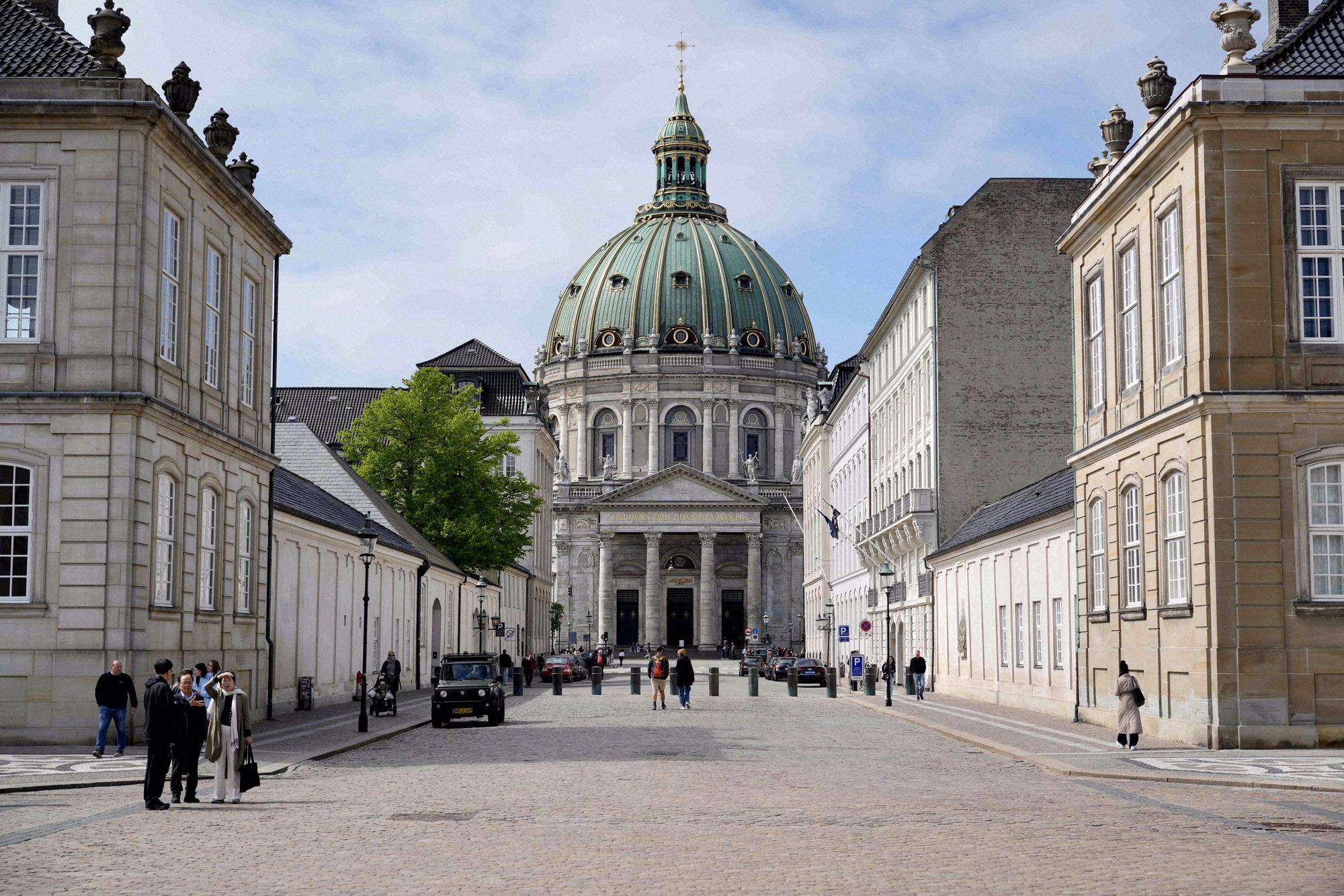
The Marble Church (Marmorkirken), officially Frederik's Church, stands on Frederiksgade in line with Amalienborg Palace. The church is free, and the dome tour runs on Saturdays and Sundays at 13:30.