
Church of Our Saviour
Baroque church with a spiral tower
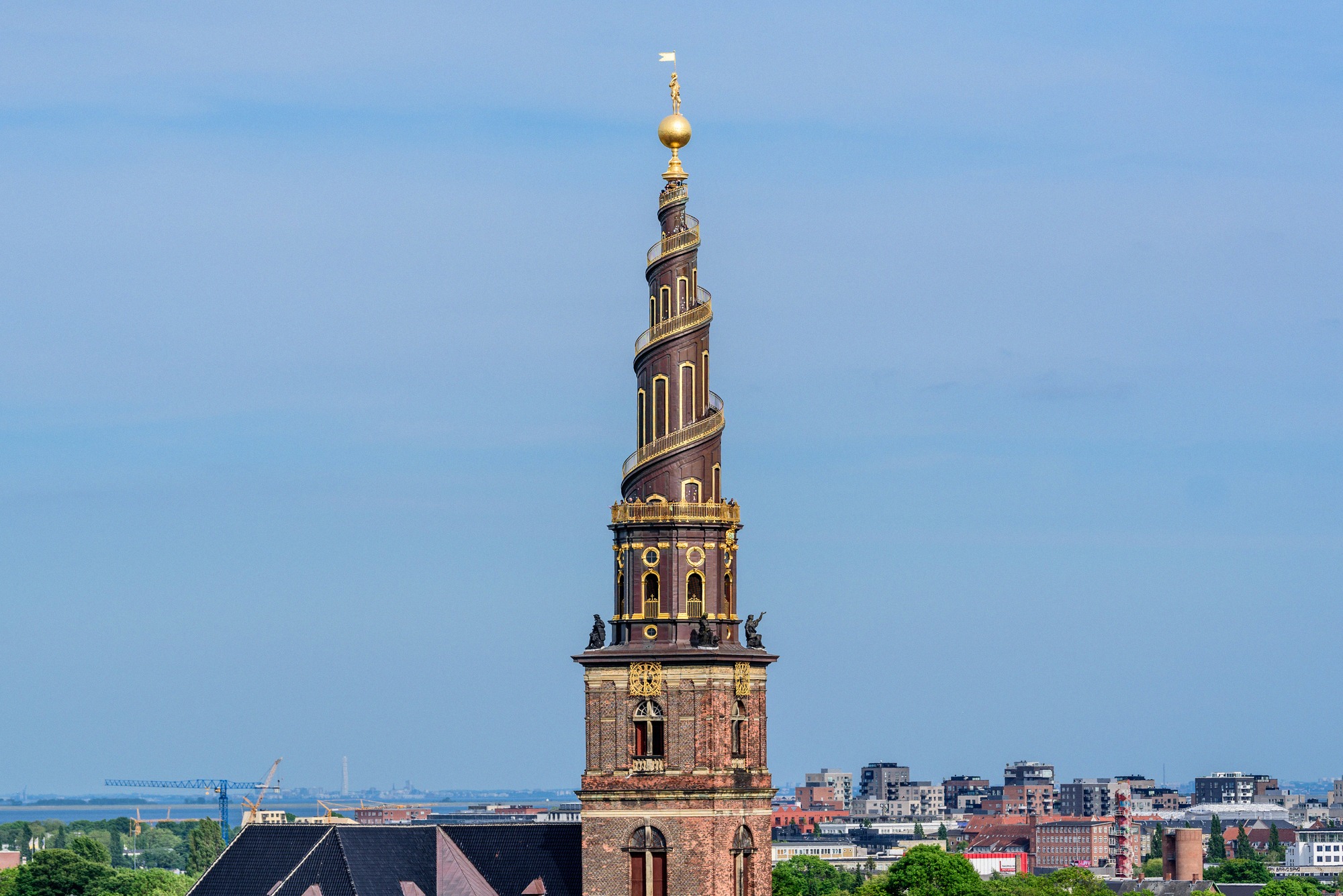
The tower of the Church of Our Saviour (Vor Frelsers Kirke) in Christianshavn has 400 steps, the last 150 on the outside of the spire. Booking advised, closed in January, facade and spire under restoration.
Contents
Climbing the tower
About 400 steps lead up. The first half runs inside the tower on narrow, steep stairs. For the last 150 you step out onto a gallery that winds around the spire and becomes narrower towards the top. The viewing platform is at 86 m. Above it the spire carries a gilded ball and a figure of Christ 4 m high, which brings the whole tower to roughly 90 m.
Stairs are the only way up, and wheelchair users cannot reach the tower. The outer steps are made of copper and slippery when wet. That is why the tower closes in rain, snow and strong wind and reopens only after the steps have dried.
Booking, busy days and sunset tours
Space in the tower is limited, and the slots are sold online. Friday to Monday during the day is the busiest period, and staff at the church may then ask you to book online rather than buy a ticket on the spot.
Sunset tours run in summer, after the normal closing time. The tour includes sparkling wine or water and snacks.
Entrances and the restoration work
The church stands on Sankt Annæ Gade in Christianshavn, a few minutes' walk from the metro station. Bus 2A stops at the side entrance.
The facade, the sandstone and the spire are being restored, and the church and the tower stay open throughout. The main entrance on Prinsessegade is behind a large scaffold. The four evangelist figures on the lower platform of the tower are being cleaned as part of the work, and a stonemasonry firm, Raadvad Stenhuggeri, restores the sandstone.
How the church and its spire came about
Christian IV founded Christianshavn in 1618 as a trading town on sandbanks between Copenhagen and Amager. Its first church was a timber building from 1640, which soon proved too small and too poorly built. Christian V laid the foundation stone of a new church on 19 October 1682, and it was consecrated on 19 April 1696. The ground had been sea bed only a few years earlier, which is why building took 14 years. The walls and four pillars rest on large boulders, and the first foundation stone still lies at the entrance.
Lambert van Haven designed the church together with a spire that was never finished, and he died young. Frederik V wanted to complete the church his great-grandfather Christian V had begun. For that he commissioned Lauritz de Thurah, who drew the twisting tower in Italian baroque style, with Sant'Ivo alla Sapienza in Rome as his model. He built it in wood so that it would rise higher than the stone original.
Construction took four years, and the tower opened on 28 August 1752, 56 years after the church. The great copper figure of the Saviour was hauled up wrapped in silk and wool, a job that took more than six hours while chorales were sung. The king arrived by carriage, and 27 salutes were fired.
Inside the church
Inside, the church is Dutch baroque, laid out on the plan of a Greek cross, with brick walls in red, yellow and grey and cornices of sandstone. Look for the monogram of Christian V at the portal, in the vault above the crossing and on the front pipes of the organ. The sculptor Christian Nerger made the figures in sandstone, stucco and wood, and many of the cherubs hold musical instruments or lines from the psalms.
The altarpiece shows the scene in Gethsemane and is by Nicodemus Tessin the Younger, who designed the altar from Stockholm from 1694. Money ran short and the expensive marble from Languedoc gave out, so the altar was consecrated only in 1732, some 40 years after planning began. Six large angels by Erich Warnheim stand at the altar rail, among them Michael with the gilded trumpet and Gabriel with the palm branch.
The pulpit dates from 1773 and was made by C. F. Harsdorff. It is cylindrical, with the apostles in antique-style relief. A marble pulpit ordered from Norway had sunk on the crossing to Copenhagen, and for almost 80 years a plain blue-painted pulpit stood in its place. N. F. S. Grundtvig preached here from 1822 to 1826. The font was donated in 1700 by Countess Elisabeth Helene von Vieregg, who in 1703 married Frederik IV in a morganatic marriage and died in 1704 soon after the birth of her son. Both lie beneath the church floor.
The elephant organ, the choirs and the carillon
The organ by the Botzen brothers was consecrated in 1698 and was ordered and paid for by Christian V. It hangs on the wall, carried by two elephants, which gives it the nickname Elephant Organ (Elefantorgel). The last major restoration was in 1965. The church has three choirs, including a vocal ensemble of ten professional singers and the concert choir Vor Frelsers Kantori with about 45 singers.
About 40 concerts a year are on the programme: organ recitals, chamber concerts of new church music, oratorios and first performances. In summer international organists play the historic organ. The main service is on Sundays at 10:30.
The carillon in the tower plays every hour from 9:00 to 22:00 and at midnight, but is switched off in the morning at weekends. Fixed melodies sound at 9:00, 12:00 and 22:00 all year round, and the other pieces change with the church year. On every Saturday in August, international carillonists play from the tower at 15:00.
Frequently asked questions
Can you change or cancel a tower booking? +
Can children climb the tower on their own? +
Did the architect really jump from the tower? +
What is the carillon in the tower? +
Nearby
Børsen
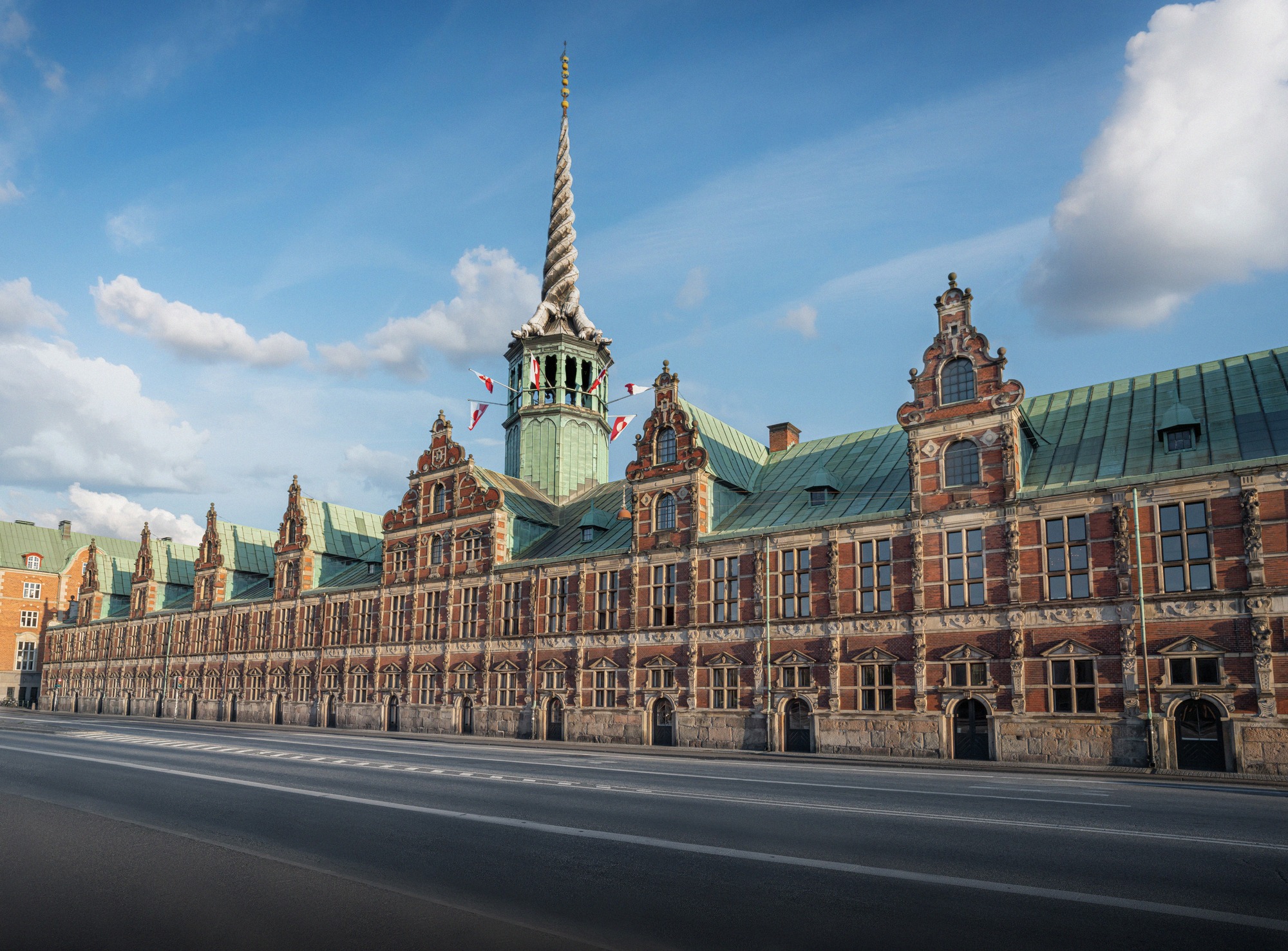
Børsen, the old stock exchange on Slotsholmen, has been a building site under a protective cover since the fire of 16 April 2024. A free visitor centre on Børsgade shows building parts and the progress of the rebuilding.
Royal Library
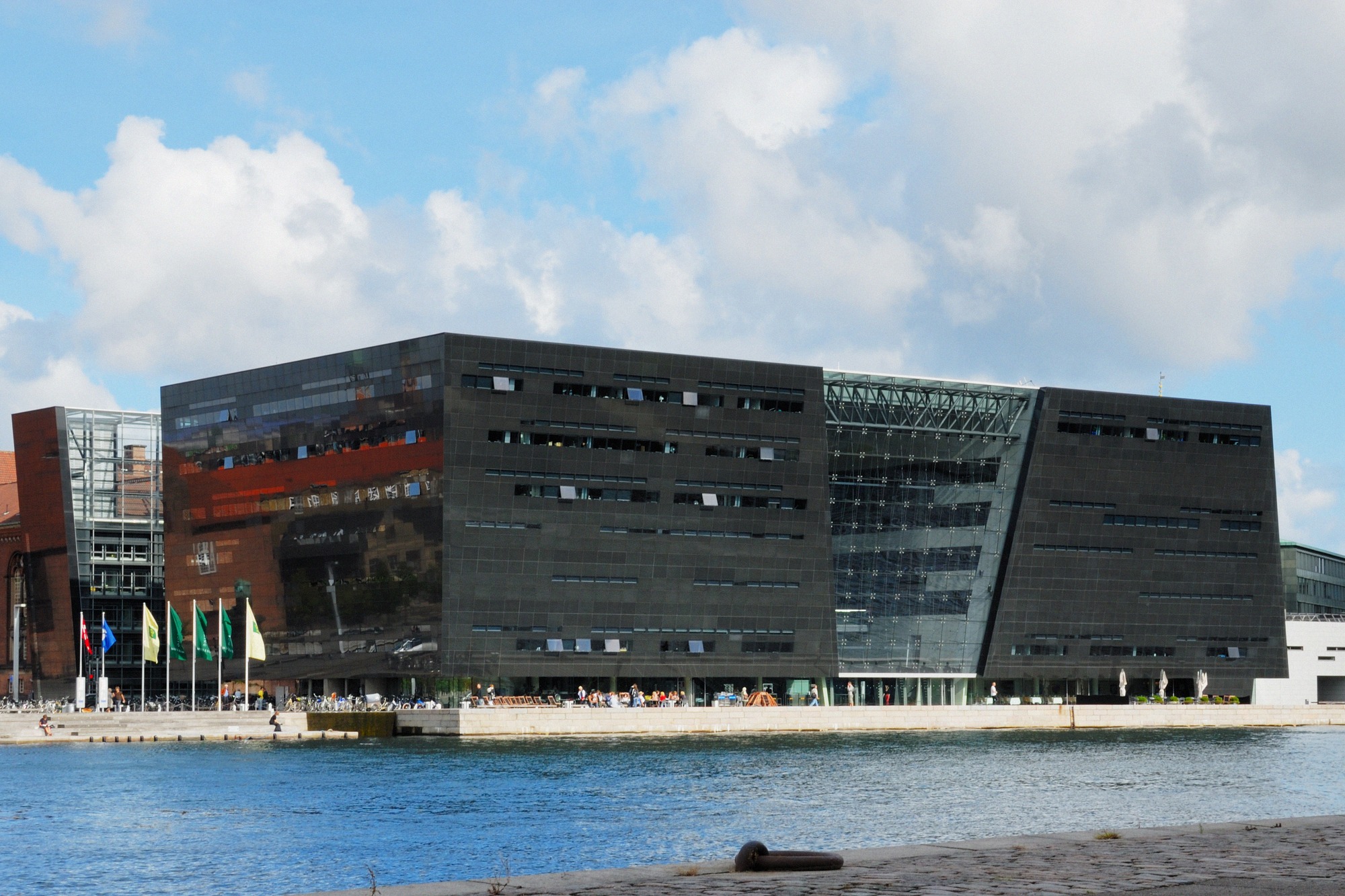
Denmark's national library by the Inner Harbour: the black granite Black Diamond of 1999, the Old Reading Room of 1906, a garden on a former naval harbour and a café with a harbour view.
Holmens Kirke
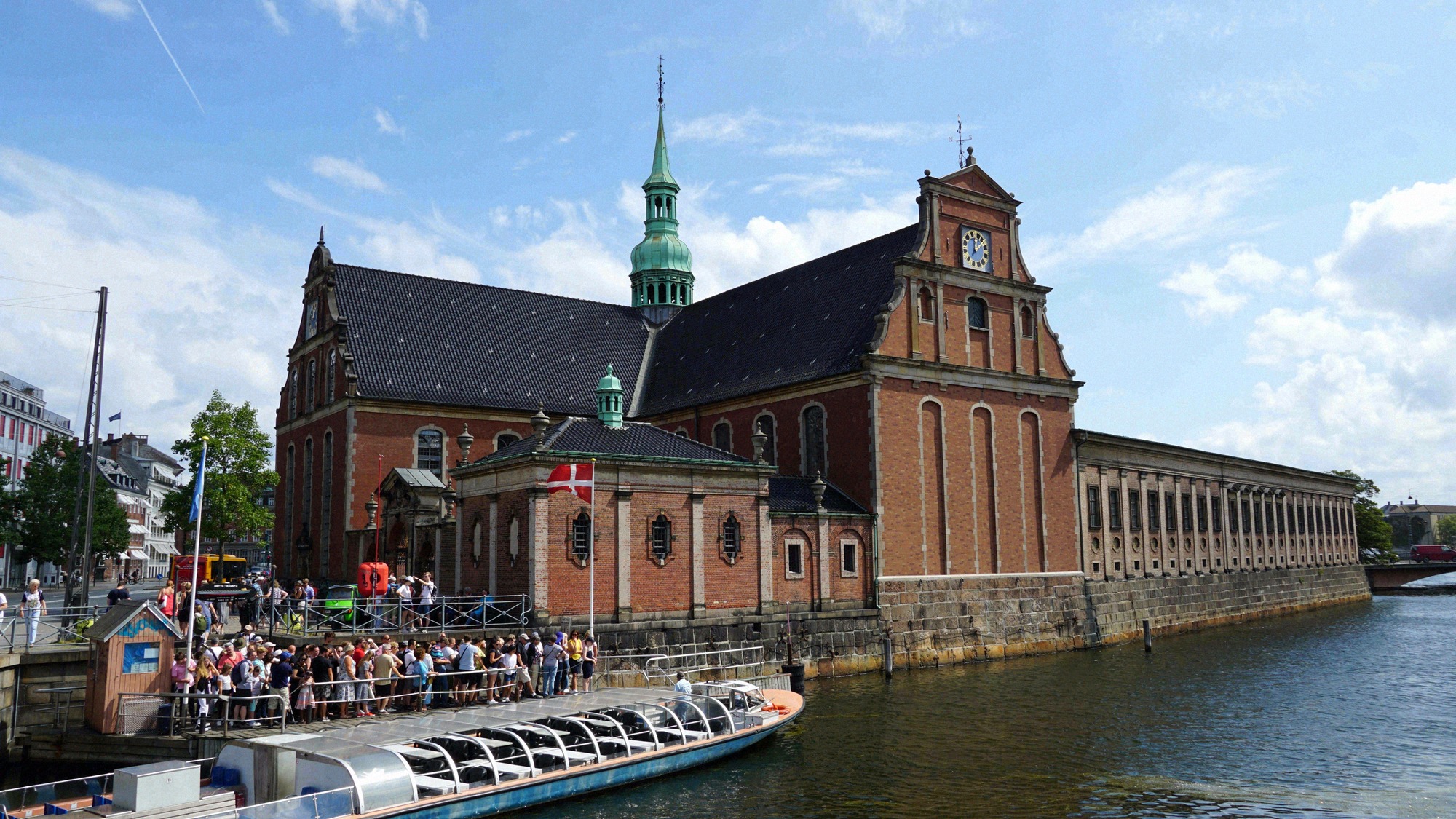
Holmens Kirke began in 1619 as an anchor forge of the navy turned church. Altar of 1661, the tombs of Niels Juel and Tordenskjold, the wedding of Margrethe and Henrik in 1967.
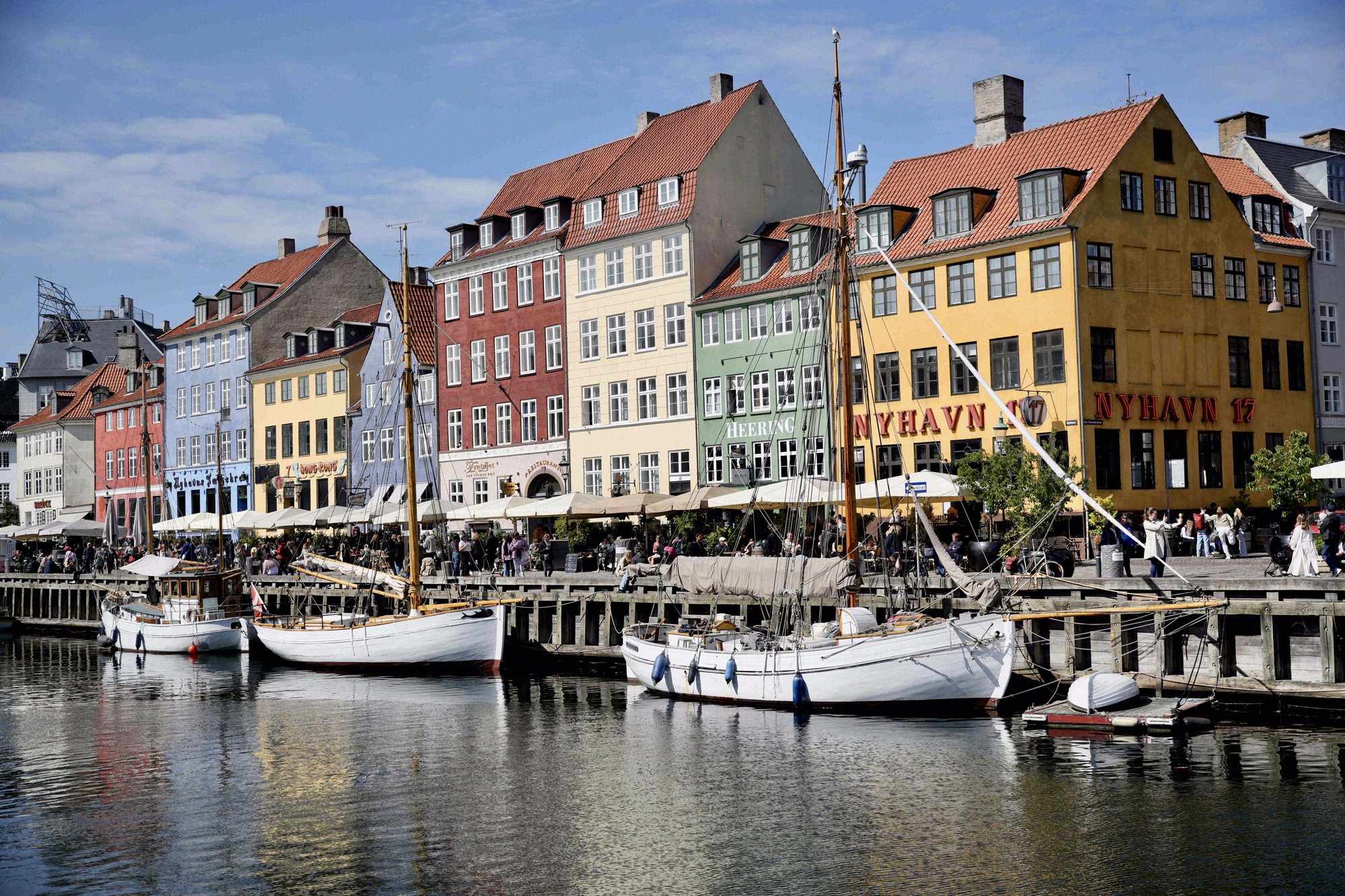
Nyhavn
The canal dug in the early 1670s, with number 9 as the oldest house, three addresses of Hans Christian Andersen, the canal tour boats and the bridge to Christianshavn.
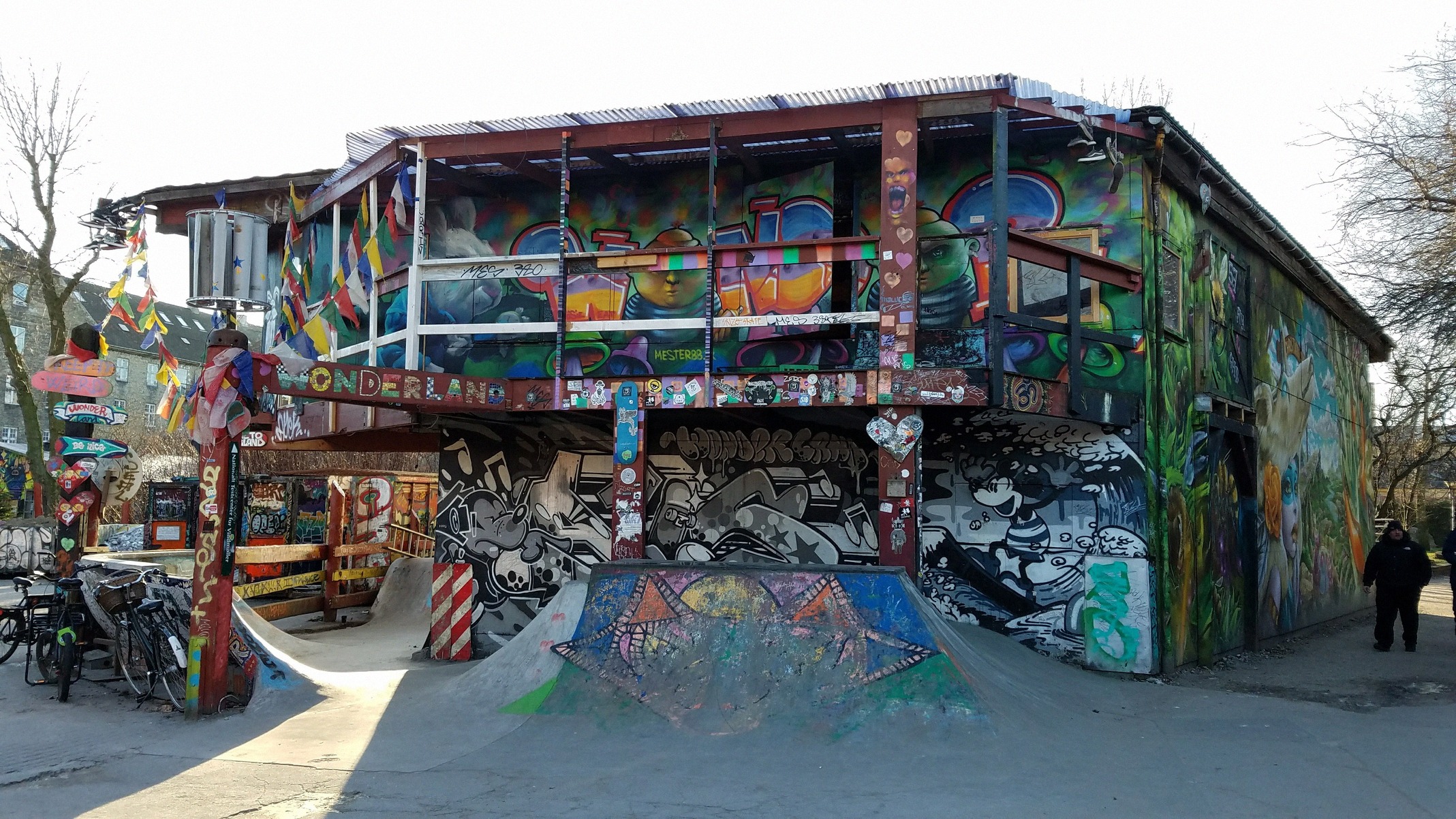
Freetown Christiania
Freetown Christiania has been a self-governing community on a former barracks site since 26 September 1971. The open cannabis trade on Pusher Street ended in April 2024.
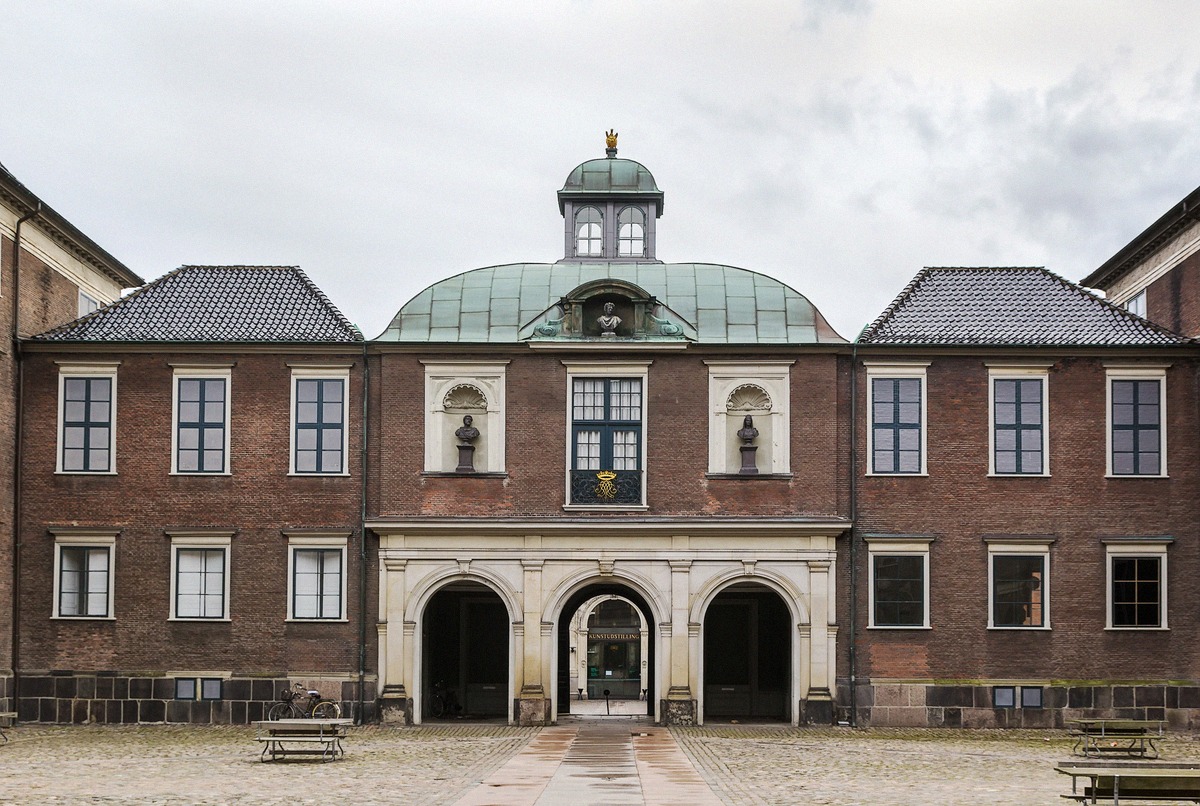
Charlottenborg Palace
The palace on Kongens Nytorv, built from 1672 for a half-brother of Christian V, houses the art academy and Kunsthal Charlottenborg with changing contemporary art.