
Nyhavn
The 1670s canal with Andersen's addresses and canal tours
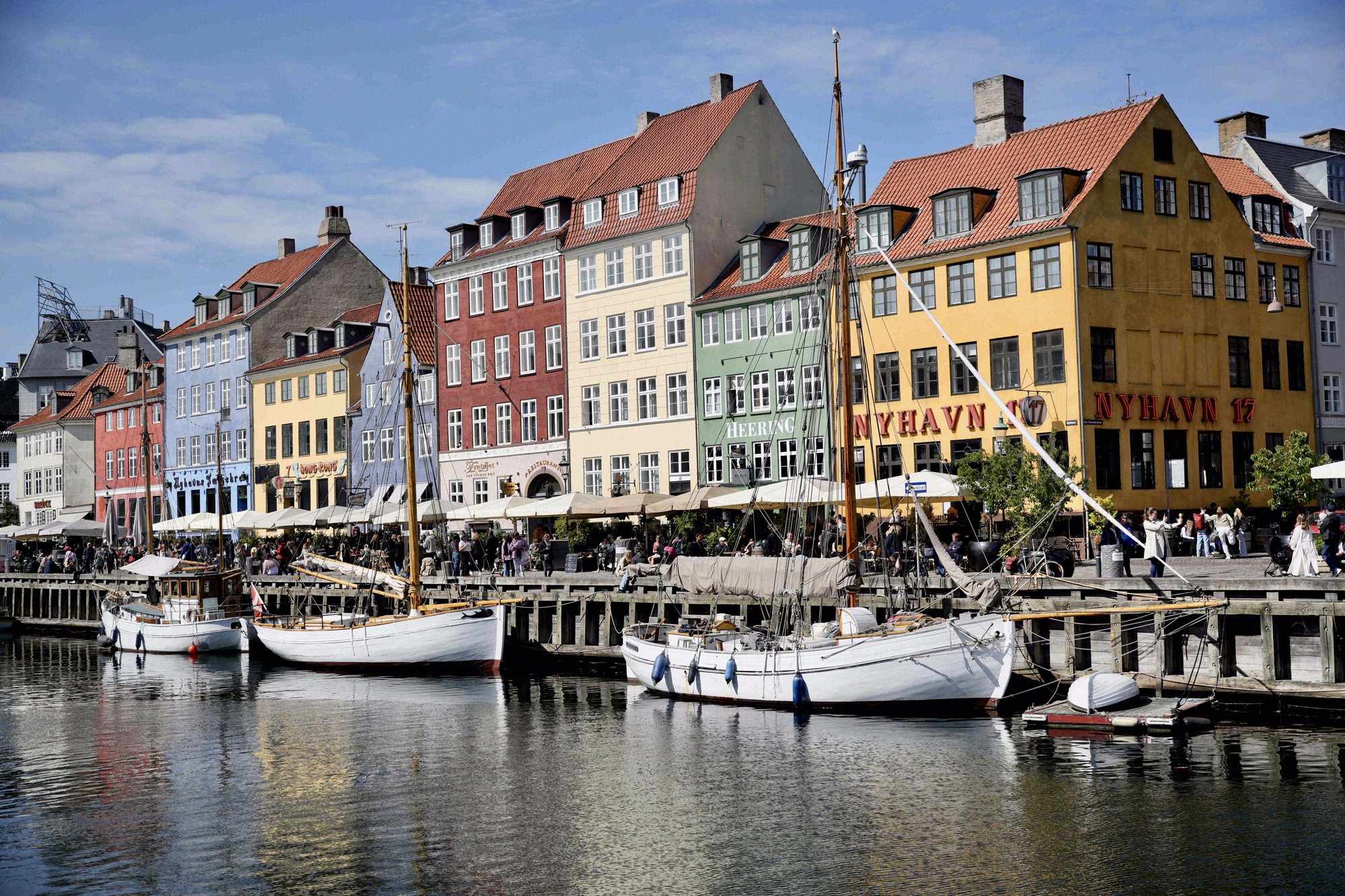
The canal dug in the early 1670s, with number 9 as the oldest house, three addresses of Hans Christian Andersen, the canal tour boats and the bridge to Christianshavn.
Contents
Nyhavn is a canal about 450 m long that runs from the harbour to Kongens Nytorv. By tradition, Danish soldiers and Swedish prisoners of war dug it in the early 1670s so that ships could bring their cargo into the old town. The district that grew up around it belonged to sailors: seamen's pubs, hotels, emigration agencies and moorings for the mail boats. Only from about 1970 did it become the mix of flats, offices and restaurants it is today. The canal became a museum harbour in 1977, and in 1980 the quayside was redesigned for pedestrians. From the canal it takes about 12 minutes on foot to Amalienborg Palace, and Charlottenborg Palace stands directly on the water.
The two sides of the canal
The bars and cafés stand mostly on the sunny north-east side, so that is where you sit for a break. The south-west side has fewer terraces, which makes it the better side for walking and photographing, with the gabled houses of the opposite bank in front of you. A drawbridge, in its present form from 1911/12, separates the inner canal from the outer. The historic ships lie in the inner part, usually including the galeas Anna Møller.
Number 9, from 1681, is regarded as the oldest house on the canal. Many of the others along the two quays are listed buildings that once belonged to merchants and craftsmen. Among the museum ships is the theatre ship Bådteatret from 1898, and the quay served as a backdrop for several films of the Olsen Gang.
Hans Christian Andersen's three addresses
Andersen lived at three addresses on the canal. In September 1834 he rented two rooms on the second floor of number 20, a house from 1778/79. His first fairy tales appeared there in May 1835, and in December 1838 he moved to the Hotel du Nord. The house now mostly belongs to the neighbouring Hotel Bethel. Number 67 is a residential building with a keystone dated 1737. His last address was number 18, where he died in 1875. You do not need to go in; looking from the edge of the quay is enough.
Canal tours from Nyhavn and Ved Stranden
Two operators matter for planning and weather.
- Netto-Bådene run 60-minute tours with a guide. Boats leave from the ticket kiosk or from Nyhavn 71, and you should arrive 20 minutes before departure. From October to March, boats with a glass roof and heating are used.
- Stromma leaves from two piers, Nyhavn 3 and Ved Stranden 26. The Classic Canal Tour takes one hour and runs all year. Combined with the harbour, the trip takes 1 hour 45 minutes. From October to early January, only live-guided tours, in English or Danish, leave from Nyhavn.
A stop for the harbour bus is also on Nyhavn; the public transport page has the details.
Crowds, seasons and the Christmas market
The promenade is open around the clock all year. It is busiest from June to August, above all on Friday and Saturday evenings, while Monday to Wednesday evenings are quieter. In summer, live jazz plays on the outdoor terraces. On the full evenings you should plan for waiting times, and the side streets are calmer. For photos without groups, come early in the morning.
From January to March many terraces close, and you have the quay almost to yourself. In December there is usually a Christmas market on the quay. Because it gets dark early, it is most worthwhile in the late afternoon and evening.
Over the Inner Harbour Bridge
The Inner Harbour Bridge (Inderhavnsbroen) starts at the end of the promenade, at Havnegade, and crosses to Nordatlantens Brygge. Its two bridge leaves touch like lips when they close, which gave it the nickname Kyssebroen, the Kissing Bridge. From Nordatlantens Brygge you continue to Christianshavn, with the Church of Our Saviour (Vor Frelsers Kirke) and Freetown Christiania.
Frequently asked questions
Do you need to reserve a table at Nyhavn? +
How far is it from Nyhavn to the Little Mermaid? +
Can you walk from Nyhavn to Christianshavn? +
Nearby
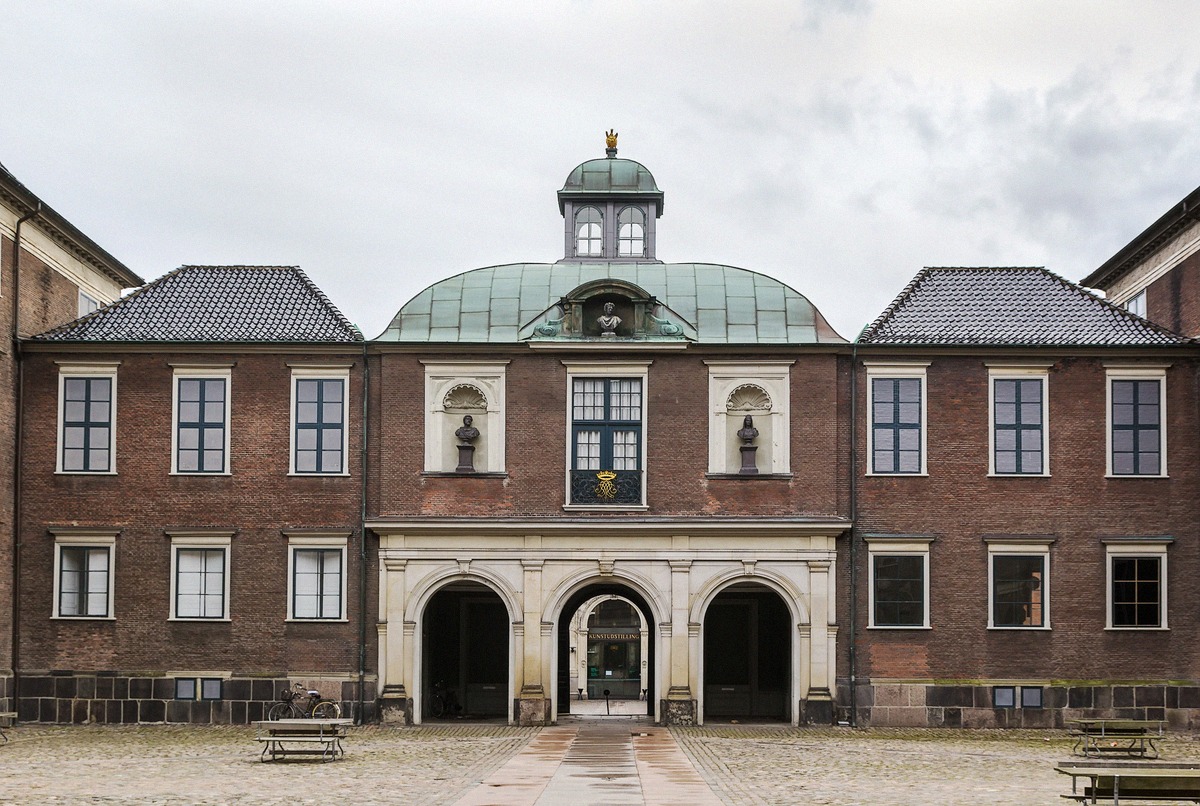
Charlottenborg Palace
The palace on Kongens Nytorv, built from 1672 for a half-brother of Christian V, houses the art academy and Kunsthal Charlottenborg with changing contemporary art.
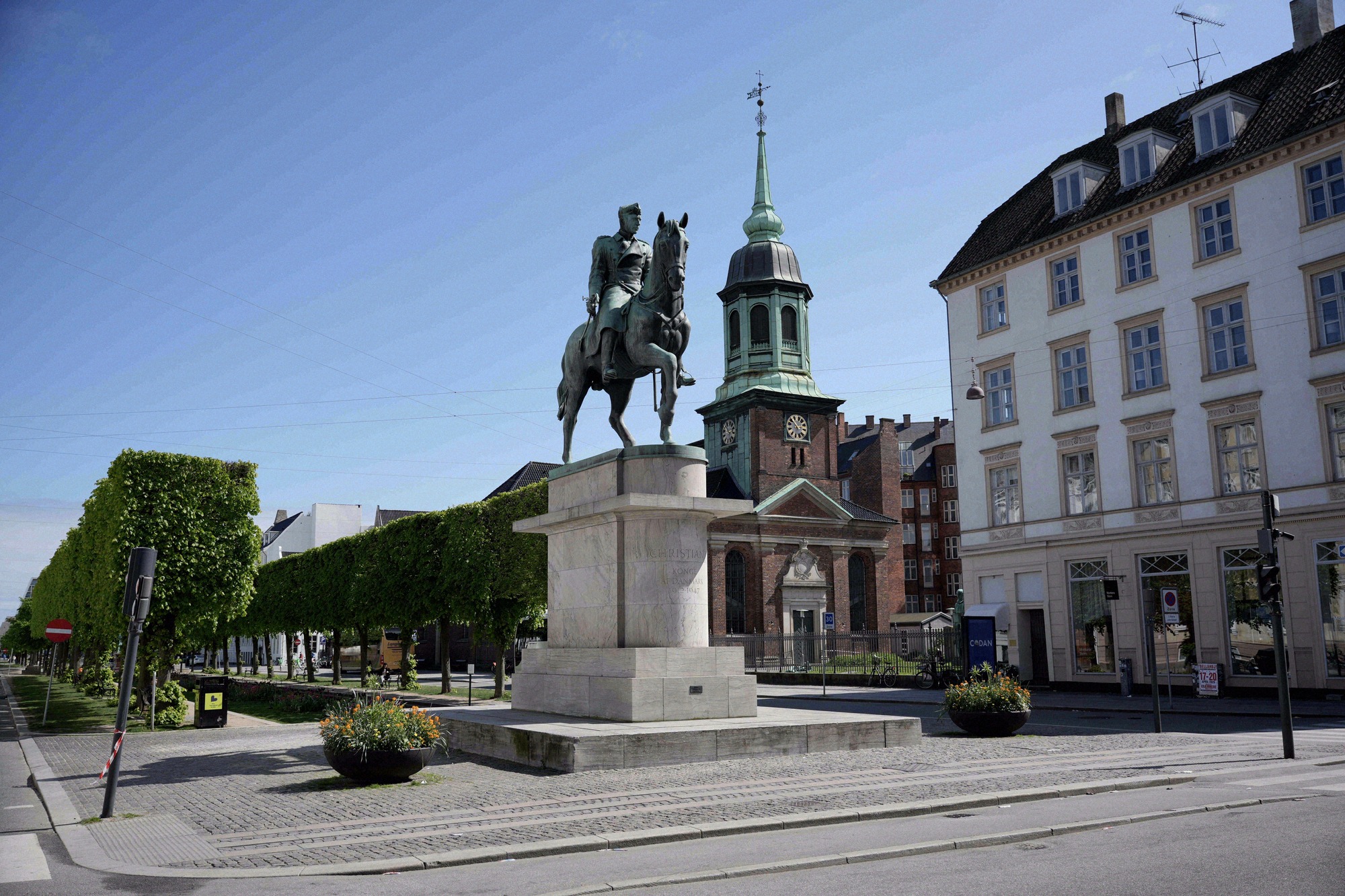
Kongens Nytorv
The square where Strøget ends and Nyhavn begins, with the statue of Christian V, the Royal Theatre, Hotel d'Angleterre, Magasin du Nord and a metro station beneath it.
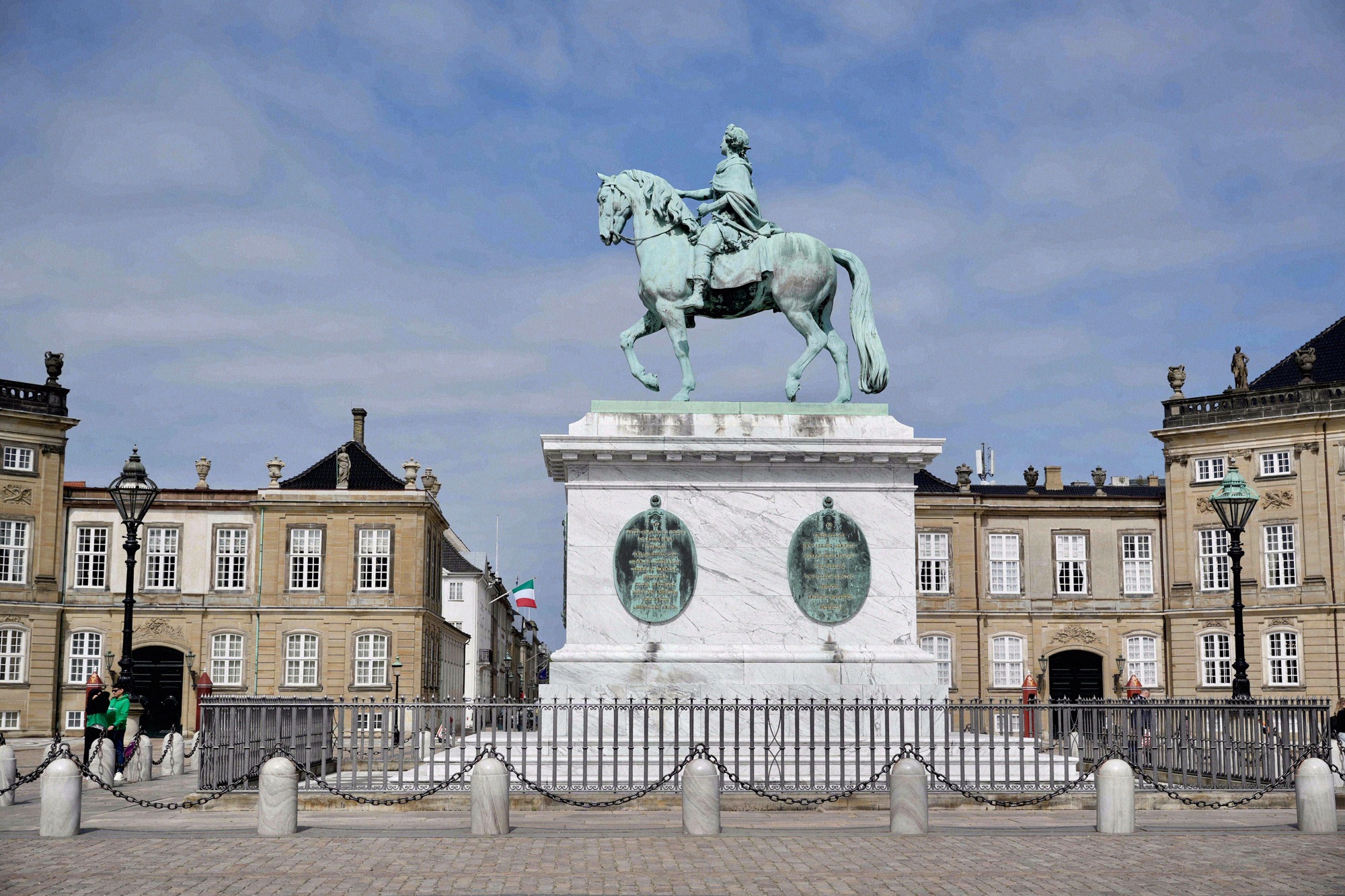
Amalienborg Palace
Amalienborg Palace is four palaces around an octagonal square. The Changing of the Guard on the square is free to watch, and the museum shows the studies of Danish kings and a Fabergé room.
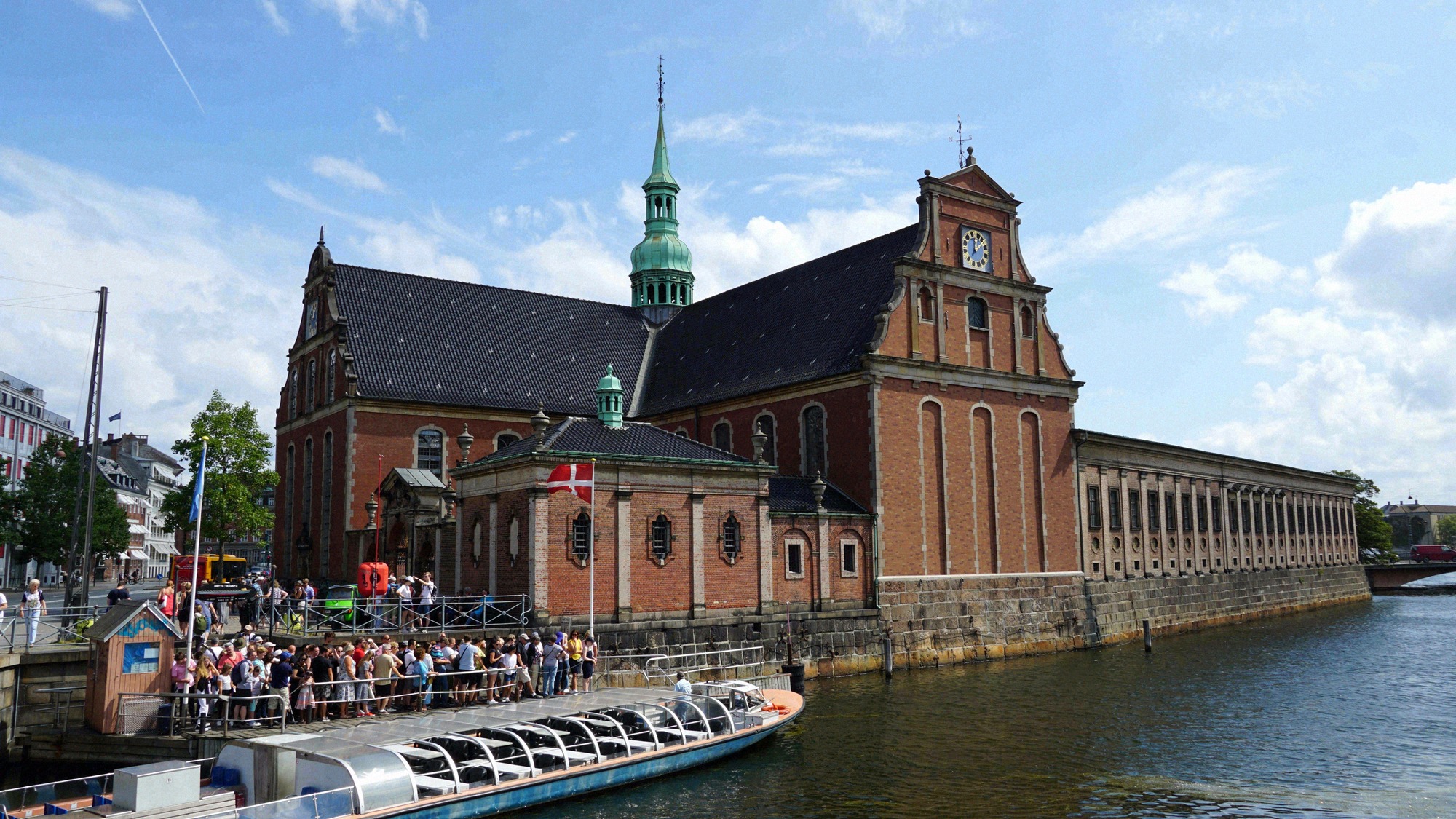
Holmens Kirke
Holmens Kirke began in 1619 as an anchor forge of the navy turned church. Altar of 1661, the tombs of Niels Juel and Tordenskjold, the wedding of Margrethe and Henrik in 1967.
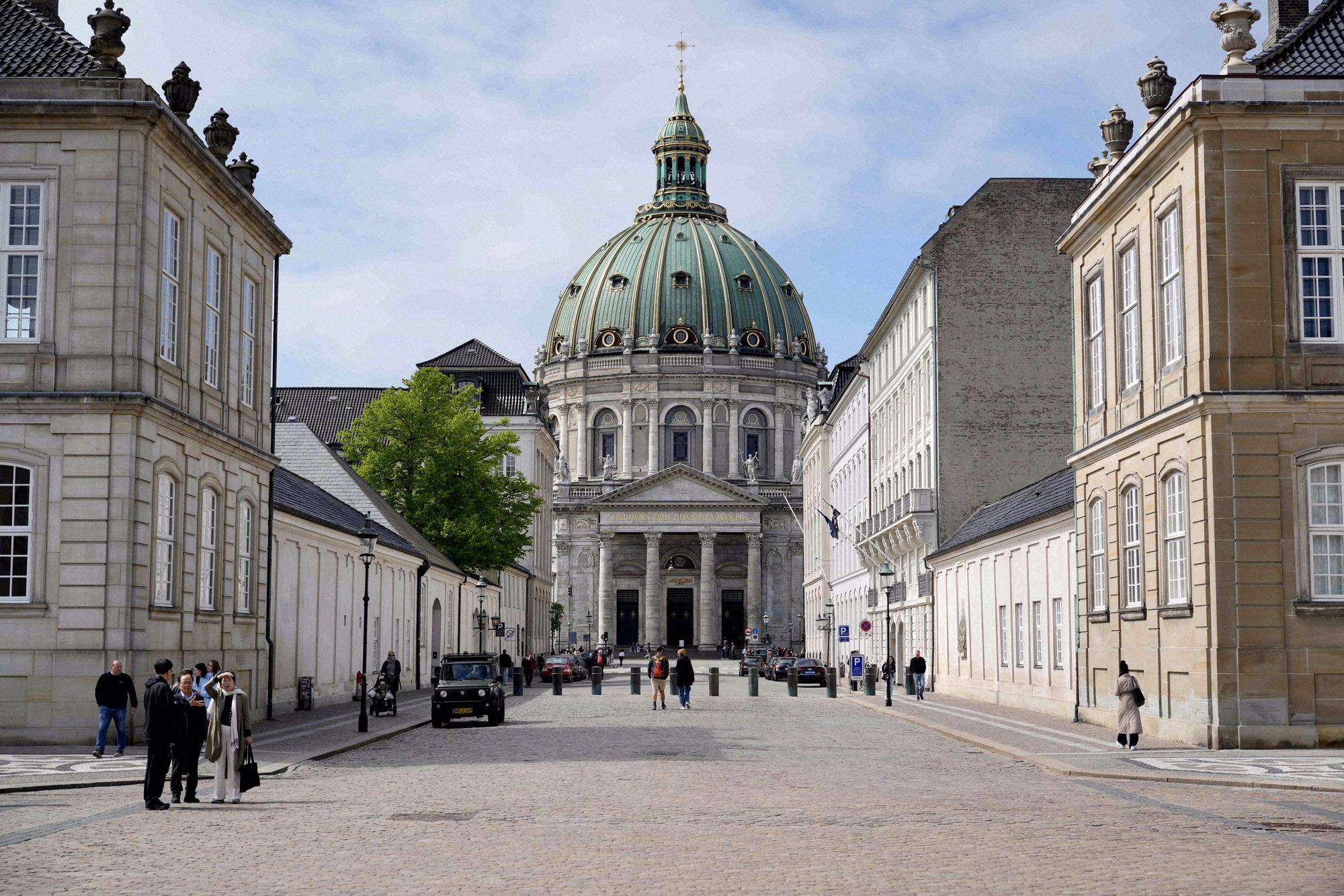
Marble Church (Marmorkirken)
The Marble Church (Marmorkirken), officially Frederik's Church, stands on Frederiksgade in line with Amalienborg Palace. The church is free, and the dome tour runs on Saturdays and Sundays at 13:30.
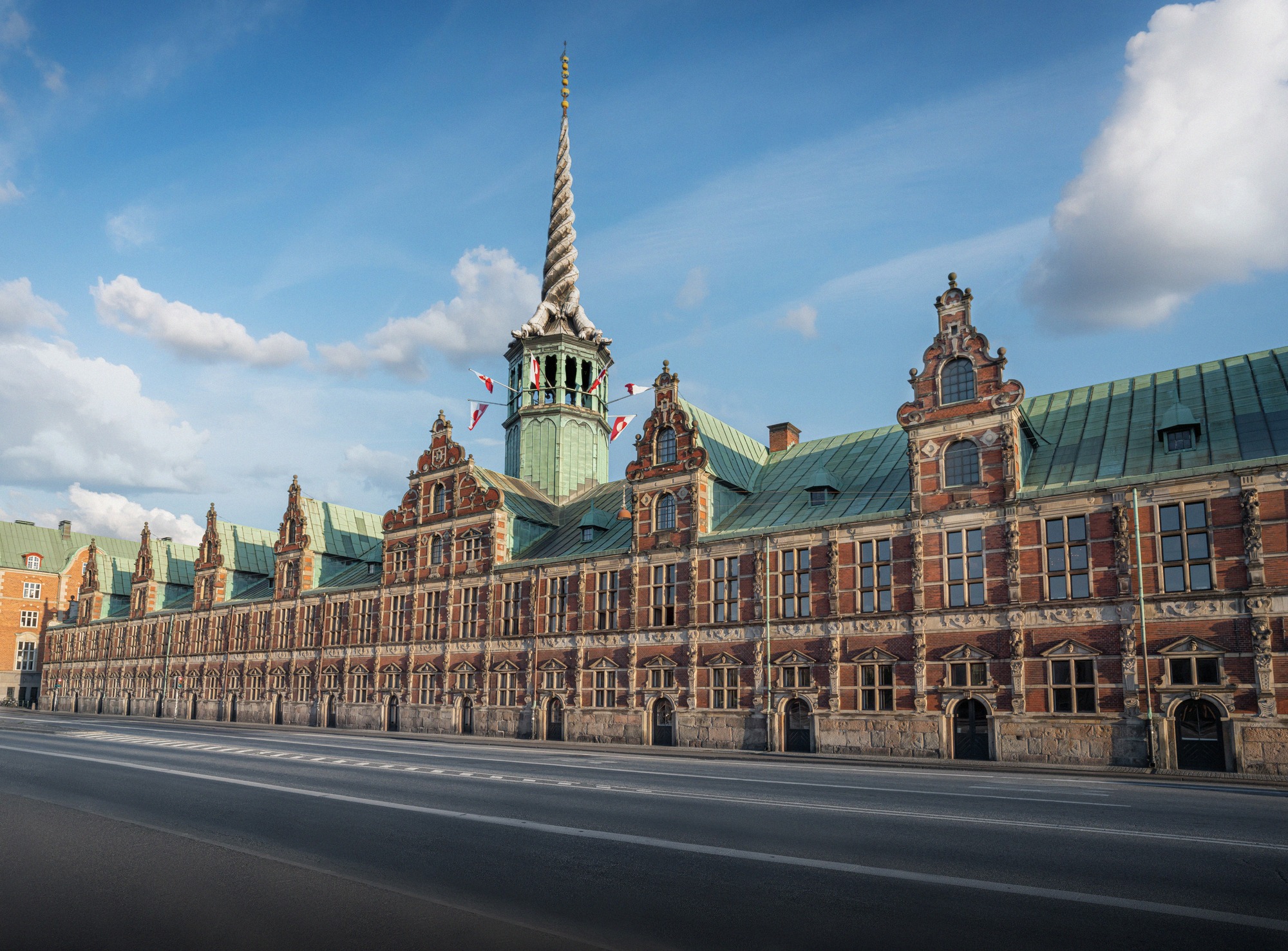
Børsen
Børsen, the old stock exchange on Slotsholmen, has been a building site under a protective cover since the fire of 16 April 2024. A free visitor centre on Børsgade shows building parts and the progress of the rebuilding.